Germany’s natural gas production has risen for the first time since 2003, a small statistical break with outsized implications for Europe’s energy security, utility economics and the investment case for domestic production, storage and infrastructure.
Germany Gas Output Rise Supports Energy Infrastructure
That matters because Europe is still living with the aftershocks of the 2022 energy shock: imported gas remains a strategic vulnerability, storage levels have been under pressure and every incremental molecule produced at home reduces exposure to volatile LNG cargoes, transit risk and geopolitical disruption. For Germany, the continent’s industrial anchor, even a modest uptick in output points to a policy and capital shift away from pure dependence on imported fuel toward a more resilient, if more expensive, supply model.
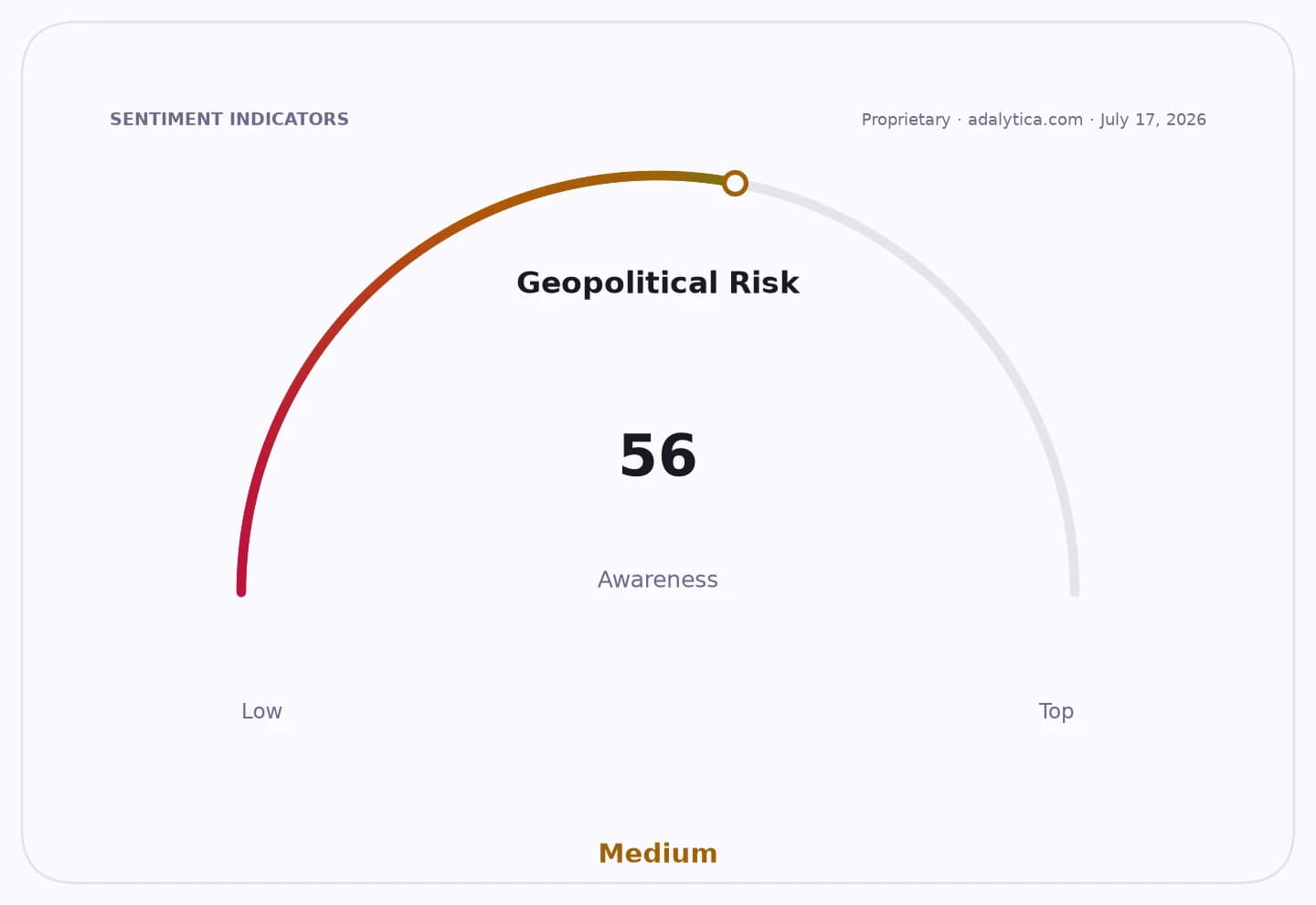
Sentiment IndicatorsⓘProprietary · adalytica.com · July 17, 2026
This is a snapshot — live sentiment, awareness and momentum for 130+ markets update continuously in the dashboard.Open AlphaPulse
The market should not dismiss the change as merely symbolic. In a region where gas is still essential for power, heating and heavy industry, domestic production can support price stability, improve optionality for utilities and give policymakers more room to manage winter risk. It also reinforces the investment logic behind upstream and midstream assets that had been treated as ex-growth or politically constrained. The winners are the companies that can produce, store, move and balance gas inside Europe’s borders.
E.ON, one of Germany’s most important energy groups, has already been signaling that the gas business is becoming strategically valuable again. Its shares have recovered from the spring, and conventional technical indicators now show the stock trading above both its 50-day and 200-day moving averages, with momentum still positive even after a sharp run. That is exactly what a market looks like when investors start to price in a more durable earnings floor for gas infrastructure and retail power from a continent that cannot yet quit hydrocarbons.
The broader backdrop makes the turn more important, not less. Brent-style crude volatility remains elevated, global stability sentiment has sunk into extreme fear, and geopolitical strain around energy chokepoints keeps reminding investors that supply security is now a premium asset. In that environment, Germany’s first increase in gas production in more than two decades is not a footnote. It is a sign that Europe’s energy map is slowly being redrawn toward domestic resilience, and that the most attractive upside may sit with the boring assets the market used to ignore: pipelines, storage, local gas producers and grid-connected utilities.
For investors, the takeaway is simple: the market underestimates how much value is created when Europe starts paying up for security of supply. The next leg of the trade is not just in commodity prices, but in the companies that control the infrastructure and production base needed to keep German industry running.
| Entity | Gains | Losses |
|---|---|---|
| German gas producers | ▲Higher output, stronger relevance | ▼None |
| E.ON and peers | ▲Better gas/infrastructure economics | ▼Cheap-import model |
| LNG exporters | ▲Demand support | ▼Share of European supply |
| Energy importers | ▲More supply optionality | ▼Reliance on chokepoints |