Germany’s inflation rose to 2.9% in August, tightening the squeeze on household savings and keeping the hunt for bank deposits that can at least match price growth at the center of the retail money market.
Germany inflation rises to 2.9% in August

For savers, the economic logic is simple: cash sitting in accounts that pay below inflation is still losing purchasing power in real terms. That makes short-term deposit offers with promotional rates above 3% temporarily attractive, even if the headline return is only good for a few months and often comes with limits, account conditions or a sharp reset afterward.
Sentiment IndicatorsⓘProprietary · adalytica.com · September 3, 2026
This is a snapshot — live sentiment, awareness and momentum for 130+ markets update continuously in the dashboard.Open AlphaPulse
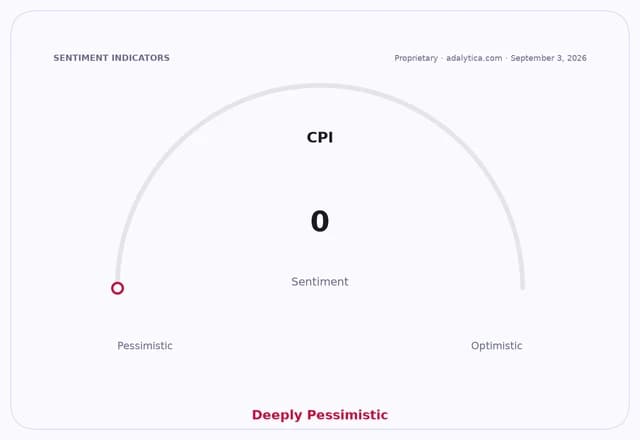
The latest inflation reading, which climbed from 2.3% in June, underscores how quickly the real value of cash can erode when prices move faster than bank rates. In the current market, several lenders are trying to win deposits with teaser offers above the inflation rate, highlighting the competition for household cash at a time when the European rate cycle has turned and banks are trying to lock in funding from retail customers.
Among the most aggressive offers is Consorsbank, which is paying 3.6% annualized for five months on balances up to 1 million euros. ING is advertising up to 3.75% for four months for customers who also open a current account, or 3.2% without that extra step. Volkswagen Bank is offering 3.1% for six months, while BBVA is paying 3.5% on its free current account for six months. All of those rates sit above the August inflation figure, though only for a limited promotional window.

The difference between a nominal rate and a real return matters for investors because it frames where cash can compete with risk-free alternatives. If inflation stays near 3% while promotional deposit rates roll off after four to six months, real returns can quickly turn negative again unless savers keep moving money from one offer to the next. Taxes further reduce the effective yield.
That leaves banks in a familiar but important battle: retail deposits are cheap, sticky funding, while consumers are trying to preserve purchasing power without taking market risk. Banks with large deposit franchises can use teaser rates to attract new money, then reprice balances lower once the promotional period ends. For customers, the upside is a short-lived real yield cushion; the downside is the usual one in cash management — rates that look attractive today may not still do so when the promotion expires.
The broader backdrop is one of persistent inflation anxiety rather than a decisive retreat in price pressures. With German consumer prices still running above the European Central Bank’s 2% goal, and with policy rates already elevated relative to recent history, the competition between deposits, money-market alternatives and short-duration bonds is likely to stay intense. For investors, the key question is no longer whether cash earns something, but whether it earns enough to outpace inflation after fees, tax and the inevitable reset in bank pricing.
| Entity | Gains | Losses |
|---|---|---|
| Savers | ▲Higher promotional rates | ▼Lower real purchasing power |
| Banks | ▲New deposits, lower funding costs | ▼Margin pressure from teaser rates |
| Cash holders in low-yield accounts | ▲Short-term opportunities to switch | ▼Real returns below inflation |
| Inflation-linked or higher-yield alternatives | ▲Relative appeal rises | ▼Competition from bank offers |