German retail sales fell unexpectedly in September, a sign that Europe’s largest economy is still struggling to generate durable household demand even as inflation pressures ease and labor conditions remain relatively stable.
Germany retail sales fall in September

The drop matters because consumer spending is one of the few domestic engines Germany can rely on when manufacturing remains soft and export demand is uneven. A weaker-than-expected retail print raises the risk that third-quarter growth in private consumption will disappoint, leaving the economy more exposed to industrial weakness and limiting the near-term upside for a recovery that had been expected to broaden beyond factories and trade.
Sentiment Indicators

For investors, the reading is another reminder that Germany’s domestic demand rebound is fragile. Retail weakness can weigh on sentiment around German-listed consumer discretionary names and broader euro zone growth expectations, while also keeping pressure on policymakers who need stronger household spending to offset sluggish investment. It also complicates the outlook for the European Central Bank: if consumers are not yet responding to moderating inflation and real-income gains, rate cuts may take longer to feed through to activity.
The data fits a broader picture of uneven demand across the region. Germany has been trying to shake off the aftereffects of energy shocks, high financing costs and a prolonged industrial slump, but the consumer side of the economy has yet to provide a decisive offset. Even with inflation cooling, households appear cautious, suggesting that higher savings, job insecurity in parts of manufacturing, and a still-muted confidence backdrop may be suppressing discretionary purchases.
Consumer Confidence
That caution is visible in market positioning as well. German equities, represented by the DAX, have held up better than the domestic growth backdrop might imply, but investors remain sensitive to signs that consumption is not improving in a sustained way. Retail-focused stocks can outperform on hopes of a cyclical turn, but unexpected declines in spending tend to revive worries that earnings upgrades will be harder to sustain.
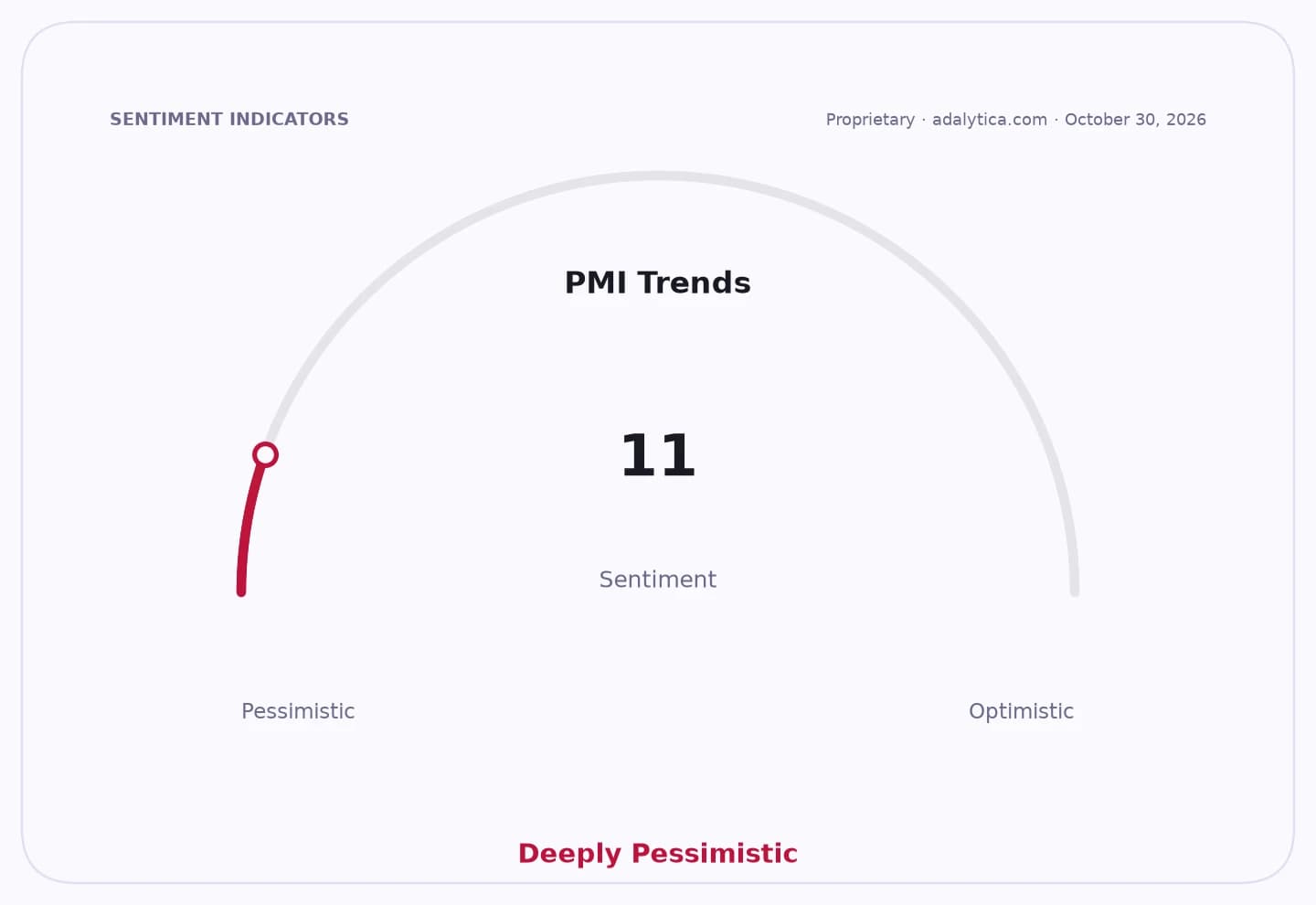
The contrast with sentiment gauges is telling: proprietary consumer spending sentiment tracked by Adalytica.com is elevated, yet the actual sales data shows that optimism is not translating cleanly into purchases. That gap suggests the recovery narrative still depends on whether households convert improving mood and easing inflation into higher spending, or whether caution continues to dominate into year-end.
For now, the September retail decline leaves Germany’s consumer sector looking more like a drag than a support for growth. The key question for markets is whether the weakness is a one-month setback or evidence that the economy’s long-awaited demand recovery is still not taking hold.
| Entity | Gains | Losses |
|---|---|---|
| German consumers | ▲lower inflation pressure | ▼weak spending power |
| ECB rate-cut supporters | ▲softer demand case | ▼policy urgency relief |
| German retailers | ▲eventual rebound hopes | ▼near-term sales momentum |
| DAX consumer names | ▲valuation reset chance | ▼earnings optimism |