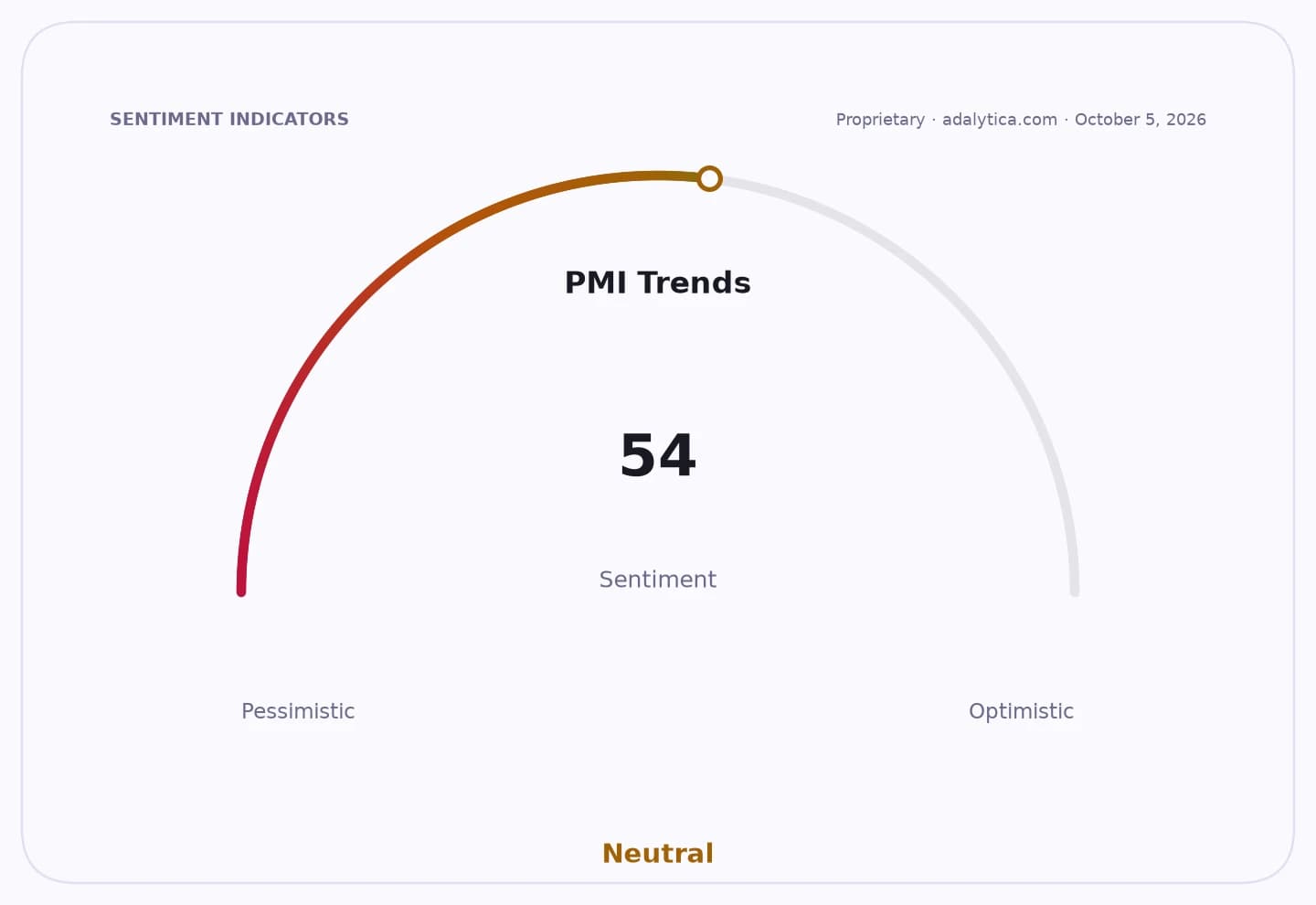
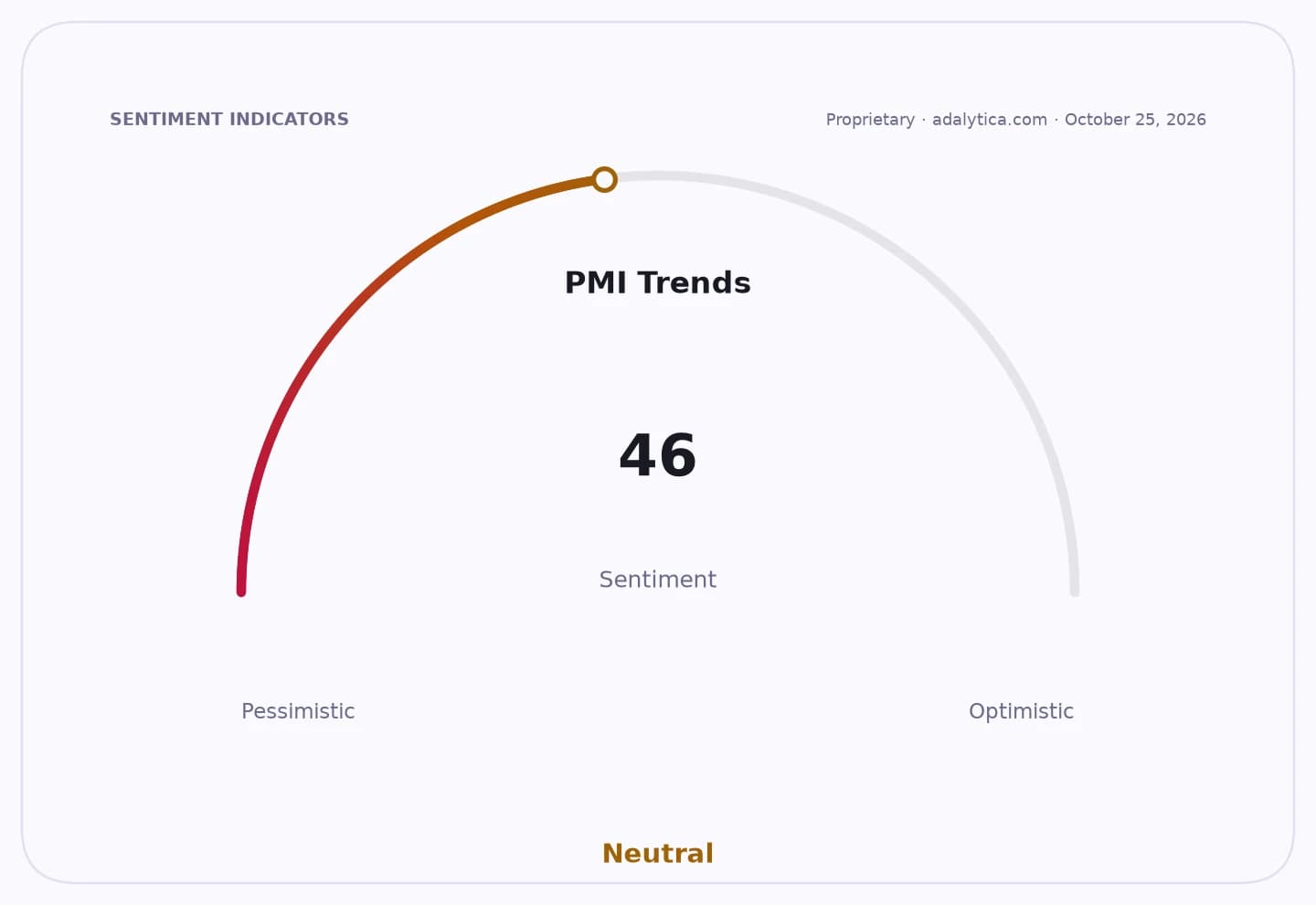
Germany’s private sector expanded in October for a fourth straight month, but the pace slowed as S&P Global’s composite purchasing managers’ index slipped to 52.8 from 53.8 in September, underscoring that Europe’s largest economy is still growing but losing momentum.
Germany private sector PMI slips to 52.8 in October
PMI Trends
The reading matters because Germany is the euro zone’s industrial anchor and one of the clearest barometers of demand across Europe. A PMI above 50 signals expansion, but the drop to a two-month low points to a softer start to the fourth quarter after a stronger run in the summer.
Sentiment Indicators
The slowdown was broad-based. The services PMI fell to 51.7 from 52.9, its weakest in two months, while the manufacturing output index eased to 55.1 from 56.0, a three-month low. New business grew only marginally, the weakest pace in three months, while service-sector demand stalled as clients delayed decisions and budgets stayed tight.
Manufacturing offered the firmer signal, with export sales still supporting order books and factory backlogs rising. That split suggests Germany’s industrial base is holding up better than domestically oriented services, but not enough to offset a clear cooling in overall momentum.
Employment trends were mixed as well. Service firms kept hiring for a third month, though only modestly, while manufacturing payrolls were close to flat, with job cuts easing to the smallest pace in more than three years. That points to a labor market that is still resilient, even as activity softens.
For investors, the report reinforces the case for cautious growth expectations in Germany and the broader euro zone. Slower activity can weigh on earnings hopes for banks, industrials and domestically exposed companies, while keeping pressure on policymakers to support demand if momentum fades further. Markets will now look to the next batch of euro zone data for signs that October’s slowdown is temporary or the start of a weaker quarter.
| Entity | Gains | Losses |
|---|---|---|
| German exporters | ▲Steady foreign demand | ▼Softer domestic growth |
| German services firms | ▲Continued hiring | ▼Slower new business |
| Industrial companies | ▲Rising backlogs | ▼Slower overall activity |
| Investors in euro zone cyclicals | ▲More policy support hopes | ▼Weaker earnings outlook |