Germany’s much-touted upswing is not yet reaching the medium-sized companies that make up the backbone of the economy, and that matters because the Mittelstand drives hiring, investment and domestic demand far more than headline GDP forecasts suggest.
Germany Mittelstand revenue growth slows in September
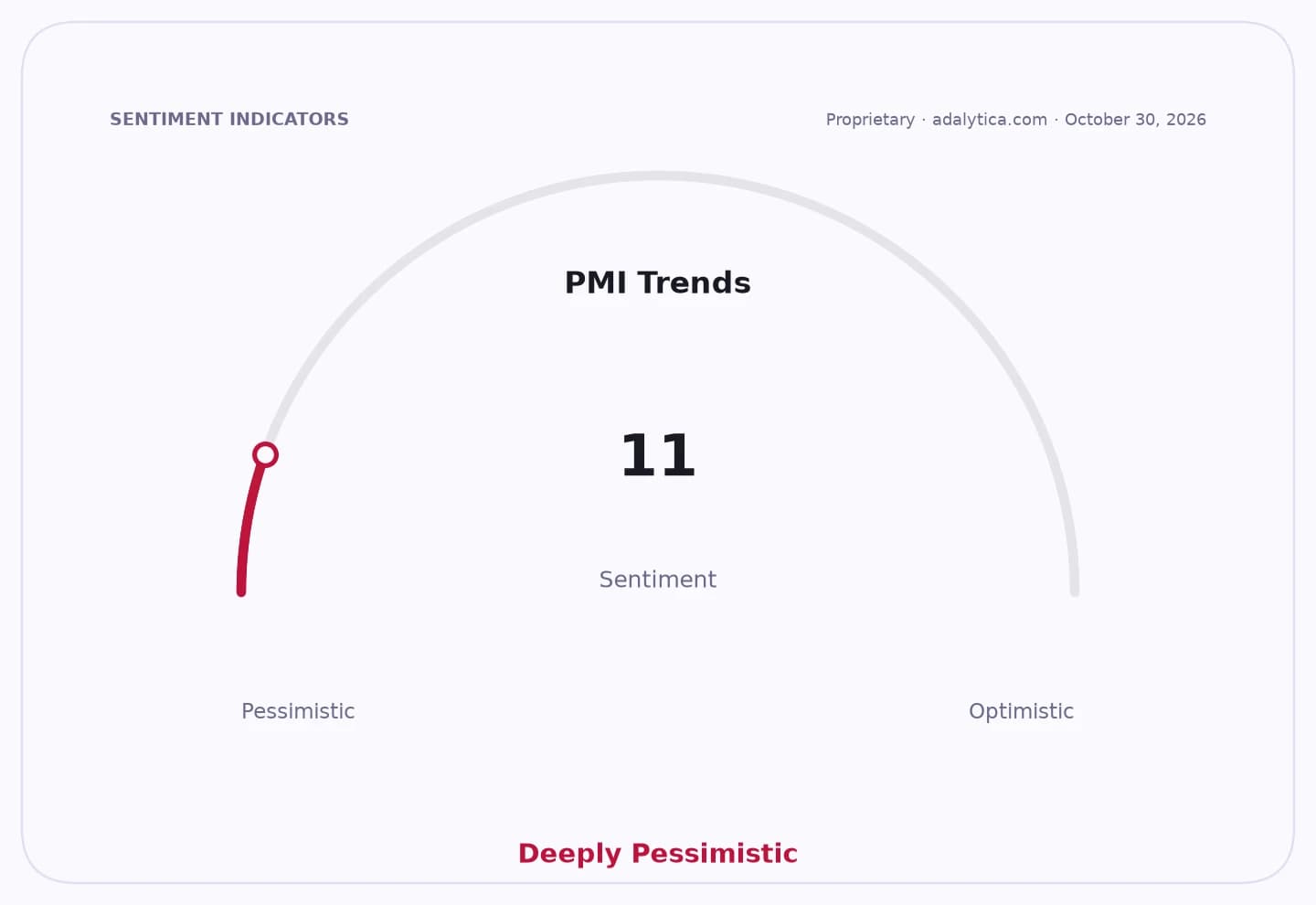
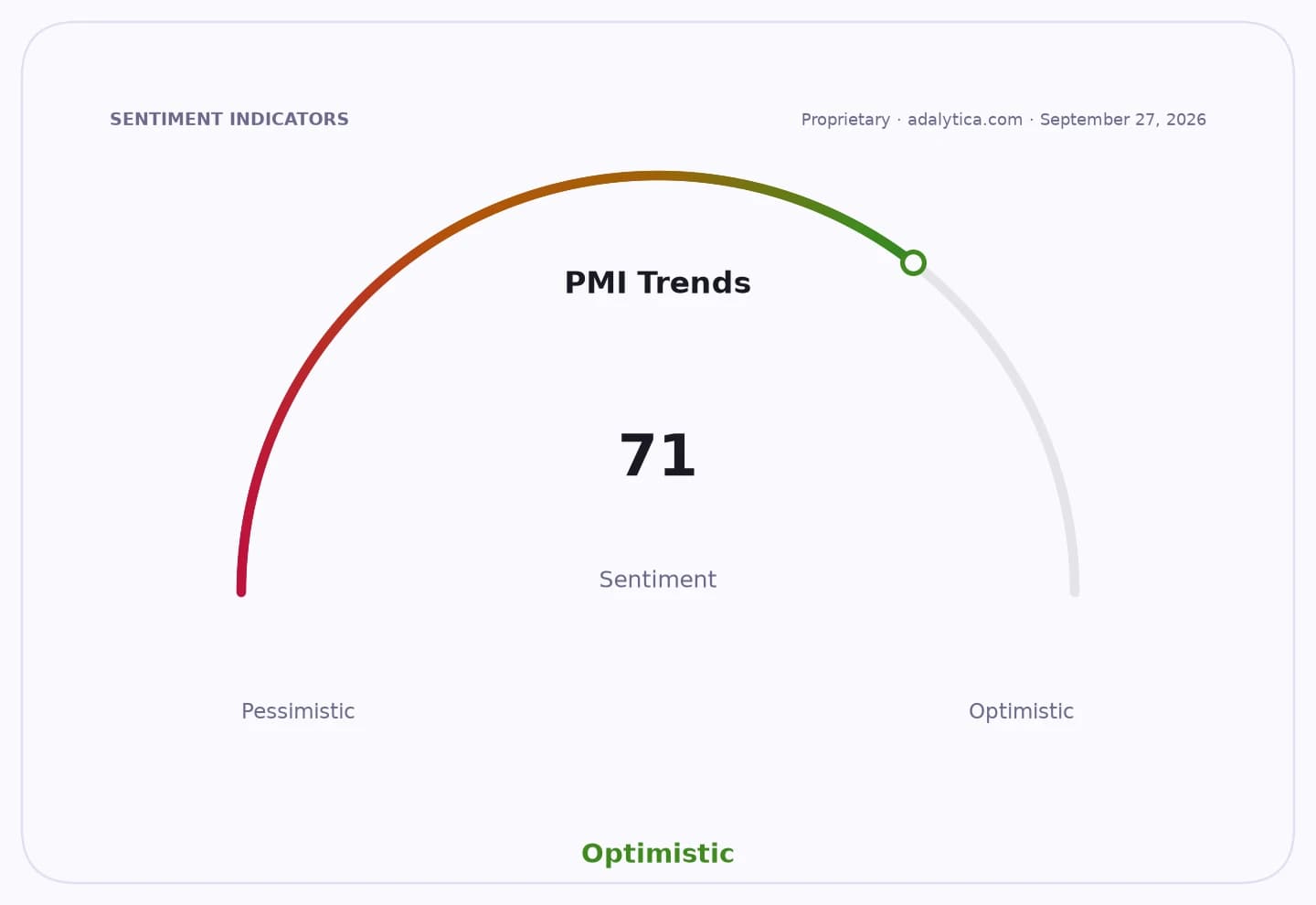
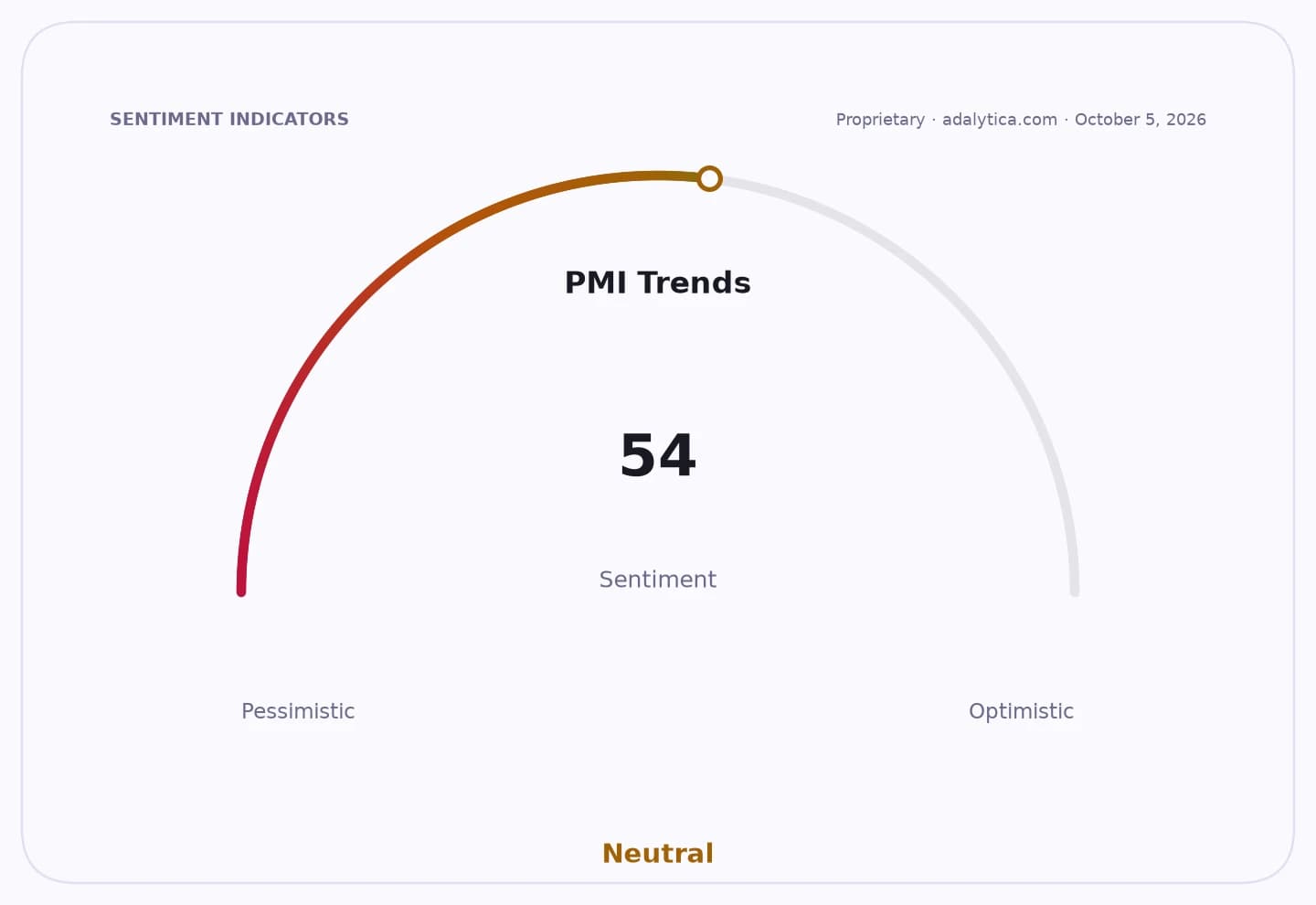
PMI Trends
The Datev Mittelstandsindex shows revenue for the sector was still just 1% above a year earlier in September after seasonal adjustment, but it slipped 1% from August, leaving the broader uptrend that had been in place through the spring flat since March. In other words, the recovery is losing momentum before it has really broadened out.
Sentiment Indicators
That weakness is economically significant because it points to a two-speed German economy: firms tied to transport and logistics are holding up, while the core industrial and domestic-demand sectors remain under pressure. In manufacturing, medium-sized revenues are still down about 11% from the trend level at the start of 2023; construction is down roughly 16%; and retail about 9%. Hospitality, meanwhile, has been deteriorating faster since April. Those are the kinds of industries that typically decide whether a cyclical rebound becomes self-sustaining.
The squeeze is being made worse by labor costs. Datev said wages across the Mittelstand were up 5.5% in September, while employment was 0.2% below a year earlier. That combination is toxic for margins: revenue growth is too weak to absorb higher pay, so companies are being forced to protect profitability by limiting staff or delaying investment. For investors, that is a warning that earnings recovery in German domestic cyclicals may lag any macro headline improvement.
The divergence inside the Mittelstand also tells an important market story. The smallest firms, with up to 10 employees, have seen revenues fall for months, while small and mid-sized companies have managed some growth. That suggests the weakest balance sheets and the least pricing power are under the greatest strain, which tends to filter through to regional lenders, suppliers and local services before it shows up in official national accounts.
Datev’s data, drawn from tax filings for more than 1 million companies and payroll records for more than 8 million workers, usually arrives ahead of official statistics, making it a useful early read on whether Germany’s stimulus and easing cycle are actually translating into private-sector demand. So far, the answer is only partially. Even the one bright spot — transport and logistics — may say more about higher energy costs and shifting freight demand than about a broad-based industrial rebound.
The investable takeaway is straightforward: this is not a clean “buy Germany” signal yet. The market may be ahead of the real economy in pricing a durable upswing, and the more compelling opportunities could lie not in broad domestic cyclicals, but in exporters, logistics-linked names and companies with pricing power and less exposure to labor inflation. Until the Mittelstand’s revenue trend turns decisively higher, any German recovery thesis remains incomplete.
| Entity | Gains | Losses |
|---|---|---|
| Logistics and transport firms | ▲Higher freight demand | ▼Broad recovery doubts |
| German exporters | ▲Relative demand resilience | ▼Domestic-cyclical weakness |
| Mittelstand small/mid-size firms | ▲Modest revenue growth | ▼Wage inflation pressure |
| Smallest microbusinesses | ▲None | ▼Falling revenues, squeezed margins |