Germany’s inflation pipeline is filling again, with producer prices up 6.7% and wholesale prices rising 8.7% in September, a combination that suggests consumer inflation could stay elevated into year-end rather than fade quickly.
Germany Inflation Pipeline Rises in September
That matters because price pressures at the start of the supply chain do not feed through to households overnight, but they do feed through. Germany’s consumer inflation rate already accelerated to 3.3% in September, the highest this year, and the latest readings from factories and wholesalers show that the disinflation story may be losing momentum just as energy costs climb again. For Europe’s largest economy, that raises the risk that inflation stays stubbornly above the European Central Bank’s comfort zone even if headline price growth remains far below the 2022 peak.
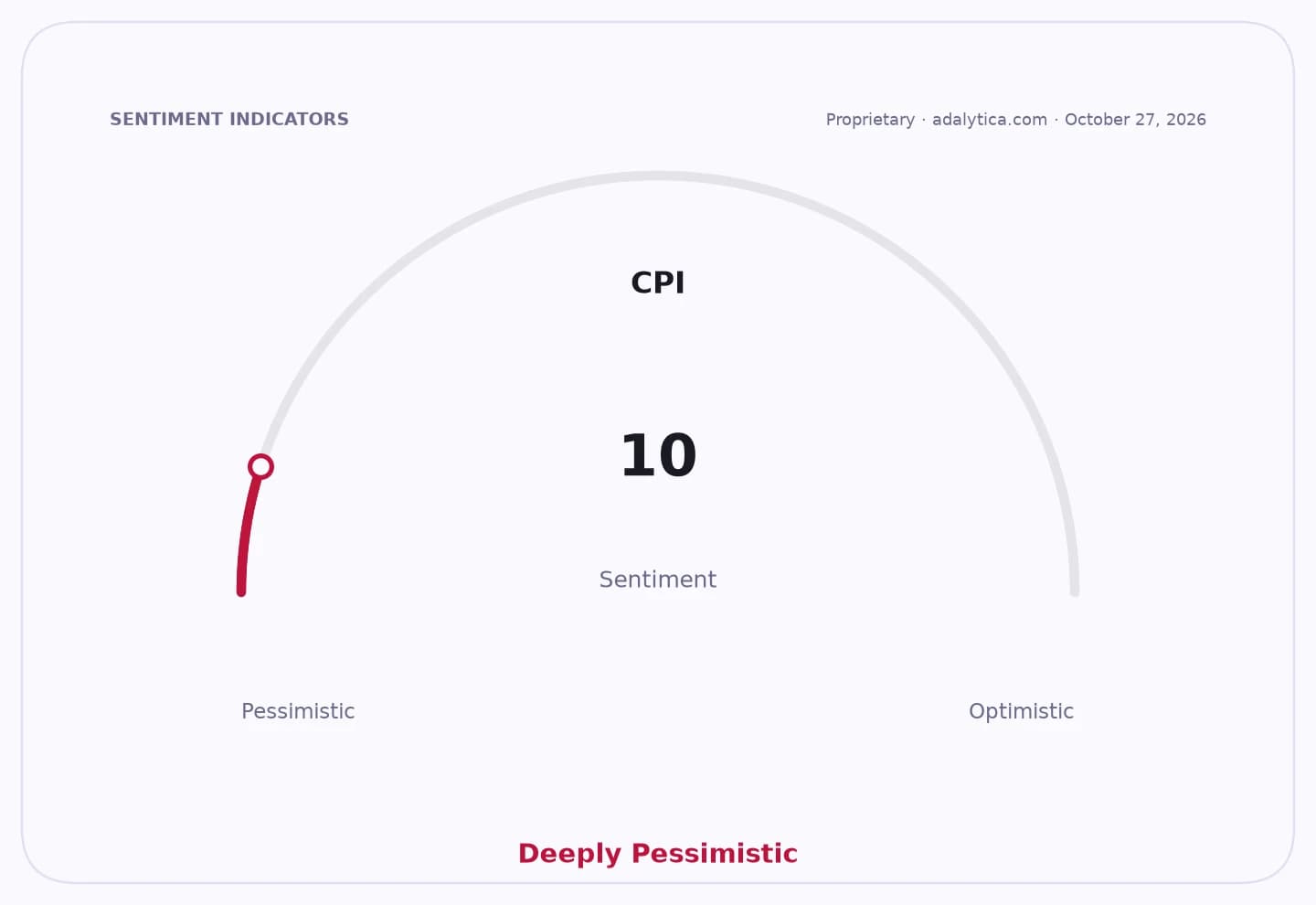
Sentiment IndicatorsⓘProprietary · adalytica.com · October 27, 2026
This is a snapshot — live sentiment, awareness and momentum for 130+ markets update continuously in the dashboard.Open AlphaPulse
The producer-price increase was the strongest since March 2023, while wholesale inflation was the highest since February 2023. Both are consistent with a renewed pass-through from energy, which is again the dominant driver. German inflation in October 2022 had reached 8.8%, and while current levels are nowhere near that shock, the direction of travel matters more for markets than the absolute number. A rising inflation pipeline can keep businesses cautious on pricing, wages and investment, and it complicates the policy outlook if the ECB is hoping for a cleaner retreat in underlying inflation.
The mechanism is straightforward. Producer prices capture costs at the factory gate, wholesale prices reflect the next step in distribution, and consumer prices are the end result. The transmission is not mechanical: retailers can absorb some of the increase in margins, and firms often hedge energy and input costs ahead of time. But that delay is precisely why the latest figures are important. They indicate that inflationary pressure is not gone, only buffered. If energy remains expensive, the pipeline can keep feeding higher prices into the broader economy over the coming months.
For investors, that shifts the balance of risks. Government bonds are vulnerable if markets start to price a longer period of sticky inflation, while inflation-linked assets retain appeal as a hedge against renewed cost pressure. Equities face a more mixed picture: energy producers and firms with pricing power may hold up better, while consumer-facing companies, retailers and industrials with thin margins could absorb more of the squeeze. In Germany and across the euro area, the question is whether profit margins can continue to cushion households or whether they will eventually give way to higher end prices.
The near-term relief may be limited. The report points to temporary help from the return of a fuel rebate, but lasting improvement depends on a broader easing in energy costs, including any de-escalation around Iran that could reduce oil-market tension. Until then, the data argue that Germany’s inflation fight is not over and that the consumer price slowdown may prove brief rather than durable.
| Entity | Gains | Losses |
|---|---|---|
| Energy producers | ▲Higher pricing power | ▼Demand uncertainty |
| Inflation-linked bonds | ▲Better hedge value | ▼Nominal bonds |
| German households | ▲Temporary fuel relief | ▼Higher living costs |
| Retailers and manufacturers | ▲Can delay pass-through | ▼Margin pressure |