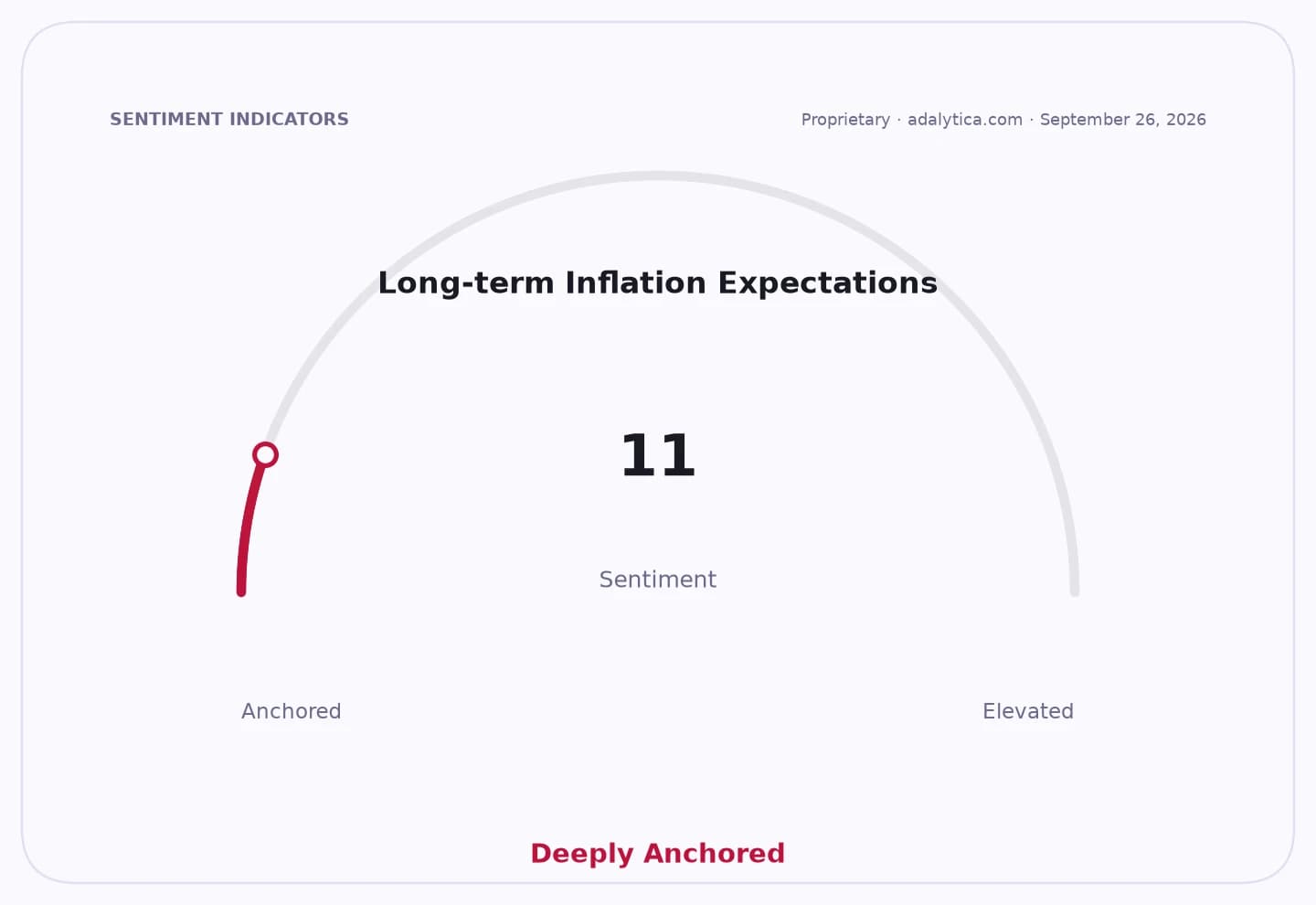
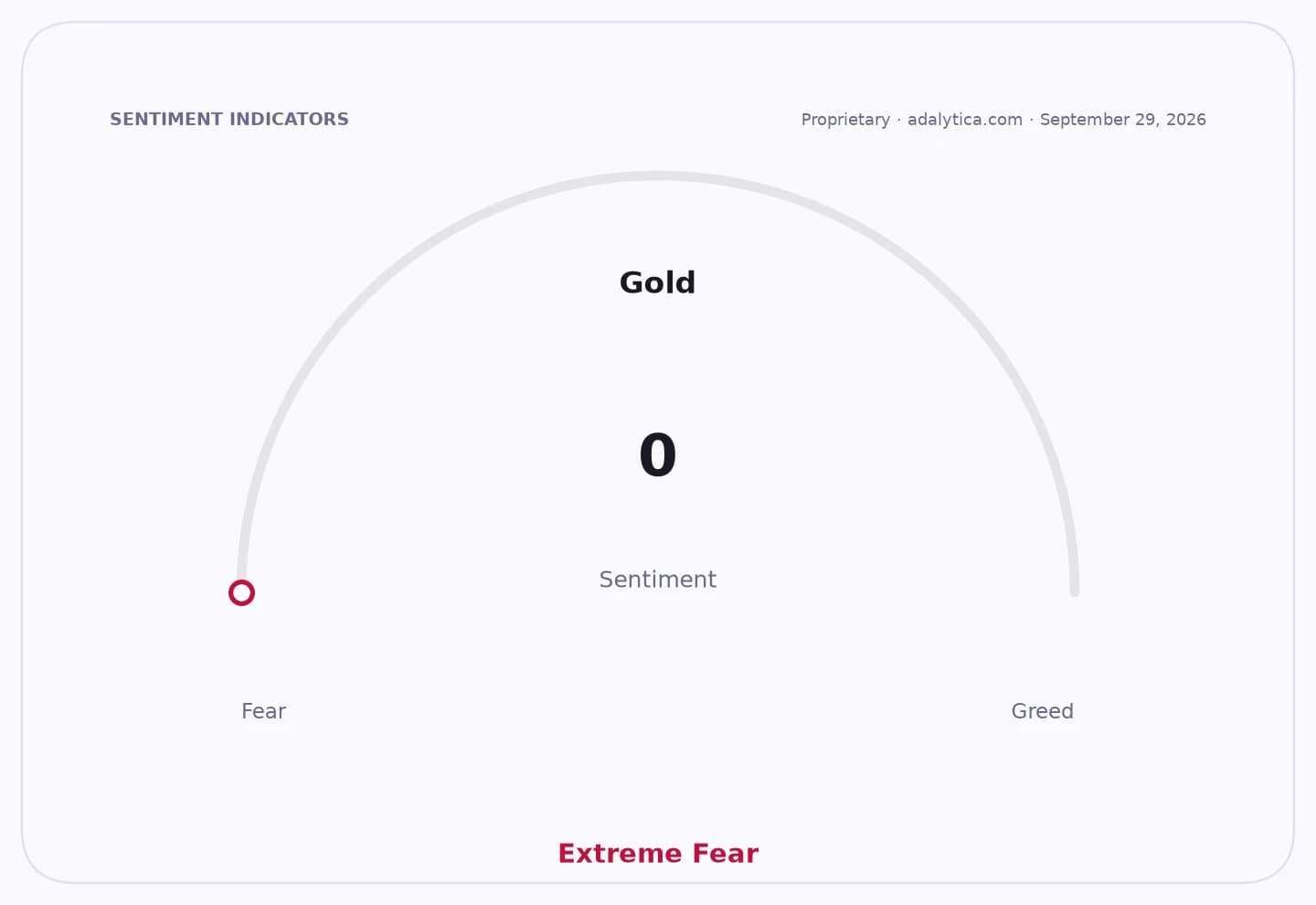
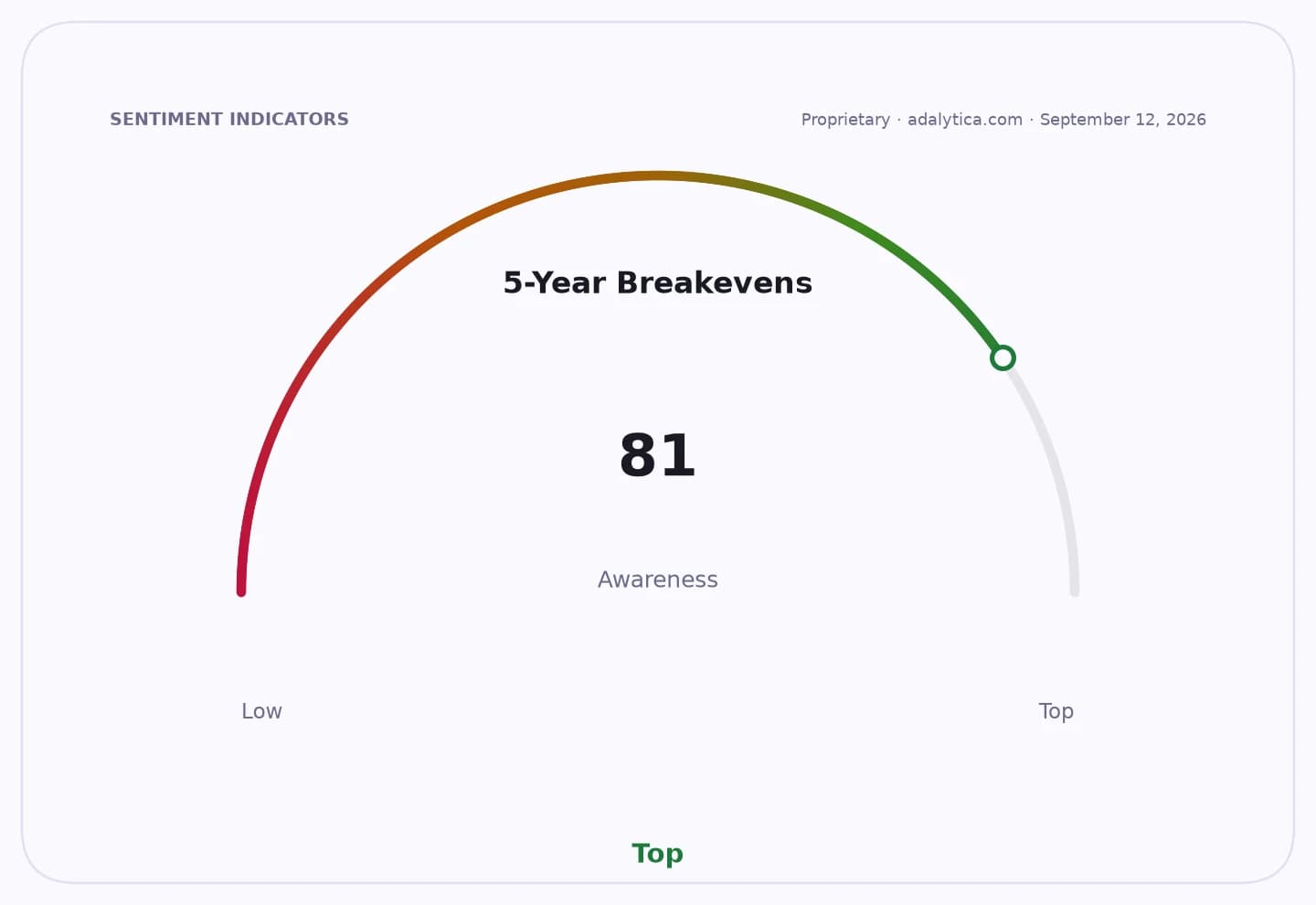
Ghana’s central bank is facing a harder trade-off as inflation climbs to 5% and foreign-exchange reserves come under pressure from a rise in gold bar hoarding and counterfeit currency activity that is siphoning liquidity from the formal economy.
Ghana Inflation, Reserves, and Cedi Pressure
That combination matters because reserves are the buffer that keeps the cedi stable, pays for imports and gives the Bank of Ghana room to defend the currency when external shocks hit. If reserve loss accelerates, the central bank has less firepower to smooth volatility just as price pressures are turning back up and global dollar conditions remain tight after the Federal Reserve’s latest rate increase.
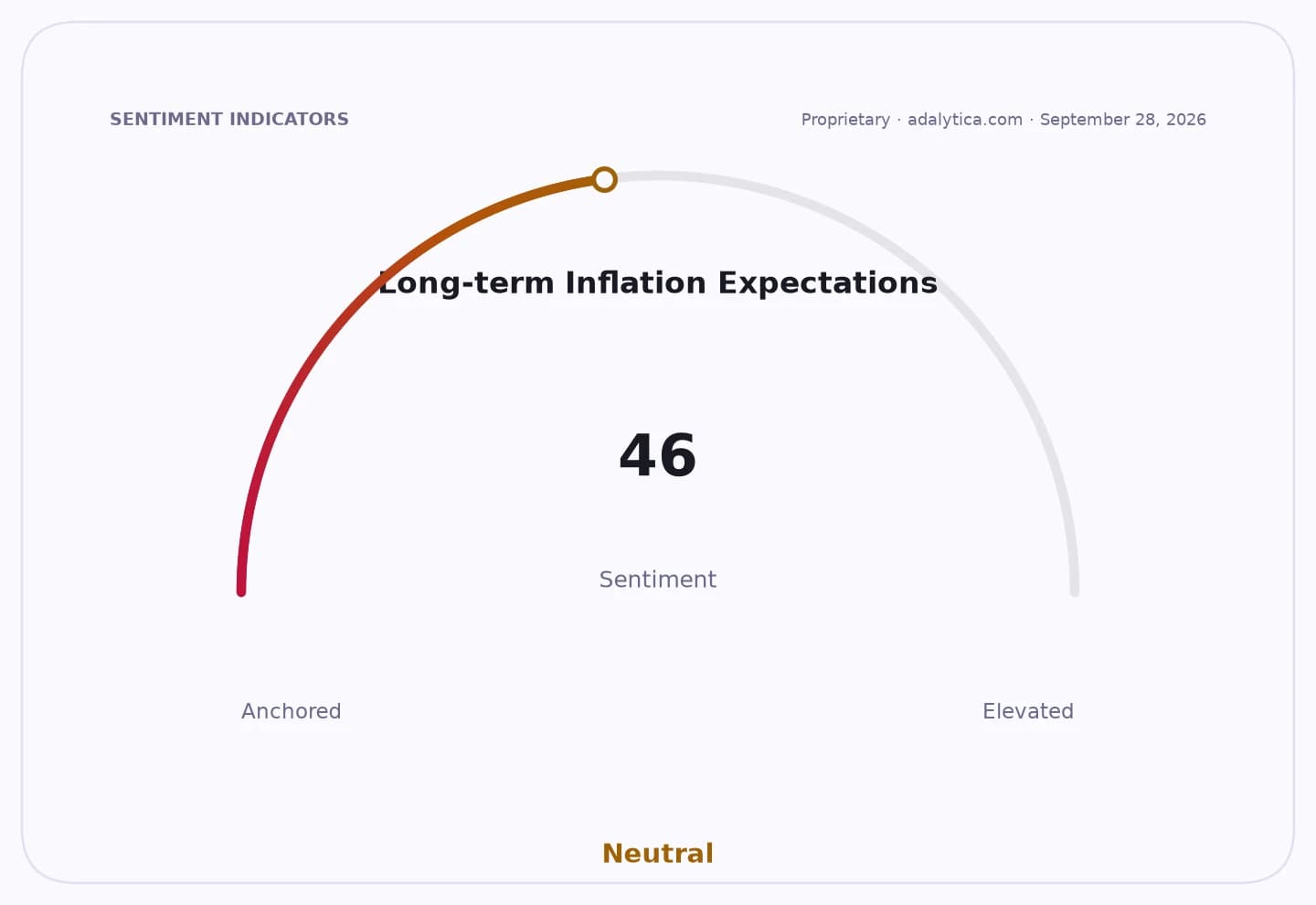
Sentiment IndicatorsⓘProprietary · adalytica.com · September 28, 2026
This is a snapshot — live sentiment, awareness and momentum for 130+ markets update continuously in the dashboard.Open AlphaPulse
The warning points to a familiar vulnerability in frontier markets: when confidence weakens, households and businesses shift into hard assets and cash alternatives, reducing the banking system’s grip on local liquidity. In Ghana’s case, gold is doing double duty as a store of value and a parallel monetary asset, which makes the reserve problem more than a balance-sheet issue. It becomes a transmission channel for stress in the cedi, import costs and domestic pricing.
For investors, that raises the premium on hard-currency earners and exporters while making purely domestic consumer exposure more fragile. Companies with dollar revenues, mining links or pricing power should hold up better than banks, importers and local retailers if the cedi comes under renewed pressure. The broader macro setup also reinforces the appeal of gold, which tends to benefit when confidence in local currency stability erodes.
The immediate market implication is that Ghana cannot afford to let inflation re-accelerate without risking a deeper strain on reserves. The central bank may have to keep policy tighter for longer, tolerate slower growth or lean more aggressively on administrative measures to defend the currency. None of those options is easy, and all of them tend to be negative for domestic demand.
The investment thesis is straightforward: Ghana is entering a phase where scarcity of foreign exchange matters more than headline inflation alone. If reserves keep leaking, the winners will be exporters, miners and select sovereign-risk hedges; the losers will be the businesses that depend on cheap imported inputs and a stable cedi. This is the kind of inflection point where the market often misprices liquidity risk until it becomes impossible to ignore.
| Entity | Gains | Losses |
|---|---|---|
| Gold miners/exporters | ▲Hard-currency earnings | ▼— |
| Cedi importers/retailers | ▲— | ▼Higher input costs |
| Bank of Ghana | ▲Policy urgency | ▼Reserve flexibility |
| Gold holders | ▲Inflation hedge | ▼Formal liquidity access |