Gold’s sharp correction looks less like the end of the bull case than a violent reset in positioning, with relentless central bank buying still underpinning the market even as speculative longs pull back and prices wobble around $4,000 an ounce.
Gold Falls Below $4,000 as Bull Case Holds
Gold
That is the key investment takeaway from the latest price action. Gold futures settled at $3,886.30 on Nov. 13, down 0.61% on the day, after slipping below the psychologically important $4,000 level in a week that still left the metal up 4.82% over seven days. The retreat has been painful for momentum traders, but it has also flushed out some of the froth that built during gold’s run to record territory earlier this year.
Sentiment Indicators
The bigger story is not the day-to-day chop. It is the collision between two forces that matter enormously for the next leg: official-sector demand remains strong, while speculative participation has shrunk. That combination tends to produce a market that is less euphoric, more volatile and ultimately more durable. In other words, the correction may be creating a better setup for long-term holders rather than ending the cycle.
The macro backdrop still favors hard assets. The U.S. 10-year Treasury yield has climbed to about 4.88%, while the fed funds rate is still near 3.88%, a reminder that real-rate uncertainty remains unresolved even after the recent selloff. The dollar also remains a major swing factor. Adalytica’s U.S. Dollar Trade Signals showed sentiment at 70, but with a sharp one-day drop in the latest reading, reinforcing the view that currency moves can still amplify gold’s swings rather than settle them.
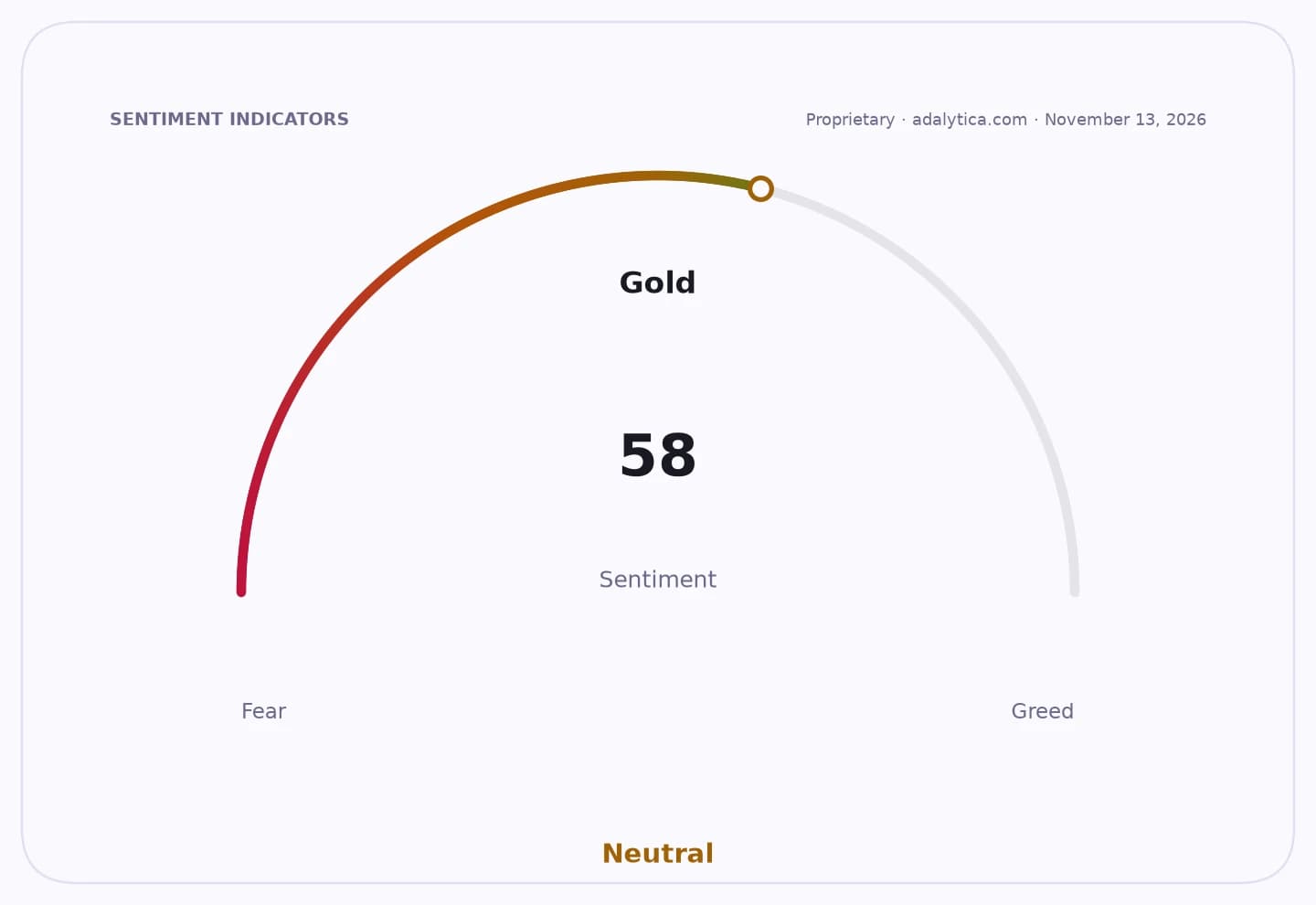
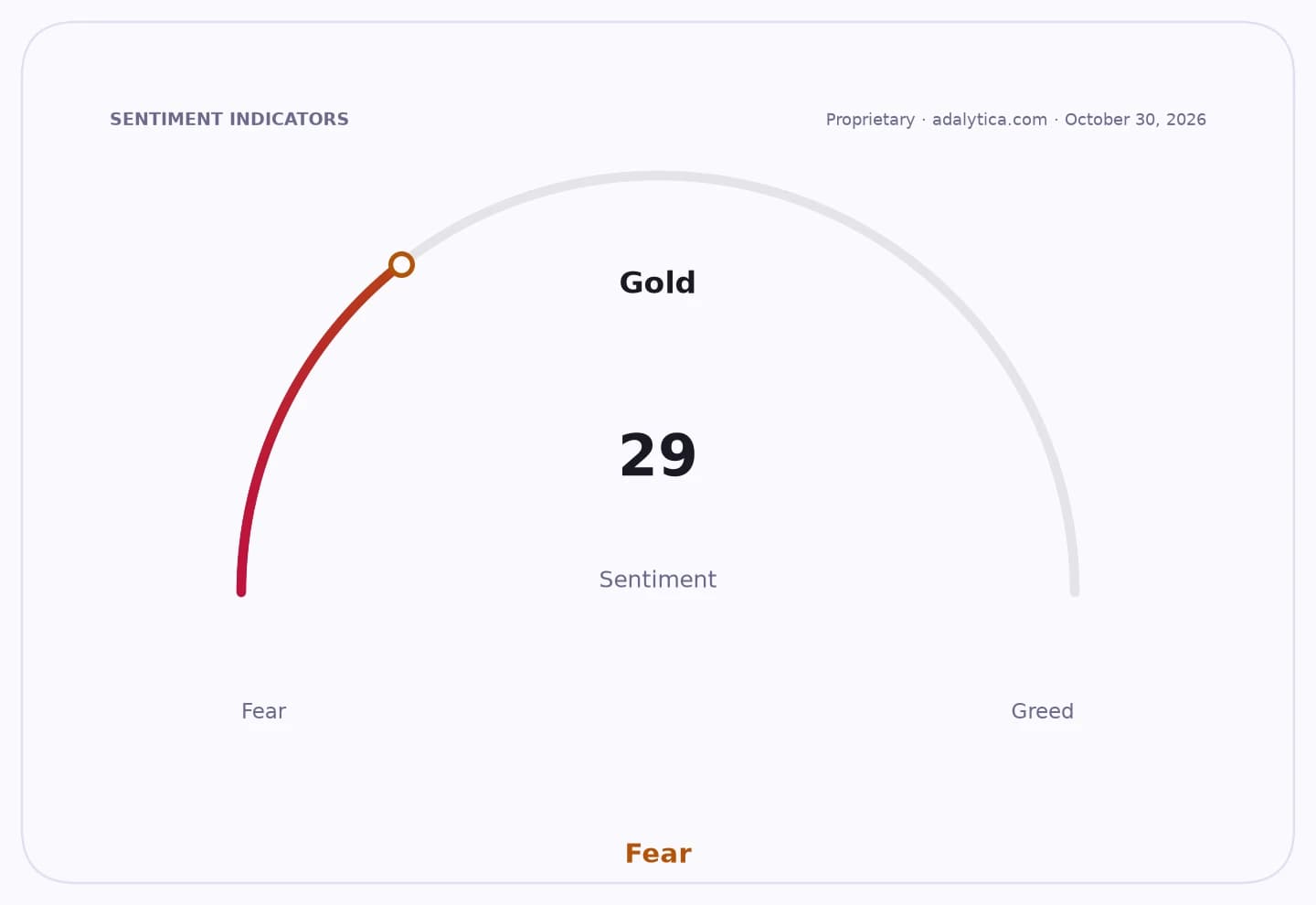
Technically, the market has clearly been damaged, but not broken. Gold futures are trading below both the 50-day moving average and the 200-day moving average, and RSI readings near 40 show the market is no longer overheated. The pattern is similar in bullion ETFs: GLD has slipped to $355.45, far below its 50-day average of $380.91, while the broader gold sentiment gauge on Adalytica has eased to 45, down 48 points over 30 days. That is not a sign of panic; it is a sign that enthusiasm has been cleaned out.
For investors, that matters because gold is rarely a straight-line trade. The market tends to reward patience when official buyers stay active and speculative accounts are forced to de-risk. Central banks have been the most important structural bid in bullion for the past two years, and as long as that bid remains intact, sharp pullbacks are more likely to reset the market than to reverse it.
The opportunity now is less about chasing a breakout and more about positioning for the next accumulation phase. Physical-backed vehicles such as GLD and PHYS remain the cleanest liquid expressions of the thesis, while miners would likely benefit later if bullion stabilizes and margins expand. But the first beneficiaries are the investors willing to buy when the tape looks broken and the narrative still sounds bruised.
If gold can hold the $3,800-$4,000 zone while central bank demand continues and speculative length stays light, the next move could be driven by sidelined capital rushing back in. For now, the market is saying the rally is damaged. The more important message is that the structural bull case is still alive.
| Entity | Gains | Losses |
|---|---|---|
| Central banks | ▲Lower entry costs | ▼Less urgency to buy |
| Long-term gold investors | ▲Better entry points | ▼Near-term volatility |
| Speculative longs | ▲Potential reset risk | ▼Forced de-risking |
| GLD / PHYS holders | ▲Recovery optionality | ▼Mark-to-market losses |