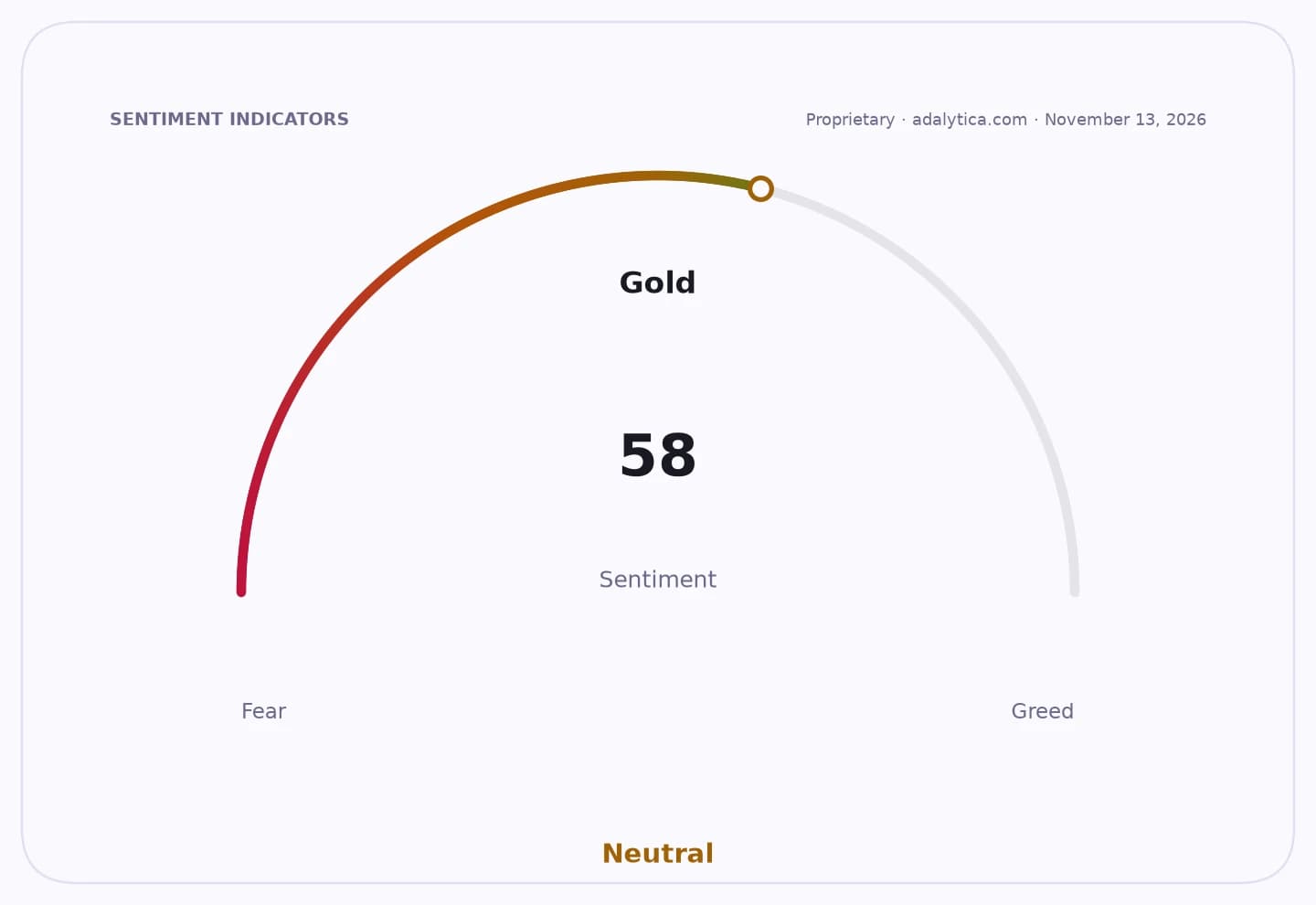
Gold prices in Vietnam fell sharply on Nov. 7, with SJC bars and 9999 rings losing as much as 2.3 million dong a tael as the domestic market tracked a weaker global bullion price and heavy profit-taking.
Vietnam gold prices fall as global bullion weakens
The drop matters because it comes after a rapid run-up that left many retail buyers exposed to wide dealer spreads and the risk of immediate losses if they need to sell back into the market. At a time when domestic selling prices are still being quoted near 140-141 million dong a tael, buy-sell gaps of 3 million to 4.5 million dong mean the first move in a correction can erase a significant part of any short-term gain, or deepen losses for late entrants.
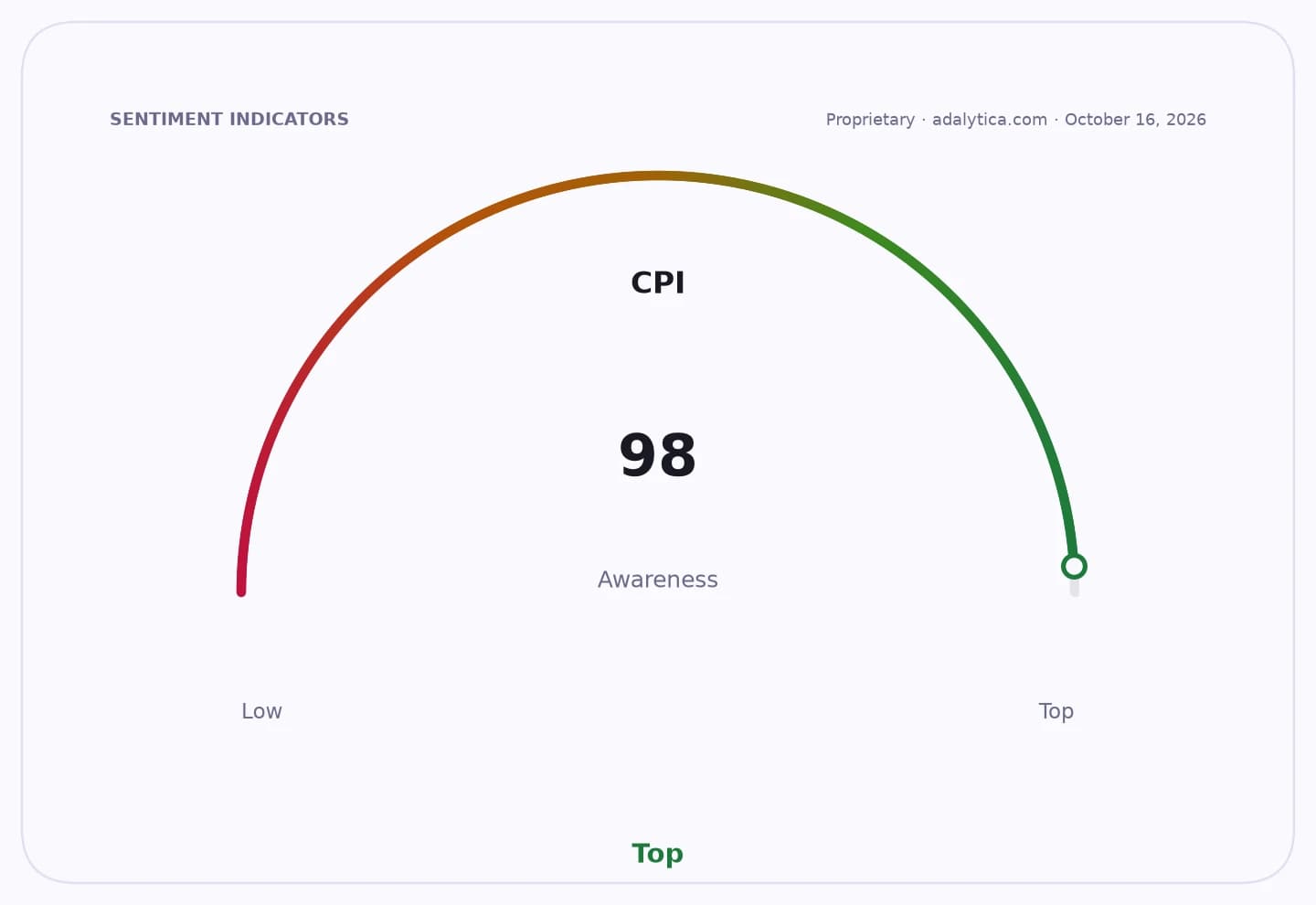
Sentiment Indicators
At the major Vietnamese bullion houses, SJC bars were marked down 1 million to 1.9 million dong a tael, while gold rings were cut by 1.5 million to 2.3 million dong. Bảo Tín Mạnh Hải and DOJI were quoting SJC at 138-141 million dong a tael, while Bảo Tín Minh Châu’s spread was even wider at 136.5-141 million dong. Gold rings at several brands were clustered around 136.5-140.5 million dong a tael, leaving little room for anyone who bought near the top to sell without taking a hit.
The domestic selloff is being driven by the same forces hitting international bullion. Spot gold was around $4,070 an ounce on Nov. 7, down about $10 from the previous session, after failing to hold the rebound that followed U.S. political noise earlier in the week. The bigger problem for gold is not politics but the Federal Reserve path: stronger-than-expected U.S. labor data has reinforced expectations that the Fed will stay cautious and keep real yields elevated for longer, raising the opportunity cost of holding non-yielding assets.
That has pushed the key psychological level at $4,000 an ounce into focus. The futures contract for gold was trading just above that area earlier in the week before slipping back, and technical readings show momentum has weakened after the rally from below $3,900 to a peak near $4,145. In conventional chart terms, the latest pullback has left gold below its recent highs and vulnerable to further liquidation if $4,000 gives way decisively.
For investors, the question is not whether gold remains a long-term hedge — it likely does, especially with U.S. fiscal debt above $40 trillion and lingering concerns over the dollar’s purchasing power — but whether this is a tradable dip or the start of a deeper reset. The bull case is that central-bank buying, persistent deficits and eventual Fed easing should keep structural demand intact. The bear case is that the market has run ahead of itself, with rate expectations still too optimistic and retail positioning vulnerable to a steeper washout.
In Vietnam, that calculus is even harsher because the spread between buying and selling prices remains unusually wide. For traders, the message is simple: catching the bottom is hard, but selling into a falling market after paying a 3 million-4.5 million dong premium is often more expensive than it looks. Unless global gold quickly stabilizes above $4,000 and U.S. rate expectations soften, domestic bullion is likely to stay under pressure.
| Entity | Gains | Losses |
|---|---|---|
| Buyers waiting for a dip | ▲Lower entry prices | ▼Risk of further downside |
| Recent retail gold holders | ▲Possible long-term hedge value | ▼Mark-to-market losses |
| Bullion dealers | ▲Wider spreads and turnover | ▼Slower investor demand |
| U.S. dollar and high yields | ▲Support from tighter Fed expectations | ▼None directly |