Gold eases to about $4,405 an ounce as firmer U.S. dollar tone and a rebound in Treasury yields sap demand for the non-yielding metal, even after a run that left bullion deeply extended by technical measures.
Gold Falls to $4,405 as Dollar and Yields Rise

The move leaves gold down 0.42% at 4,405.96 in indicative pricing, with the market consolidating after a powerful advance that pushed the metal into overbought territory on standard technical readings. The 50-day moving average for GLD now sits near 388.9, while the fund’s latest close at 406.77 is still well above the 200-day average of 415.44, showing the broader uptrend remains intact even as momentum cools.
Sentiment IndicatorsⓘProprietary · adalytica.com · September 8, 2026
This is a snapshot — live sentiment, awareness and momentum for 130+ markets update continuously in the dashboard.Open AlphaPulse
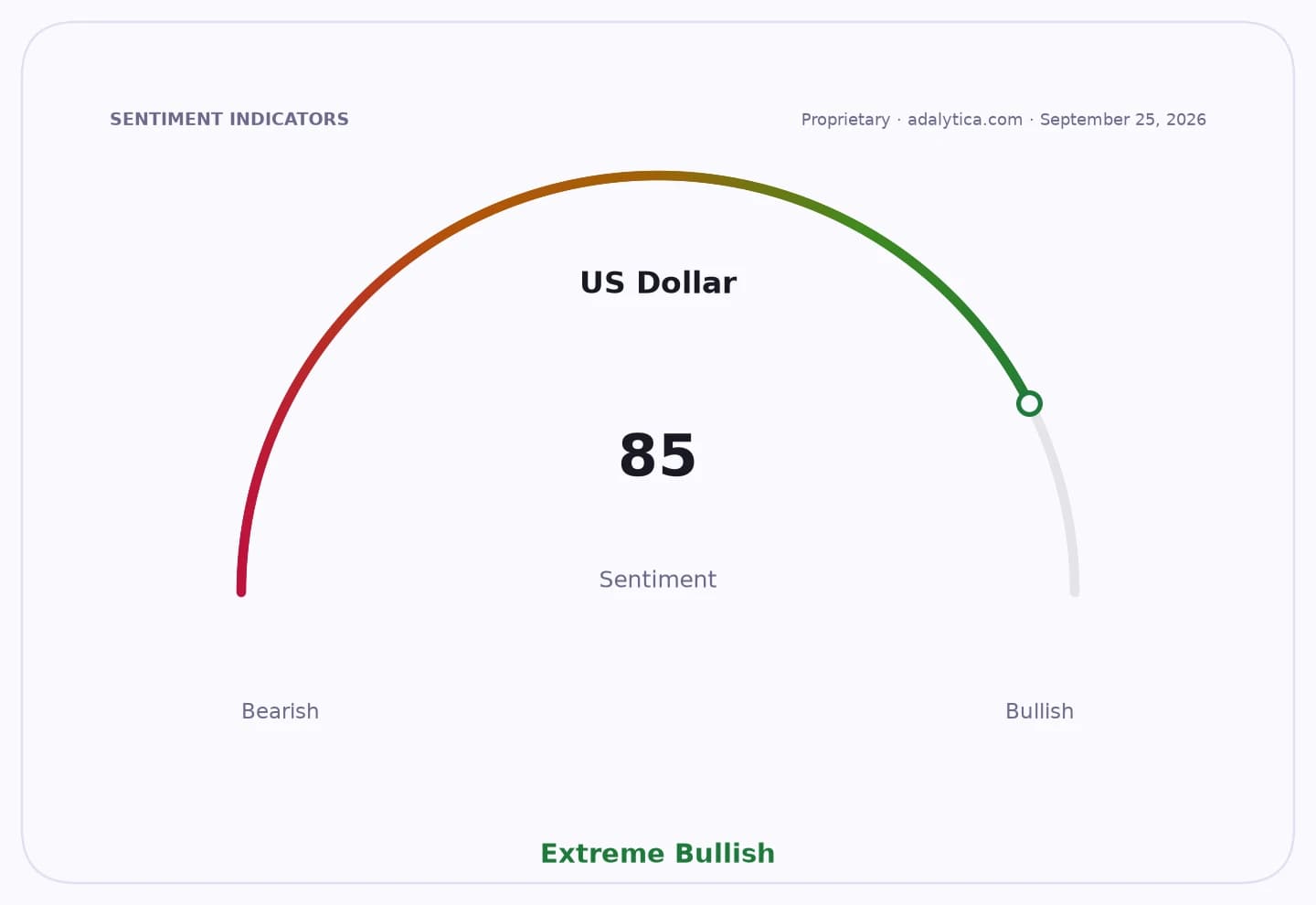
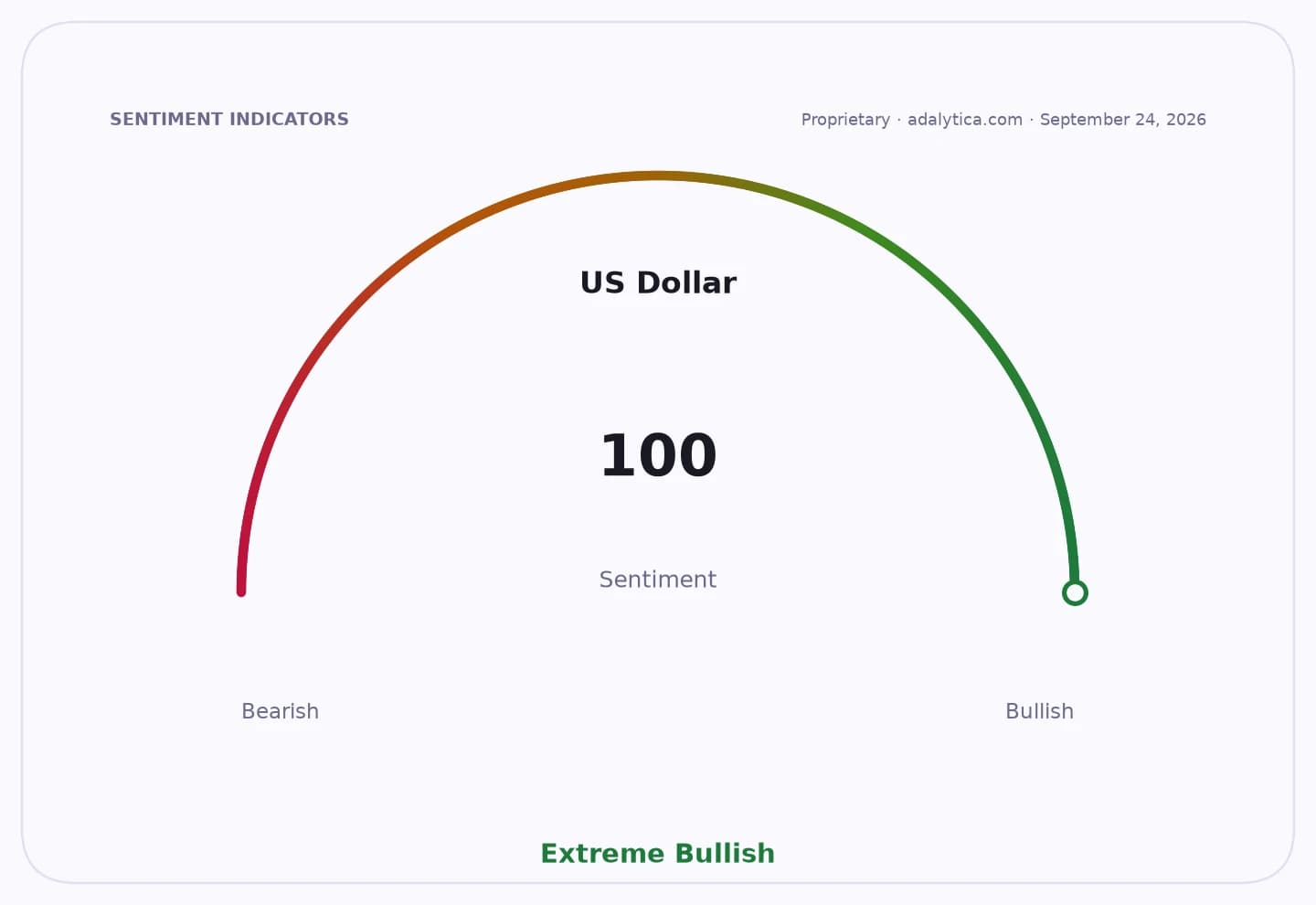
Investors are also watching the broader risk backdrop. Adalytica’s Gold Fear & Greed Index shows sentiment in “Fear” at 19, while awareness sits at an “Extreme Fear” reading of 5, a sign that traders remain cautious despite the metal’s recent strength. At the same time, the U.S. dollar trade signal is in “Greed” at 78, reinforcing pressure on dollar-priced commodities.
Gold’s pullback matters because it hits a market that has become a crowded hedge against policy uncertainty, inflation risk and geopolitical stress. When the dollar firms and yields rise, bullion’s appeal weakens on a relative-return basis, especially after sharp gains that have already pulled in momentum buyers and exchange-traded fund flows.
Mining shares are following the metal lower but remain outsized winners on the year. The VanEck Gold Miners ETF, GDX, slipped to 99.26 from 101.49, though it remains far above its 50-day average of 84.41, reflecting how much of the sector’s rerating is still intact.
The next catalyst is likely to come from U.S. macro data and Federal Reserve pricing, which will determine whether this is a brief pause in the rally or the start of a deeper correction. A further rise in yields or a stronger dollar would likely extend the pressure on bullion, while any renewed growth scare or dovish Fed repricing could quickly revive demand.
| Entity | Gains | Losses |
|---|---|---|
| U.S. dollar | ▲Improves purchasing power | ▼Loses less if rates fall |
| Treasury bears | ▲Benefit from higher yields | ▼Lose if yields retreat |
| Gold buyers | ▲Get a cheaper entry point | ▼Lose on mark-to-market value |
| Gold miners | ▲Support from still-elevated prices | ▼Margin pressure if bullion keeps falling |