Gold’s next big move may still be higher, even after a fresh round of interest-rate increases, because the forces that really matter for the metal — central-bank buying, weaker real yields and a search for alternatives to the dollar — are still working in its favor.
Gold Outlook: SocGen Sees $5,250 by Q3 2027

Société Générale is sticking with a bullish view on gold for the fourth quarter of 2026 and now sees the metal reaching $4,750 an ounce by year-end, then climbing to $5,000 in the second quarter of 2027 and $5,250 in the third quarter. At roughly $3,794 an ounce now, that implies meaningful upside if the bank’s thesis plays out.
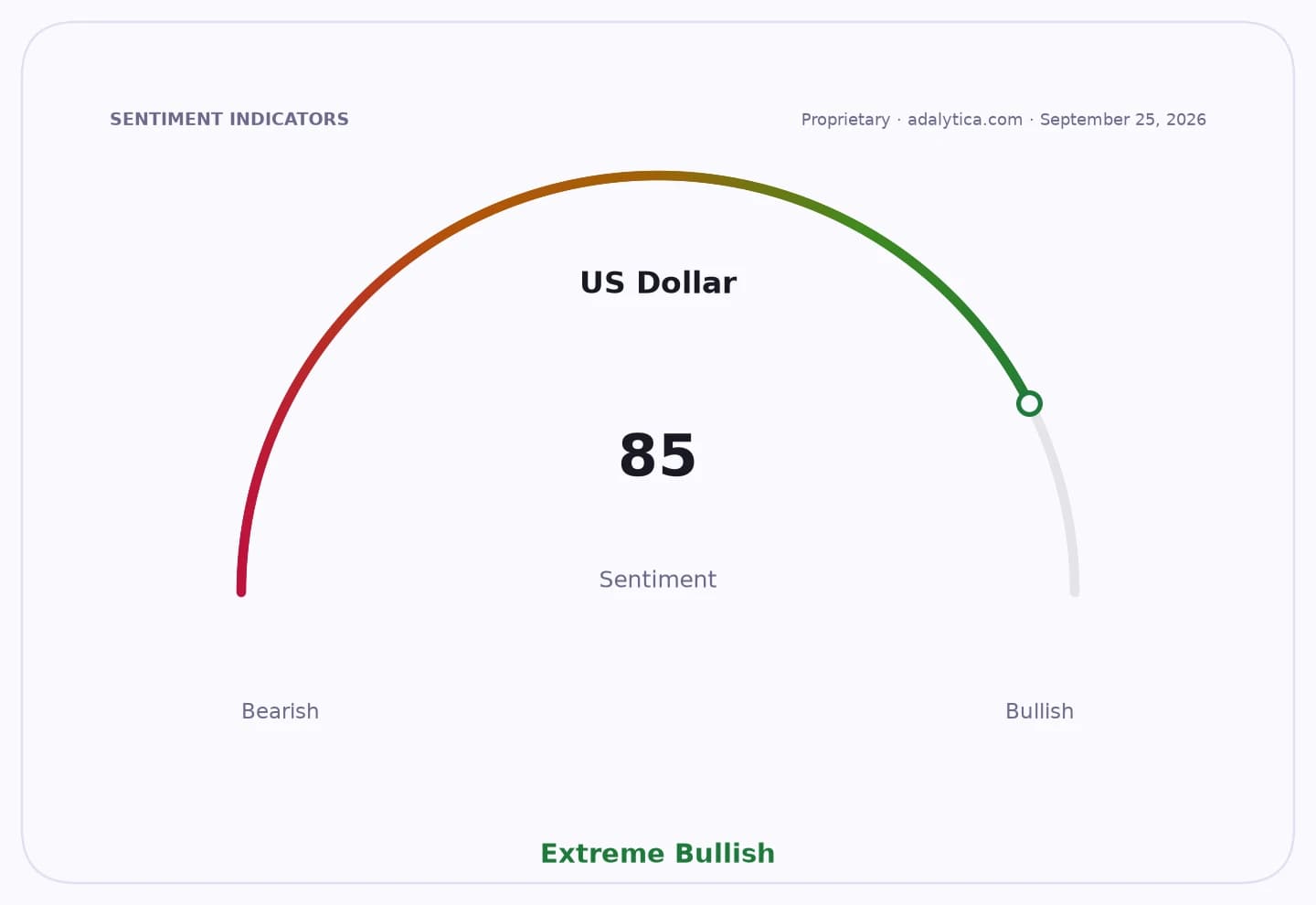
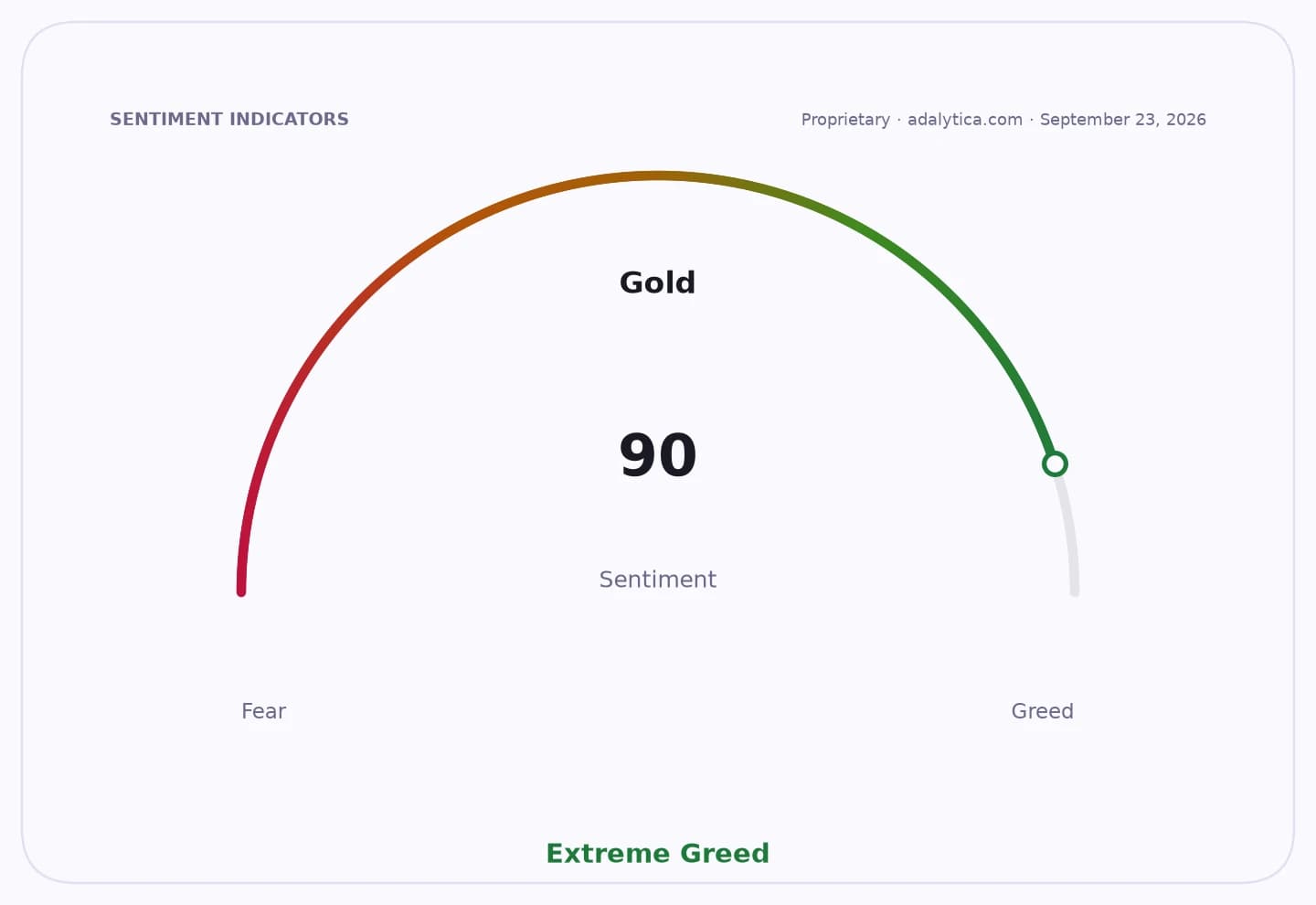
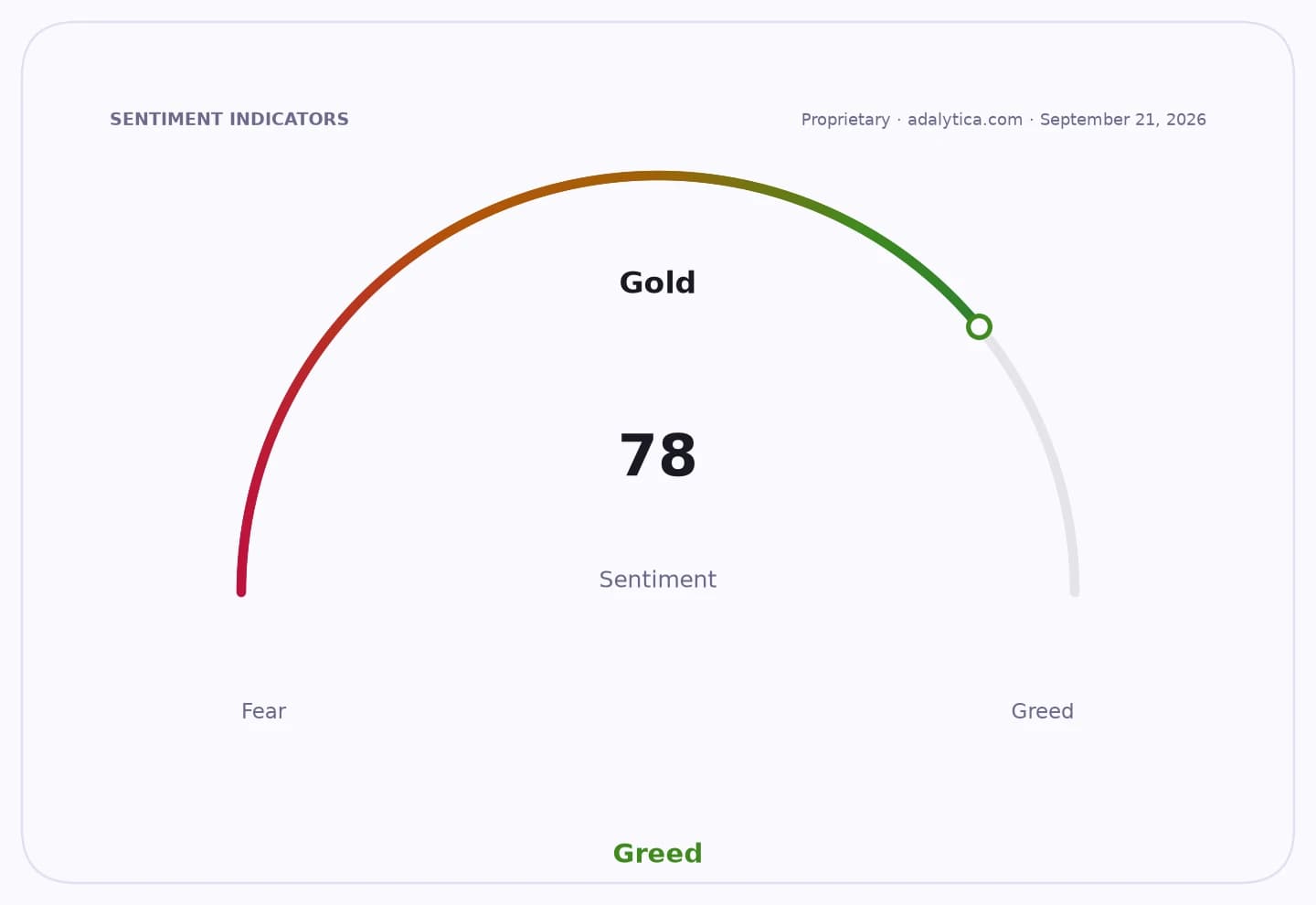
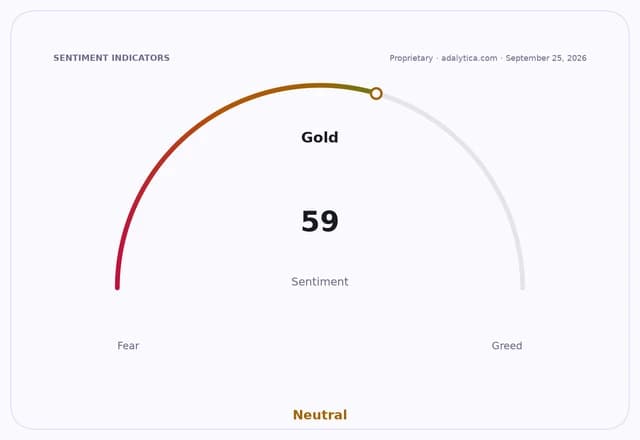
Sentiment IndicatorsⓘProprietary · adalytica.com · September 25, 2026
This is a snapshot — live sentiment, awareness and momentum for 130+ markets update continuously in the dashboard.Open AlphaPulse

That matters for investors because gold is not just another commodity in this cycle. It is behaving like a reserve asset in a world where central banks are still buying, ETF holdings have recovered to around 3,000 tons and confidence in fiat currencies is being tested by geopolitics, fiscal strain and a still-uncertain inflation outlook. In other words, this is not simply a short-term trade on rate cuts or economic fear. It is a longer structural bid.
The bank’s argument is straightforward: even though the U.S., Europe and Japan have recently tightened policy again, that does not automatically crush gold if inflation stays sticky and real rates drift lower over time. Gold does not pay interest, so what matters most is the opportunity cost of holding it. If real yields ease and the dollar weakens, the case for bullion improves — especially when official sector demand remains firm.
That backdrop helps explain why gold has repeatedly found buyers on pullbacks. The metal hit an all-time high of $5,416.40 earlier this year amid geopolitical stress, and large banks have been revising targets higher as the rally broadens. Morgan Stanley lifted its 2027 target above $5,000 in August, after an earlier $4,450 target for late 2026 was reached ahead of schedule.
For market participants, the bigger message is that gold’s bull case is no longer just about panic buying. It is increasingly about portfolio construction. Société Générale kept gold at 10% of its multi-asset mix and raised equities while trimming government bonds, effectively endorsing a more inflation-resistant, commodity-friendly allocation than the classic 60/40 model.
That has implications beyond bullion itself. Gold miners, broad commodity funds and even the biggest gold ETFs could benefit if institutional and retail investors continue to rotate toward hard assets. At the same time, bondholders and dollar bulls may find that every new rate hike is less helpful than it once was if inflation stays ahead of policy and investors keep treating gold as a hedge against policy credibility.
Short term, gold may remain volatile — the recent swings in GLD and the broader market show how quickly sentiment can shift. But for long-term investors, the message from Société Générale is clear: the gold story is still alive, and the next phase could be driven more by persistent demand than by fear alone. That makes bullion and quality gold exposure worth keeping on the watchlist for patient investors.
| Entity | Gains | Losses |
|---|---|---|
| Gold bulls | ▲Higher price targets | ▼Near-term volatility |
| Central banks buying gold | ▲Reserve diversification | ▼Dollar dominance |
| Gold ETFs and miners | ▲Stronger investment demand | ▼Bond proxies |
| Government bonds | ▲None | ▼Relative appeal as gold rises |