Gold rebounded in domestic trade on Wednesday, but the move only partially offset a sharp three-day decline that had taken 22-carat prices to a seven-week low and underscored how quickly bullion is being repriced as U.S. rates, the dollar and inflation expectations shift.
Gold rebounds in India after three-day decline

In India, 22-carat gold rose Rs 10 to Rs 14,010 a gram, or Rs 1,12,080 a sovereign, after falling Rs 135 a gram the previous day and losing Rs 2,500 over three sessions. Eighteen-carat gold also gained Rs 10 to Rs 11,780 a gram. Silver was unchanged at Rs 250 a gram, suggesting the latest bounce was limited to bullion and not yet broad-based across precious metals.
Sentiment IndicatorsⓘProprietary · adalytica.com · September 30, 2026
This is a snapshot — live sentiment, awareness and momentum for 130+ markets update continuously in the dashboard.Open AlphaPulse

The bigger driver remains global. Spot gold in overseas trade has been under pressure as the U.S. dollar strengthens and Treasury yields climb, making non-yielding assets less attractive. The 10-year Treasury yield was last around 5.32%, a level that reinforces the opportunity cost of holding gold. Brent and U.S. crude also remain volatile, but the key market message is that higher real rates are forcing investors to reassess how much premium to pay for safety.
That matters economically because gold is both a household purchasing staple in India and a macro barometer for inflation, rates and currency moves. When bullion retreats, the immediate effect is on consumer buying power and jewellery demand, but the wider signal is that markets are leaning toward tighter financial conditions rather than a rapid pivot to easier policy. The latest move also reflects caution ahead of fresh U.S. inflation data, which could keep the Federal Reserve on a restrictive path.

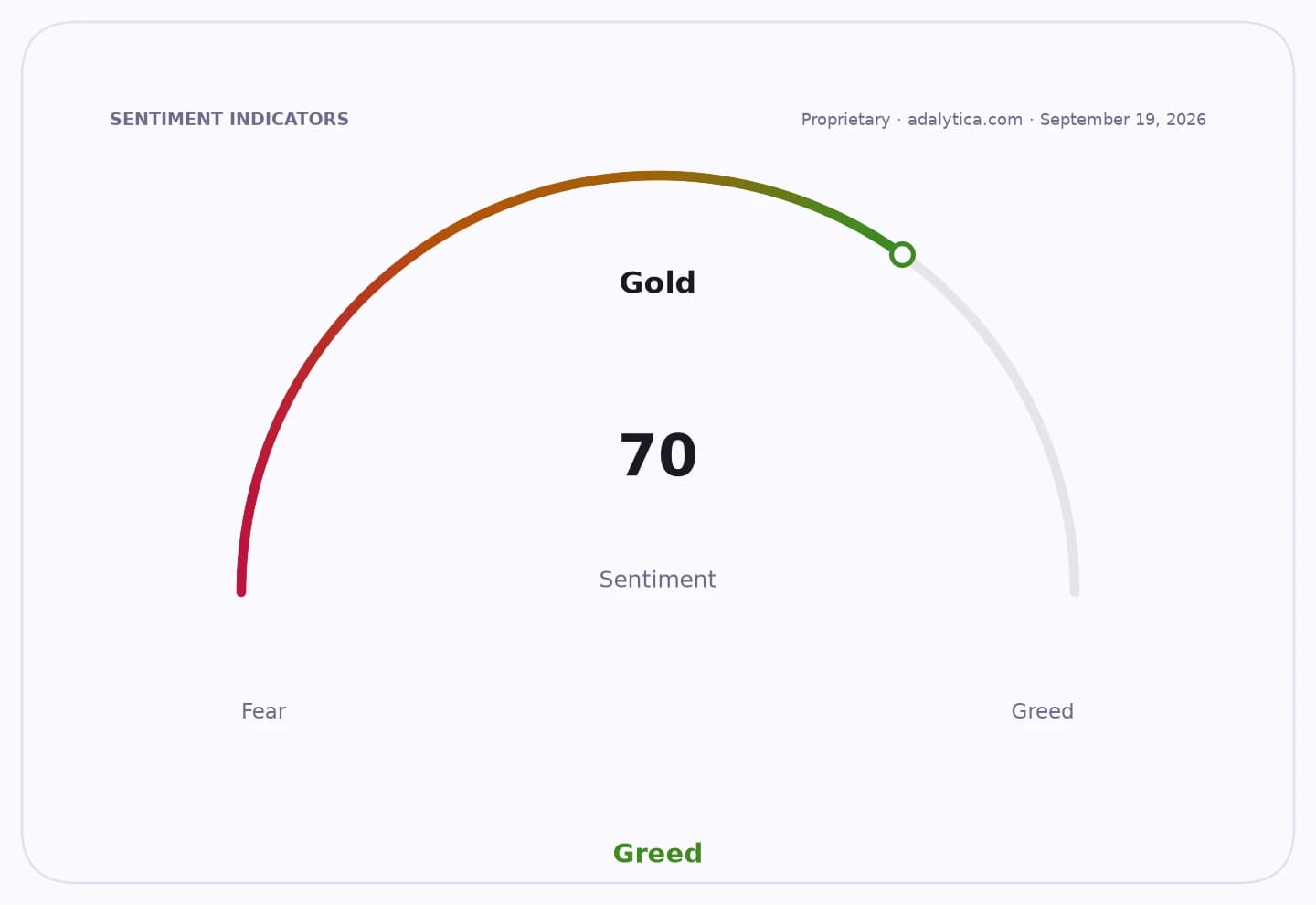
For investors, the price action is a warning against extrapolating the earlier rally. Gold has moved from extreme strength to correction territory, with the gold ETF proxy GLD still below its 50-day and 200-day moving averages and its RSI showing a weak setup. Adalytica’s Gold Fear & Greed Index is at Extreme Fear, while its U.S. dollar signal also shows Extreme Fear for gold bulls, implying that the market has swung from exuberance to defensive positioning very quickly.
The near-term narrative is straightforward: gold is no longer being driven by momentum alone, but by macro cross-currents. A softer inflation print or a pullback in U.S. yields could trigger another rebound, especially given persistent geopolitical uncertainty. But if the dollar stays firm and bond yields remain elevated, bullion is likely to stay capped, keeping pressure on importers while creating more selective opportunities for traders than for long-only buyers.
| Entity | Gains | Losses |
|---|---|---|
| U.S. dollar | ▲Higher relative appeal | ▼Gold buyers |
| Treasury yields | ▲Income advantage | ▼Non-yielding bullion |
| Indian consumers | ▲Slightly cheaper entry point | ▼Existing gold holders |
| Gold traders | ▲Volatility opportunities | ▼Momentum longs |