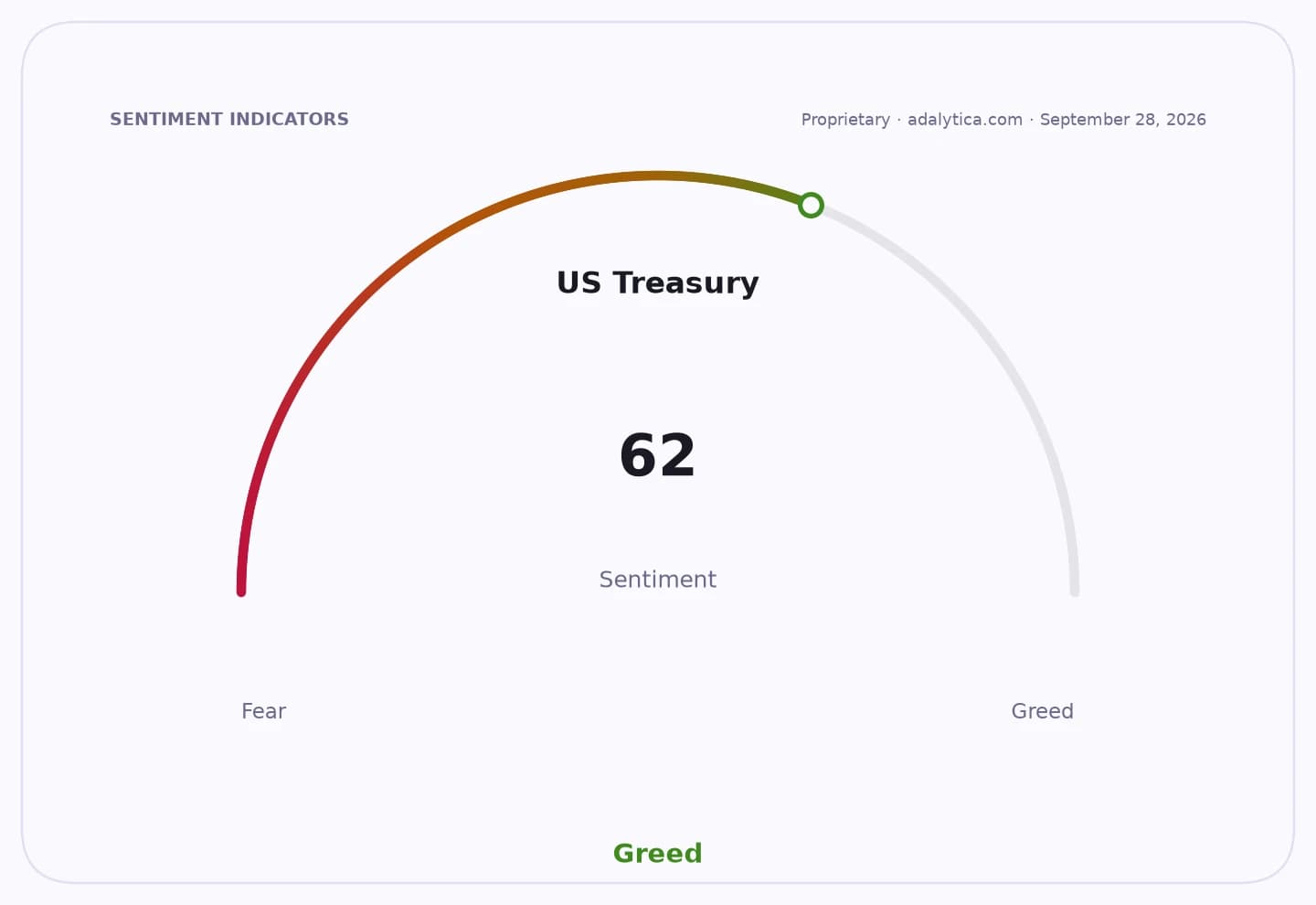
The US dollar’s sharp September rally has not shaken FX forecasters out of their long-held bearish stance, with a Reuters poll showing strategists still expect most of the greenback’s gains to fade over the next year even after a rise of more than 3% since early September.
US Dollar Rally Leaves Forecasters Bearish
That matters because the dollar’s move has become a barometer for global risk appetite, US rate expectations and the strain building across bond markets. The Reuters poll suggests economists still see the recent surge as a near-term overshoot rather than the start of a durable re-pricing.
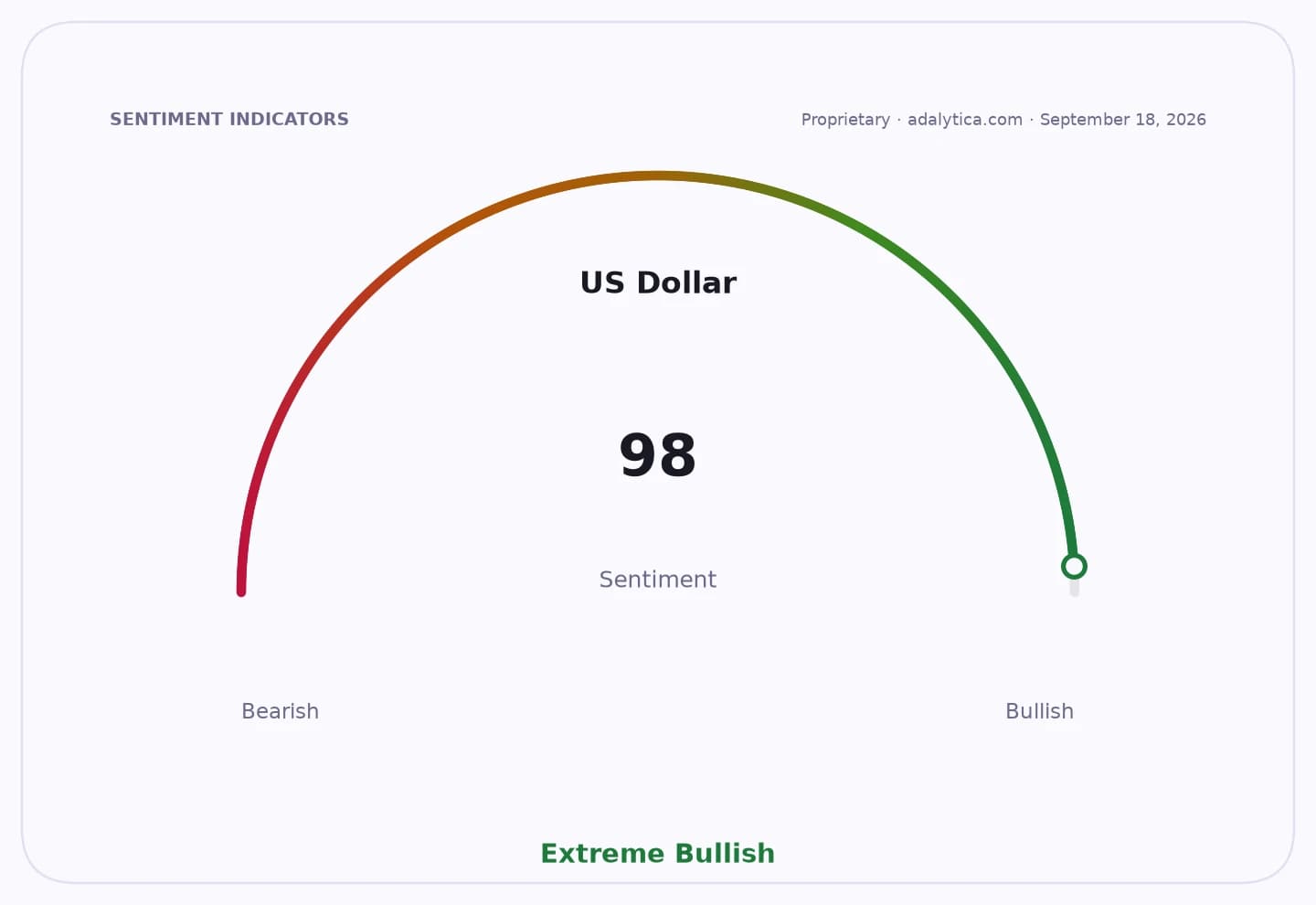
Sentiment IndicatorsⓘProprietary · adalytica.com · October 6, 2026
This is a snapshot — live sentiment, awareness and momentum for 130+ markets update continuously in the dashboard.Open AlphaPulse
Nearly 70 forecasters in the Sept. 30-Oct. 2 survey kept their weaker-dollar forecasts largely intact, predicting the euro at $1.14 in one month, $1.15 in three and six months, and $1.16 in a year. But 80% of respondents said the dollar was more likely to beat three-month forecasts than miss them, underscoring how far the short-term outlook has shifted even as the longer-term call remains unchanged.
The backdrop is a jump in US yields and renewed bets on tighter Federal Reserve policy. The dollar has been supported by a September Fed rate hike, with futures at one point pricing nearly four more, while Treasuries had their worst selloff since 1994 last quarter and benchmark 10- and 30-year yields climbed to near 25-year highs.
US Dollar — 30-day sentimentadalytica.com
Explore this data interactively — full history, time series and cross-market comparisons.Open AlphaPulse
For investors, that combination has kept the dollar bid in the short run and pressured rate-sensitive assets. The Invesco DB US Dollar Index Bullish Fund, which tracks the greenback against major currencies, was trading at 28.99 on Oct. 5 after a recent run that pushed it above both its 50-day and 200-day moving averages, while its RSI readings showed the move had become stretched.
Still, the poll shows strategists continue to bet the dollar’s strength cannot last if higher rates start to slow the US economy. TD Securities’ Jayati Bharadwaj and HSBC’s Paul Mackel both said the currency could stay firm in the near term, but they expect weakness to reassert itself later, with Mackel calling the dollar “the cleanest dirty shirt” only through the first half of 2027.
The wider narrative is that markets are still grappling with a US exception. Inflation remains above the Fed’s 2% goal, oil is still above $100 a barrel, and geopolitical strain around the Iran war is keeping pressure on prices, but the consensus view is that those forces are not enough to overturn the medium-term bearish case for the dollar.
That leaves the dollar’s next leg tied to whether the Fed keeps surprising markets on the hawkish side and whether the US economy continues to outgrow peers. If bond yields stay elevated and capital keeps flowing into US assets, the dollar may hold up longer than forecasters expect — but the Reuters poll suggests most still see that as a temporary detour rather than a regime change.
| Entity | Gains | Losses |
|---|---|---|
| US dollar bulls | ▲Near-term upside | ▼Medium-term reversal risk |
| Euro and yen traders | ▲Potential rebound | ▼Ongoing dollar pressure |
| US rate hawks | ▲Stronger policy support | ▼Risk of tighter financial conditions |
| Dollar bears | ▲Long-term thesis intact | ▼Recent rally pain |