Gold’s relentless surge is now hitting Japan’s tourism attractions, forcing one of the country’s best-known gold exhibits to shut down and squeezing businesses that rely on the metal’s novelty to draw visitors.
Gold Price Surge Shuts Toi Gold Mine Exhibit
The biggest development is not just that gold has climbed above 20,000 yen a gram for the first time, but that the price has become high enough to reshape local tourism economics. At Tanaka Kikinzoku Kogyo’s benchmark, the retail price reached a record 20,324 yen a gram on Wednesday, roughly doubling over the past two years as geopolitical tensions and investor demand keep supporting bullion. That kind of move turns gold from a museum piece and souvenir theme into a liability.
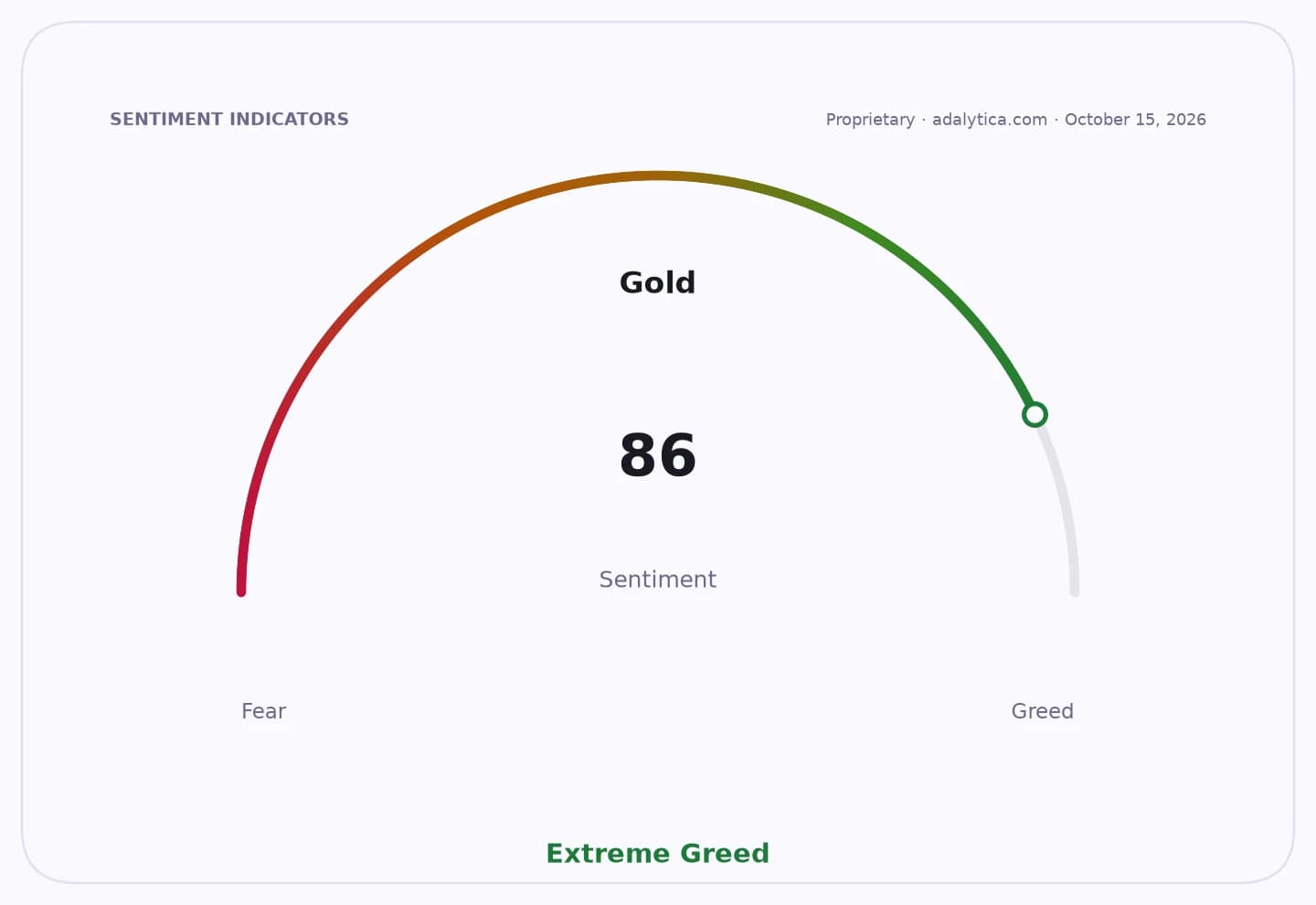
Sentiment IndicatorsⓘProprietary · adalytica.com · October 16, 2026
This is a snapshot — live sentiment, awareness and momentum for 130+ markets update continuously in the dashboard.Open AlphaPulse
That is why the Toi Gold Mine in Izu, Shizuoka prefecture, ended the display of its 250-kilogram gold nugget at the end of July after about two decades. When the nugget went on show in 2005, it was worth about 400 million yen. By the final day, its value had ballooned to 4.363 billion yen, around 11 times higher. The mine had insured the nugget against theft, but the cost burden of that coverage had become too heavy.
For investors, the story matters because it shows how a powerful macro move can ripple into unexpected corners of the real economy. Gold’s rise is already benefiting miners and exchange-traded funds tied to bullion, but it is also creating second-order winners and losers in tourism, retail and local attractions. High prices make gold-related experiences more expensive to insure, harder to display and more vulnerable to theft risk, which can crimp visitor traffic and margins for operators that built their pitch around precious-metal novelty.
The pressure is visible beyond the exhibit hall. Gold panning experiences remain popular, but they too are exposed to the same pricing shock, while even gold-themed sweets and souvenirs are likely to face higher input costs and weaker affordability if bullion stays elevated. That is a reminder that a rally in a hard asset can filter into soft-demand businesses, especially in a country like Japan where consumers are price sensitive and tourism operators compete on value and uniqueness.
The market message is clear: gold’s rally is no longer just a hedge against uncertainty, it is an economic force. If bullion keeps setting records, expect more of these exhibition pullbacks, higher operating costs for gold-themed attractions and continued support for the upstream names that benefit from expensive metal rather than display it.
The winners are the miners and bullion holders; the losers are tourism operators and attractions that depended on gold as a crowd puller. For investors, the best positioning remains on the asset that benefits from scarcity and fear, not on the businesses forced to insure and showcase it.
| Entity | Gains | Losses |
|---|---|---|
| Gold miners | ▲Higher realized prices | ▼ |
| Bullion ETFs and holders | ▲Mark-to-market gains | ▼ |
| Toi Gold Mine and similar attractions | ▲ | ▼Higher insurance costs, weaker exhibits |
| Tourism operators tied to gold themes | ▲ | ▼Lower margins, higher theft risk |