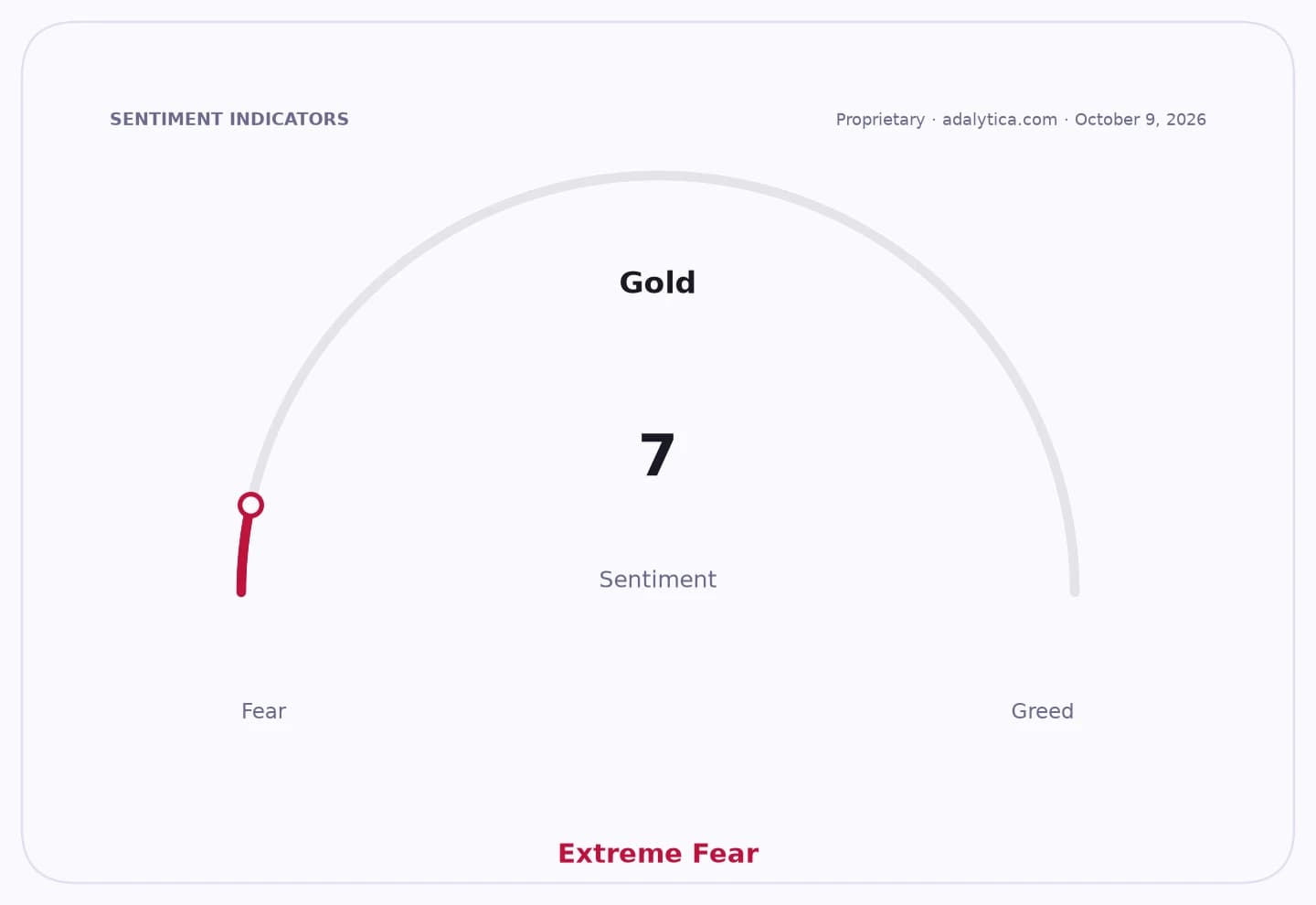
Gold prices fell sharply in Vietnam on Oct. 14, with major brands cutting selling prices by as much as 1 million dong per tael, after global bullion retreated on stronger U.S. yields and rising expectations the Federal Reserve will keep policy tight into year-end.
Gold Prices Fall in Vietnam as U.S. Yields Rise
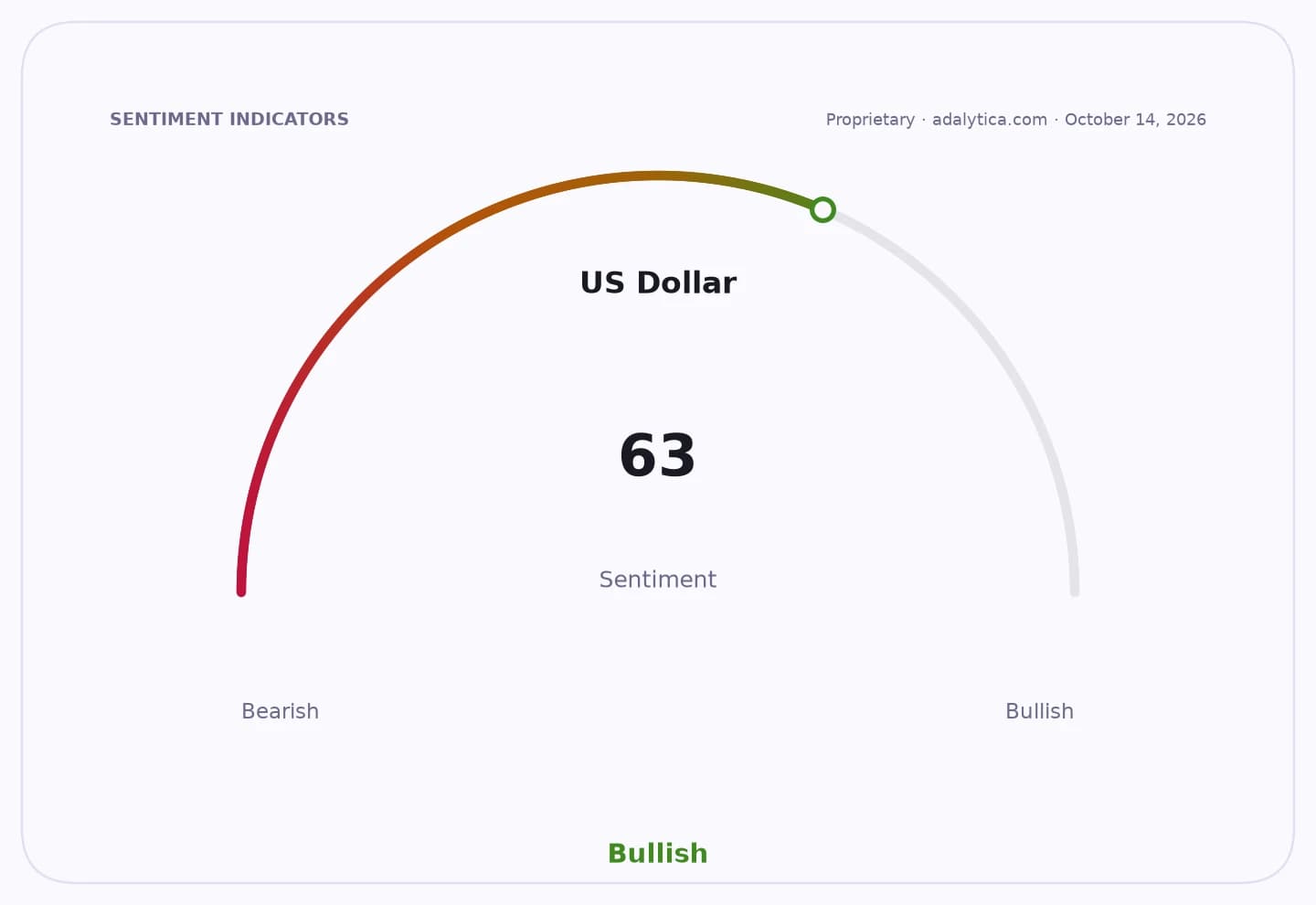
The move matters because gold’s recent rally has been built on the idea that central banks will eventually have to ease. A market now pricing an 88% chance of a Fed rate increase in December is forcing investors to reassess that view, lifting the opportunity cost of holding non-yielding bullion and keeping pressure on local prices that have been trading at elevated absolute levels.
Sentiment IndicatorsⓘProprietary · adalytica.com · October 14, 2026
This is a snapshot — live sentiment, awareness and momentum for 130+ markets update continuously in the dashboard.Open AlphaPulse
At 9 a.m. in Hanoi, SJC listed its gold bars at 140.3 million-143.3 million dong per tael, down 1 million dong from the previous session. SJC’s 9999 rings were also cut by 1 million dong to 139.8 million-142.8 million dong per tael. PNJ trimmed its prices by the same amount, while Bao Tin Minh Chau and Bao Tin Manh Hai moved more unevenly but still showed softer trading, underscoring that domestic dealers were following a weaker global benchmark rather than driving the market themselves.
Internationally, spot gold fell $15.3 an ounce to $4,155.5 by mid-morning in Vietnam time. The decline came as investors reduced exposure ahead of U.S. inflation data, while Treasury yields remained high and the dollar hovered near a 1.5-year peak. The 10-year Treasury yield at 5.219% keeps real returns on competing assets attractive, which typically weighs on precious metals even when geopolitical risk remains elevated.
DGS10 — macro contextadalytica.com
Explore this data interactively — full history, time series and cross-market comparisons.Open AlphaPulse
That geopolitical support has not disappeared. Tensions in the Middle East remain a backstop for haven demand, but for now they are being overwhelmed by rate expectations and the dollar. Traders are now waiting for September CPI and PPI, import and export price figures later in the week, and comments from Fed Chair Kevin Warsh, all of which could sharpen expectations for the December meeting and determine whether gold’s correction deepens or stabilizes.
Technically, the ETF proxy for bullion, SPDR Gold Shares, has also weakened. GLD closed at $375.08 on Oct. 14, below its 50-day moving average of $397.46 and 200-day moving average of $415.14, with RSI readings in the mid-30s and a negative MACD reading, suggesting momentum has rolled over after an extended run-up. That does not rule out a rebound if CPI comes in soft, but it does show the market is no longer rewarding momentum buyers.
For investors, the immediate question is whether the current pullback is a pause in a longer bull trend or the start of a deeper re-pricing. Bulls still point to elevated geopolitical risk and the possibility that weaker inflation data could push the dollar and real yields lower. Bears argue that if inflation stays sticky, the Fed may stay tighter for longer, forcing gold to give back more of this year’s gains.
The next catalyst is straightforward: softer U.S. inflation would likely revive bullion demand, while a hot print could extend the selloff and widen the gap between domestic Vietnamese prices and global benchmarks.
| Entity | Gains | Losses |
|---|---|---|
| Bullion buyers | ▲Lower entry prices | ▼Recent paper gains |
| Vietnamese consumers | ▲Cheaper local gold | ▼Holders of high-cost inventory |
| Fed hawks / higher rates | ▲Stronger policy case | ▼Gold bulls |
| Gold miners / dealers | ▲Trading volume in volatility | ▼Spot-price momentum |