Gold prices in Vietnam were unchanged on Oct. 8 even as the international market extended its slide, underscoring a sharp divergence between domestic retail pricing and the global bullion trend that investors should not ignore.
Vietnam gold prices flat as global bullion slides
At 10 a.m. local time, SJC kept its gold bar price at 140 million dong to 143 million dong per tael, while SJC 9999 gold rings were also flat at 139.5 million dong to 142.5 million dong. DOJI, PNJ, Bao Tin Minh Chau and Bao Tin Manh Hai likewise left prices unchanged, keeping Vietnam’s retail market pinned near record-high levels even as world bullion retreated to about $4,132 an ounce, down 31.2 dollars from the previous session.
Sentiment IndicatorsⓘProprietary · adalytica.com · October 9, 2026
This is a snapshot — live sentiment, awareness and momentum for 130+ markets update continuously in the dashboard.Open AlphaPulse
That split matters because it shows the local market is no longer being driven purely by the international spot price. Vietnam’s gold bar and ring prices are staying elevated despite the global pullback, reflecting sticky domestic demand, wide bid-ask spreads and a retail market that remains disconnected from overseas moves. For households, that means the cost of entering the market is still extremely high. For traders, it means local prices can lag global weakness and remain vulnerable to a sudden repricing if the international selloff deepens.
The global decline is being powered by a stronger dollar and higher U.S. Treasury yields, both of which raise the opportunity cost of holding non-yielding bullion. The U.S. dollar index stood at 102.25, while the 10-year Treasury yield was 5.307%, a combination that has encouraged profit-taking out of gold-backed funds. CME FedWatch still shows markets are not pricing a rate hike this month, but they are assigning an 86% probability to one in December, keeping pressure on the metal as investors lean toward assets that generate income.
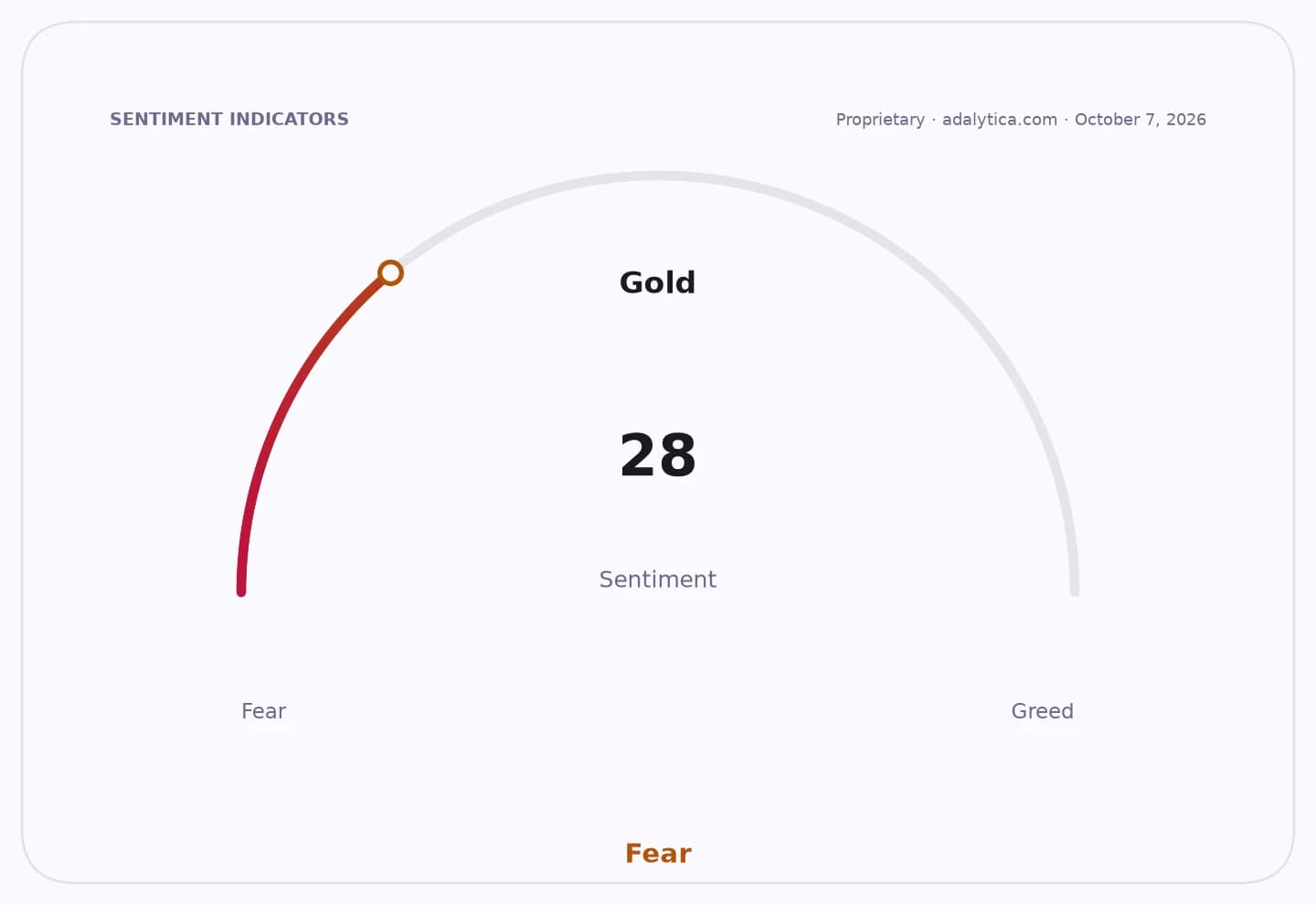
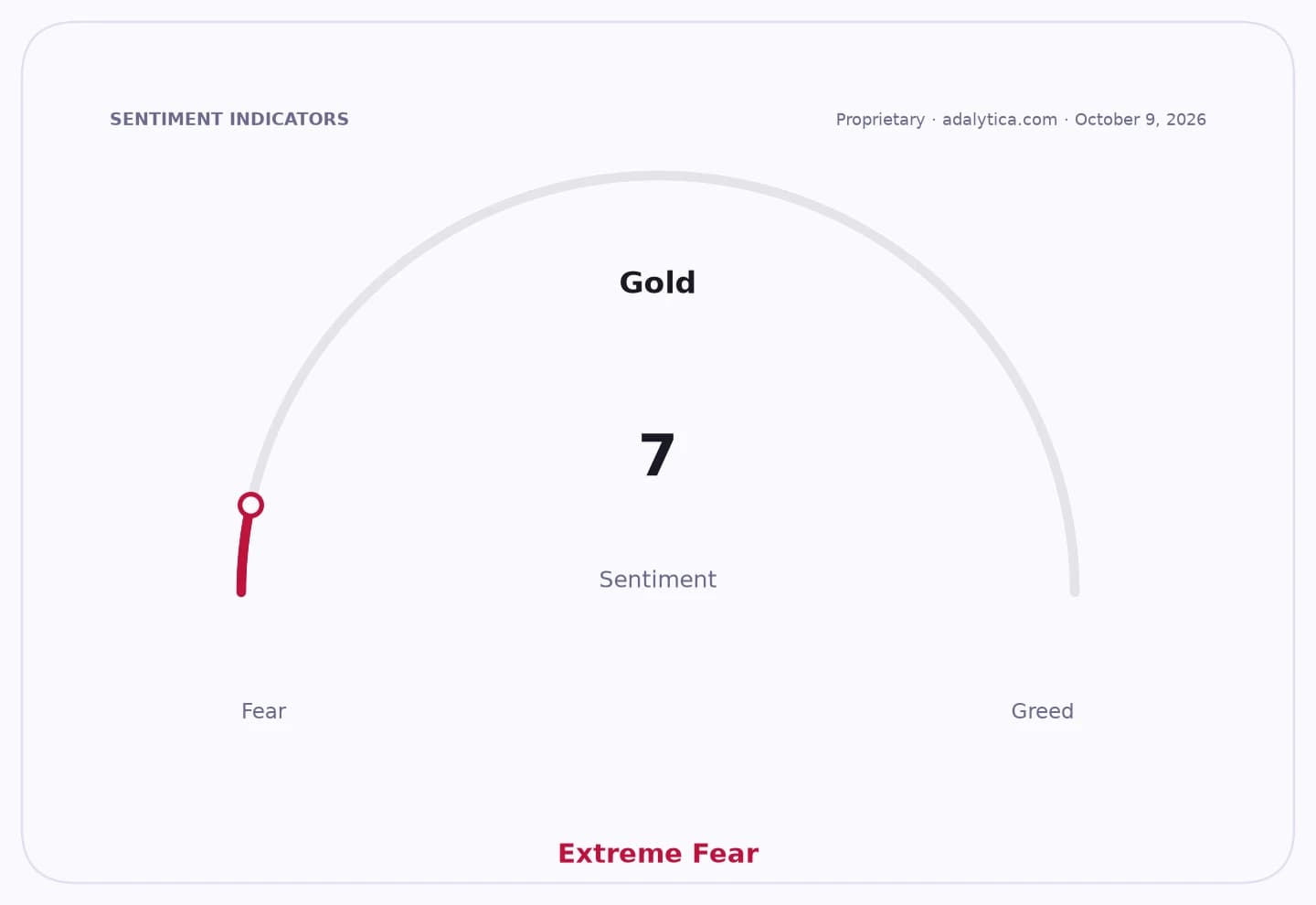
That macro backdrop is also visible in gold’s technical posture. Standard indicators on the GLD ETF and COMEX gold futures show both instruments below their 50-day moving averages, with RSI readings in oversold territory and MACD still negative, which suggests the market is vulnerable to further volatility before a durable bottom forms. Adalytica’s Gold Fear & Greed Index is deep in “Extreme Fear” at 7, reinforcing the view that sentiment has swung hard against bullion.
For investors, the key takeaway is not that gold has lost its long-term appeal. It is that the trade has become more tactical. If the dollar stays firm and yields remain elevated, global bullion can keep sliding, and Vietnam’s high domestic prices may eventually have to adjust. But if the market overplays the Fed’s hawkish path or growth data weakens, gold could rebound quickly from a deeply washed-out position. That is exactly the kind of setup that creates asymmetric opportunities in miners, bullion proxies and selective Asian precious-metals retailers.
The market is telling us two things at once: bullion is under pressure globally, and local pricing power in Vietnam is still holding firm. That disconnect is where the next trade may emerge. Investors should watch for any reversal in the dollar-yield pair, because that is the catalyst that would turn today’s gold weakness into the next accumulation point.
| Entity | Gains | Losses |
|---|---|---|
| US dollar & Treasury yields | ▲Higher appeal | ▼Gold demand |
| Global gold bears | ▲Momentum trade | ▼Bullion prices |
| Vietnamese gold retailers | ▲Stable high margins | ▼Price-sensitive buyers |
| Gold ETF holders | ▲Potential rebound if yields ease | ▼Near-term mark-to-market losses |