Gold’s retreat to 6 million 560 thousand lira per kilogram is the latest sign that a once-hot trade is cooling fast, and that matters for everyone from Turkish buyers to global miners and exchange-traded fund holders.
Gold Retreats in Istanbul and ETF Prices Fall

The standard kilogram price in Istanbul’s precious-metals market fell 1% on the day after trading between 6 million 545 thousand and 6 million 615 thousand lira, slipping from 6 million 625 thousand lira in the prior session. In dollar terms, gold futures were also under pressure, closing at $4,007.9 an ounce on Oct. 23, far below the $4,150 level seen two days earlier and well under the 50-day moving average. That follows a brutal stretch in which bullion has shed about a quarter of its value from recent highs, a sharp reminder that even gold can behave like a crowded trade when investors rush for the exits.
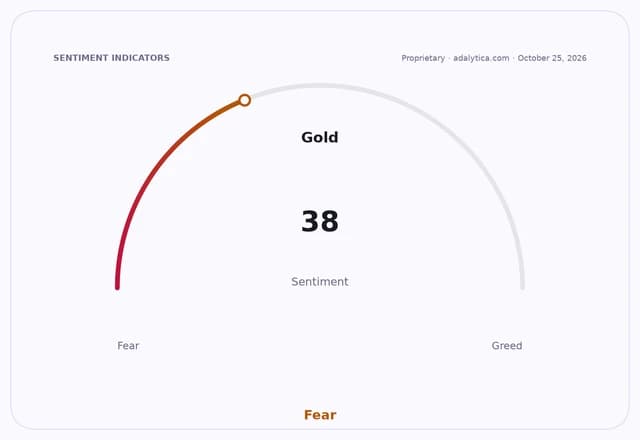
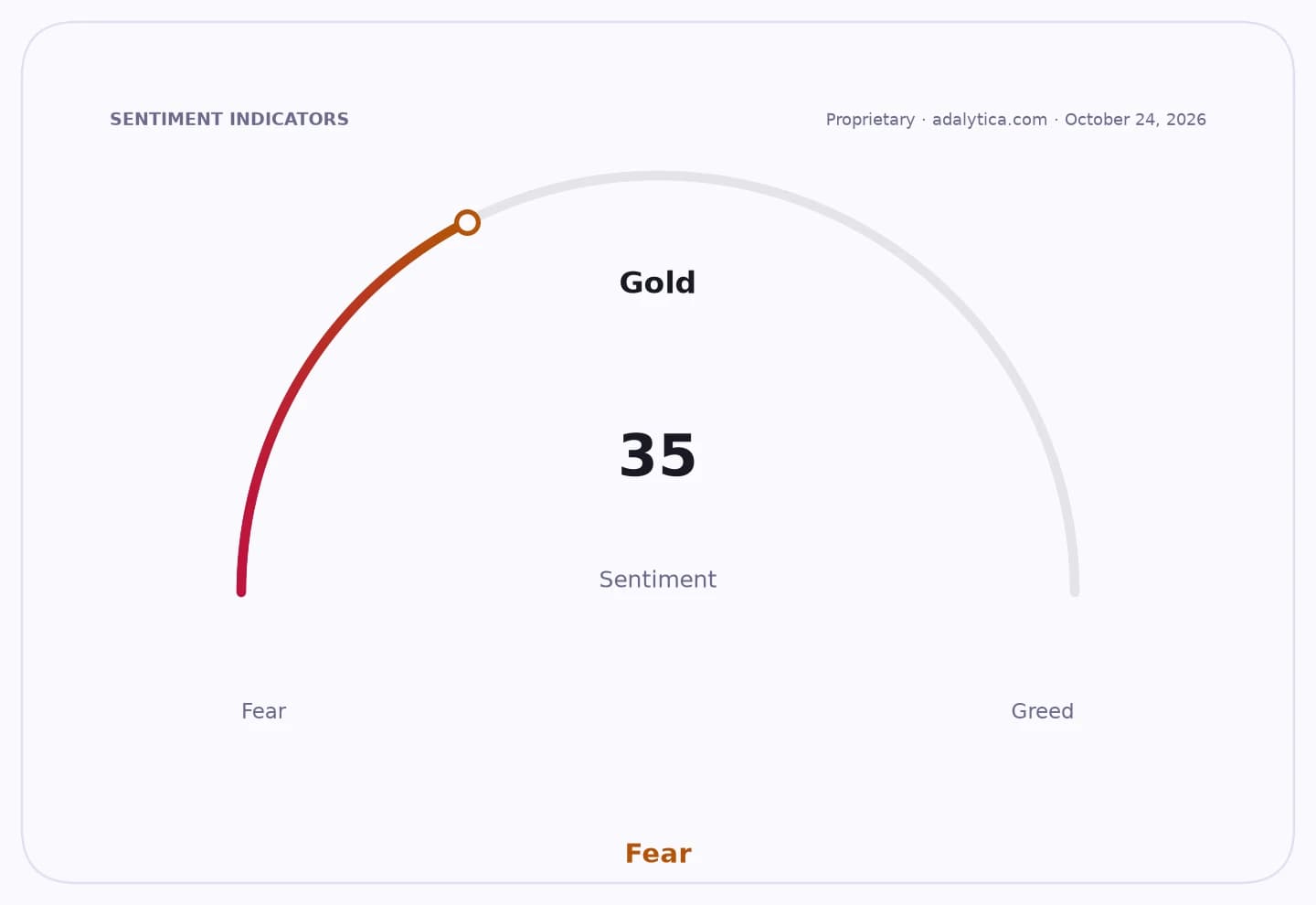
For long-term investors, the more important story is not a single down day. It is the reset in the market’s psychology. Gold’s appeal usually rests on three pillars: fear, inflation protection and currency debasement hedging. Right now, those supports are wobbling. Adalytica’s Gold Fear & Greed Index has slid to 38, in neutral territory, while its awareness gauge remains in fear. That combination suggests the market is no longer bidding up gold on panic alone, even as volatility remains elevated. The U.S. 10-year Treasury yield hovering around 5% also makes it harder for a non-yielding asset like gold to justify premium prices.
The pullback is showing up across gold-linked investments. GLD, the biggest gold-backed ETF, closed at $366.61 on Oct. 23, down from $378.95 two sessions earlier, while smaller bullion vehicle AAAU slid to $39.40 from $40.75. Both are trading below their 50-day averages, a technical warning that momentum has turned lower. That does not mean gold has lost its role in a diversified portfolio. It does mean investors who chased the rally should expect sharper drawdowns than they may have planned for.
Miners are caught in the middle. Newmont and peers can still benefit from historically high nominal gold prices, but their margins are being tested by rising costs. Newmont’s latest filing said costs applicable to sales per gold ounce rose 13% because of higher inventory, services, energy and royalty costs. When bullion backs up and costs stay sticky, profits can compress quickly. That is why gold producers can lag even when the metal looks strong on a chart.
For Turkish market participants, the lira price underscores the same dynamic through a local lens: gold remains expensive in nominal terms, but the direction is now lower, and that can cool demand from both retail buyers and institutions. The market’s busiest players — including NMGlobal Kıymetli Madenler, Osmanlı Kıymetli Madenler, Akbank, Misyon Yatırım Bankası and Vakıf Katılım — are still active, but trading volumes do not erase the fact that sentiment has turned defensive.
Long term, gold still has a place as a portfolio diversifier, especially for investors who want ballast against inflation shocks, geopolitical stress or currency weakness. But the current slide is a useful reminder that even defensive assets are not immune to valuation and momentum resets. For investors, the smart move is not to extrapolate a collapse forever, but to keep gold as a measured slice of a broader portfolio and watch for stabilization before adding aggressively.
| Entity | Gains | Losses |
|---|---|---|
| Gold buyers on dips | ▲Lower entry prices | ▼Recent peak valuations |
| GLD and AAAU holders | ▲Potential long-term diversification | ▼Short-term mark-to-market losses |
| Gold miners | ▲Still-high nominal bullion prices | ▼Margin pressure from falling prices |
| Turkish bullion traders | ▲Active turnover opportunities | ▼Softer local gold values |