Buyers rushing into gold and silver purchases for the festival season are being urged to check whether the metal in their hands is real, as household tests can help flag obvious fraud but cannot replace hallmarking and certified assaying.
Gold and Silver Buyers Urged to Verify Purity
That matters because jewelry demand spikes around Diwali and similar festivals, when consumers are more likely to buy quickly, compare less and stretch budgets to keep up with higher prices. In that environment, even small lapses in purity or weight can turn into a costly household loss, while widespread mistrust can hurt jewelers that rely on seasonal sales.
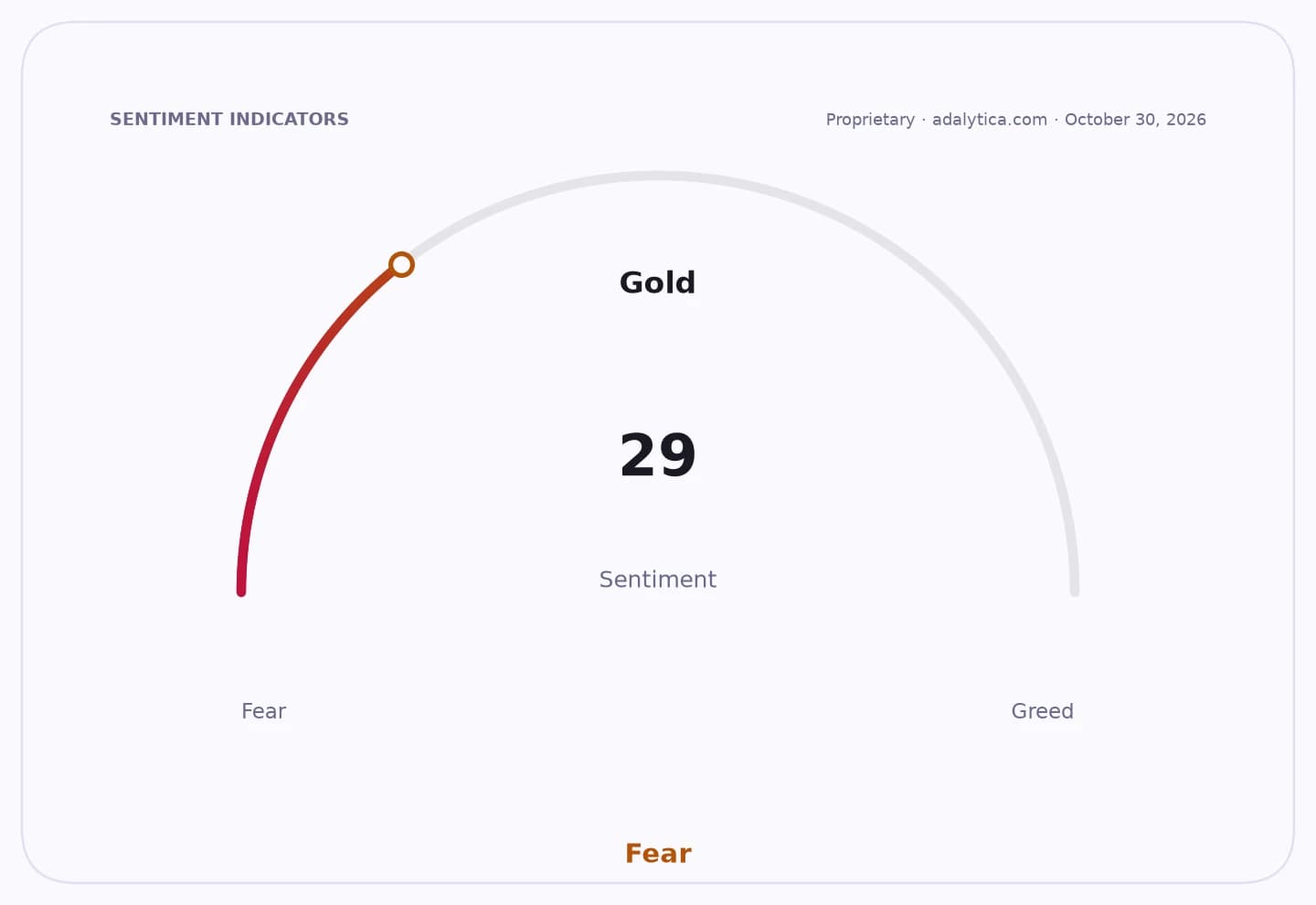
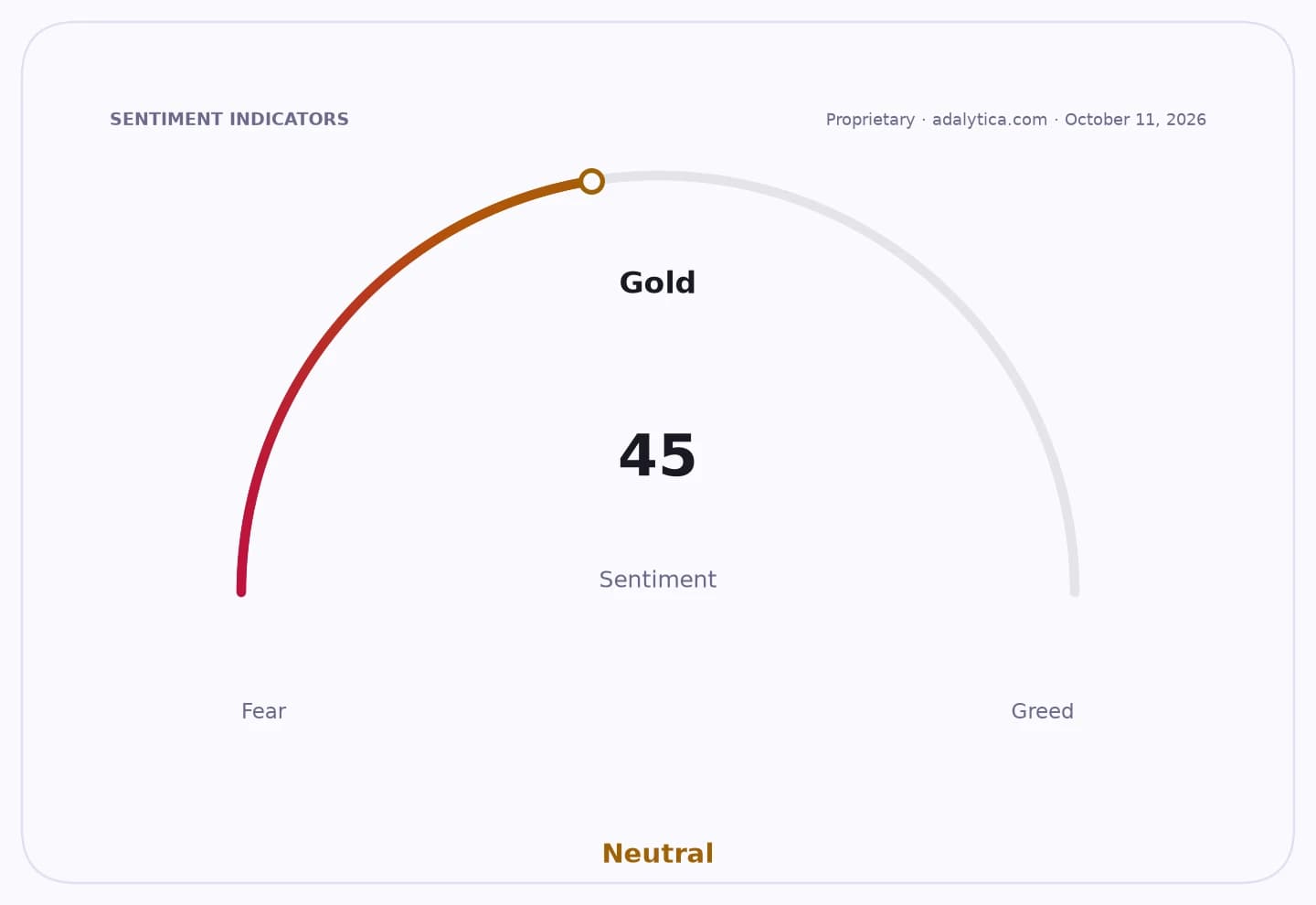
Sentiment Indicators
The basic advice is straightforward: a magnet can help identify metal that contains iron or other magnetic alloys, while an ice test can offer a rough clue about whether a piece may conduct heat like silver. But both are only screening tools, not proof. A fake or plated item may still pass a home test, and many alloys can behave in similar ways.
For gold, the key checks are hallmarks, bills and third-party verification. The article’s emphasis on XRF, or X-ray fluorescence testing, is economically relevant because it points buyers toward formal purity certification rather than informal judgment at the counter. That is especially important when prices are elevated and consumers are more sensitive to both value and trust.
The market backdrop has been volatile. Gold-backed exchange-traded fund GLD is trading at $373.51, well below its 50-day moving average of $392.67 and its 200-day average of $413.54, while Adalytica’s Gold Fear & Greed Index sits at 9, or “Extreme Fear.” Silver ETF SLV is at $49.06 versus a 50-day average of $56.42, and miner-focused GDX is at $83.95, also below both its 50-day and 200-day averages. That combination suggests investors are still digesting a correction in precious metals even as retail demand remains active.
For investors, the significance is twofold. Strong festive buying supports downstream jewelers, refiners and retail chains, but the authenticity issue creates execution risk for the sector and reputational risk for branded stores that cannot guarantee purity. At the same time, weaker prices can encourage physical buying, potentially stabilizing demand, even if speculative positioning in gold and silver stays cautious.
The broader narrative is that gold and silver remain both adornment and store of value, but in a high-price, high-demand season, trust becomes as important as price. For households, the message is to use home tests only as a first pass. For investors, the message is that seasonal demand may help sales, but the real advantage accrues to firms that can prove authenticity, protect margins and preserve customer confidence.
| Entity | Gains | Losses |
|---|---|---|
| Buyers with verified jewelry | ▲Purity confidence | ▼Fraud risk |
| Reputable jewelers | ▲Customer trust | ▼Pressure from counterfeit fears |
| Fake/undocumented sellers | ▲Short-term sales | ▼Scrutiny and returns |
| Precious-metals investors | ▲Potential festival demand support | ▼Volatility and weak sentiment |