Gold and silver are sliding because the market’s biggest support for precious metals — the expectation of lower U.S. interest rates — is fading fast, and that matters for everything from inflation hedges to jewelry demand to mining stocks.
Gold and silver fall as Fed cut bets fade
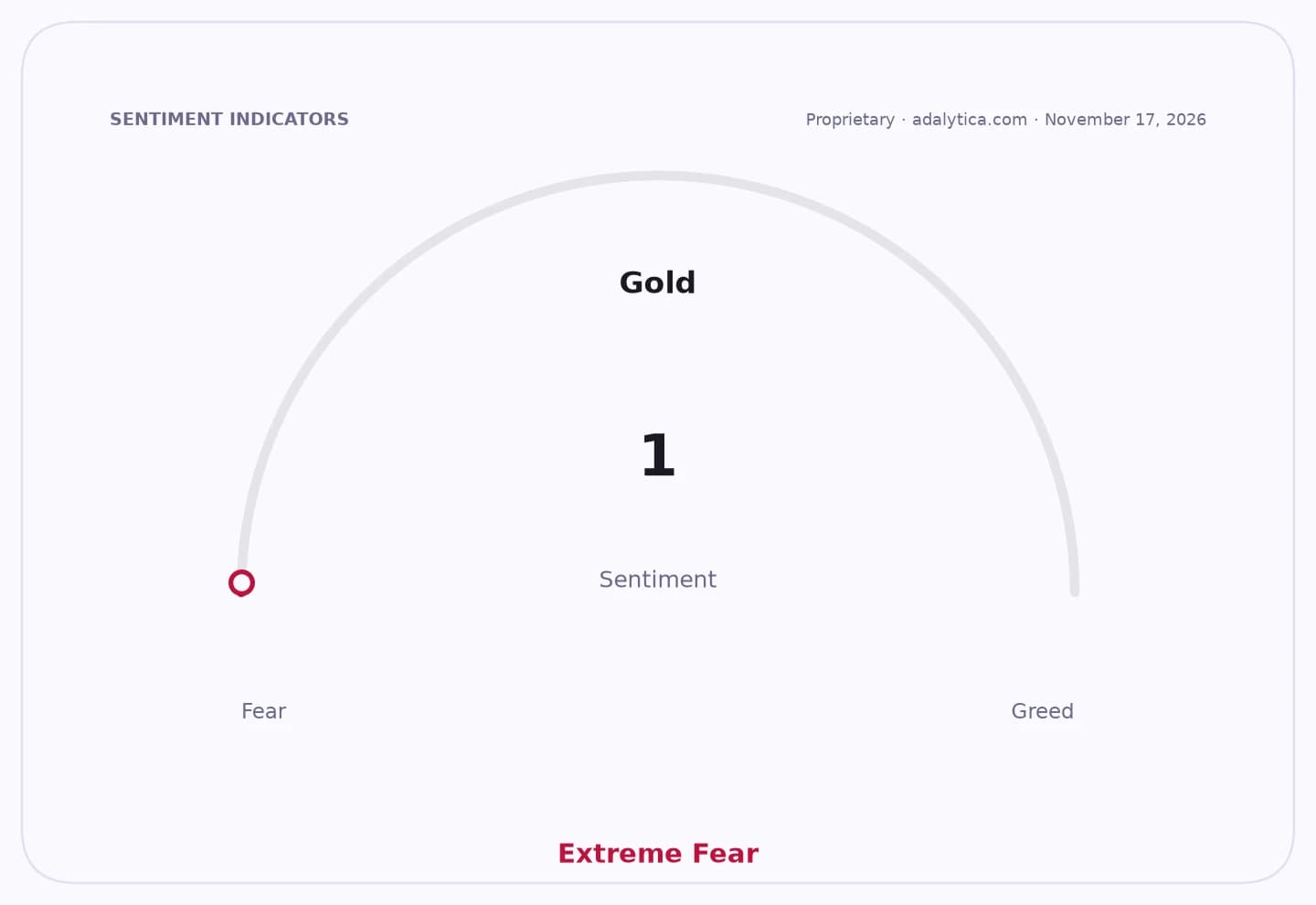
Gold
The immediate pressure point is the U.S. Federal Reserve. Instead of pricing in easier policy, traders are now leaning toward a more hawkish Fed after sticky inflation, higher Treasury yields and a stronger dollar changed the narrative. That shift has pushed investors out of non-yielding assets such as gold and silver and into cash and bonds that now pay more.
Sentiment Indicators
In India, the move has been dramatic. In Chennai, 22-carat jewelry gold fell by ₹560 a sovereign to ₹99,760, slipping below the ₹1 lakh mark for the first time in nearly a year. Over the past week, jewelry gold has dropped more than ₹6,000. Domestic gold is now trading around ₹1.37 lakh per 10 grams, down more than 23% from January’s peak near ₹1.80 lakh.
Silver has been hit even harder. After reaching a record high of about ₹4.20 lakh per kilogram on the Multi Commodity Exchange on Jan. 29, it has fallen almost 55% to roughly ₹1.90 lakh in retail trade. That kind of decline tells investors something important: silver is not just a precious metal, it is also an industrial metal, so it tends to swing more sharply when growth expectations and liquidity conditions change.
US Dollar vs GLDadalytica.com
Explore this data interactively — full history, time series and cross-market comparisons.
The deeper story is that the old “buy any dip” trade in bullion has met a more hostile macro backdrop. Higher rates lift the opportunity cost of holding gold and silver. A stronger U.S. dollar makes them more expensive for buyers using other currencies. And when oil prices jump, as they have during geopolitical flare-ups, markets start worrying about a new inflation cycle — which can keep the Fed tighter for longer.
That is why the recent pullback is economically meaningful. Gold and silver are often seen as insurance policies against stress, but when yields rise and the dollar strengthens, that insurance becomes less attractive in the short term. The latest move is also spilling over into equities, with jewelry companies under pressure as consumers delay purchases and inventories become harder to manage.
Still, this is not a simple bearish call on precious metals. Central-bank buying, especially from China and other reserve managers, is still providing a floor for gold, and exchange-traded fund demand remains a support. HSBC also expects silver to recover gradually, though it does not see a quick rebound. The bank’s warning that silver may not race back to $100 unless tariff issues flare up again underscores how much of the prior rally was driven by fear, not just fundamentals.
For long-term investors, the message is more constructive than the headlines suggest. Gold is still a portfolio diversifier, and silver still has a role in both precious-metal exposure and industrial demand. But after a run that pushed both metals to extreme highs, the market is reminding investors that even “safe havens” can fall hard when the macro tide turns. For now, patience — and small, staged buying rather than chasing momentum — looks wiser than trying to call the exact bottom.
| Entity | Gains | Losses |
|---|---|---|
| U.S. dollar | ▲Higher appeal | ▼Gold and silver buyers |
| Treasury yields | ▲More attractive returns | ▼Non-yielding metals |
| Jewelry consumers | ▲Lower purchase prices | ▼Jewelry retailers and makers |
| Long-term bullion buyers | ▲Better entry points | ▼Momentum traders and recent buyers |