Gold’s sudden slide is being driven less by local buying and selling than by a bigger macro force: the market is adjusting to a world where U.S. interest rates remain elevated and the dollar is still not offering bullion much relief. That combination is squeezing the appeal of gold as a non-yielding asset, sending spot prices lower and pulling down gold-linked funds even as retail jewelry buyers finally get a better entry point.
Gold Falls as U.S. Yields Stay High
In Chennai, jewelry gold fell Rs 360 a sovereign on Nov. 10 to Rs 1,05,680, or Rs 13,210 a gram, after rising sharply over the prior two sessions. Silver was unchanged at Rs 205 a gram. The move reflects the same global pressure that has pushed broader gold prices down and left investors nursing losses after a strong run earlier this year.
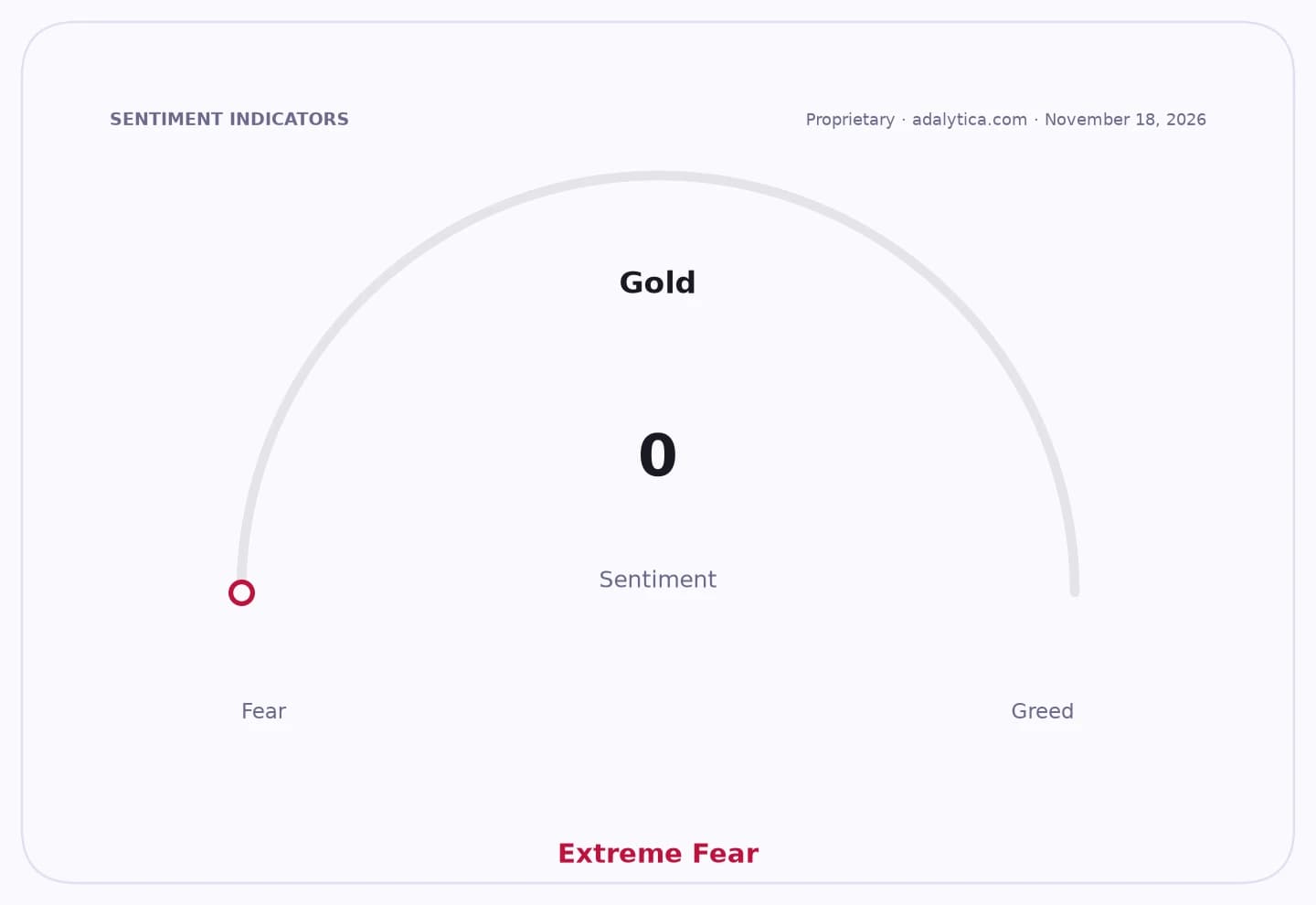
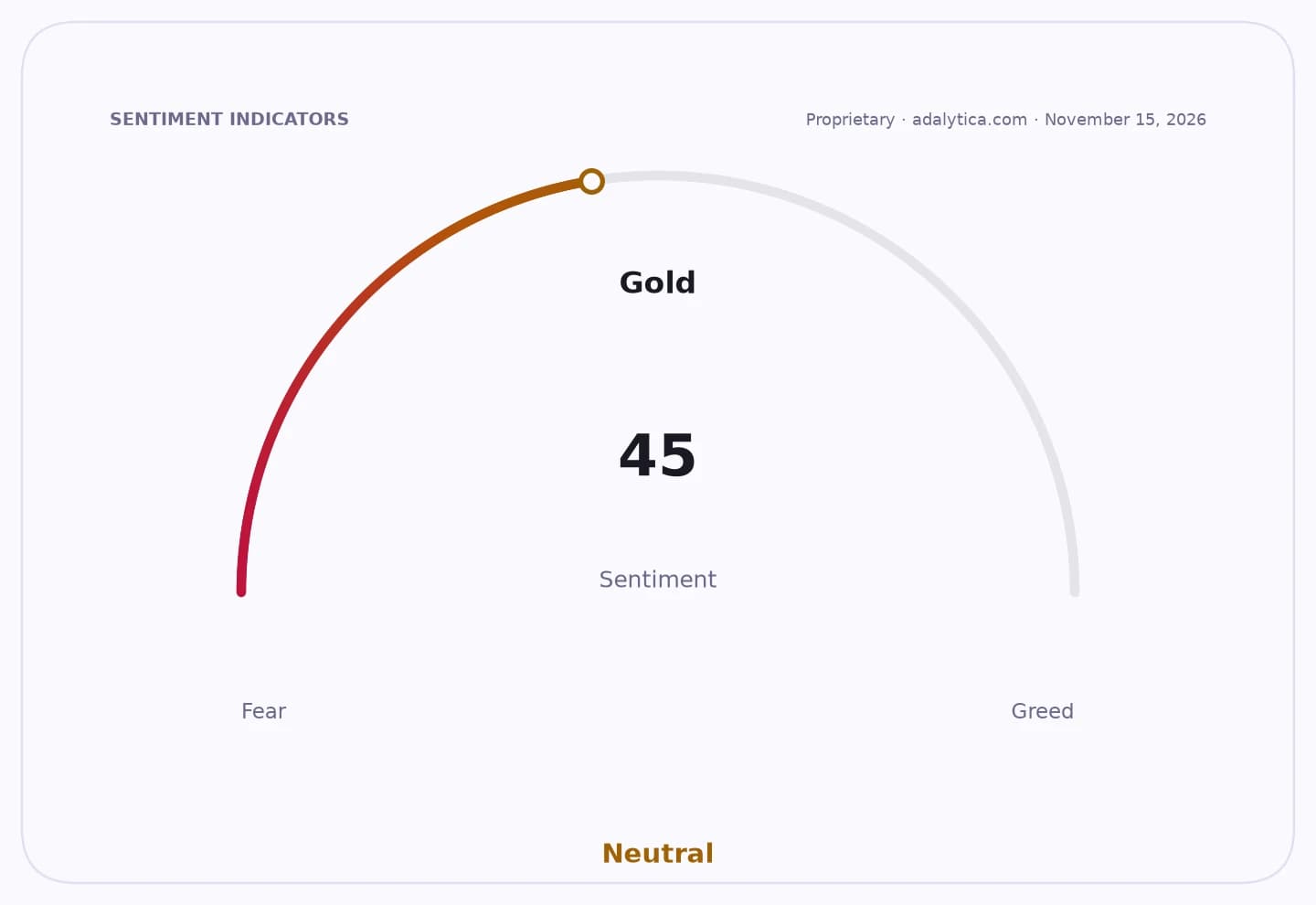
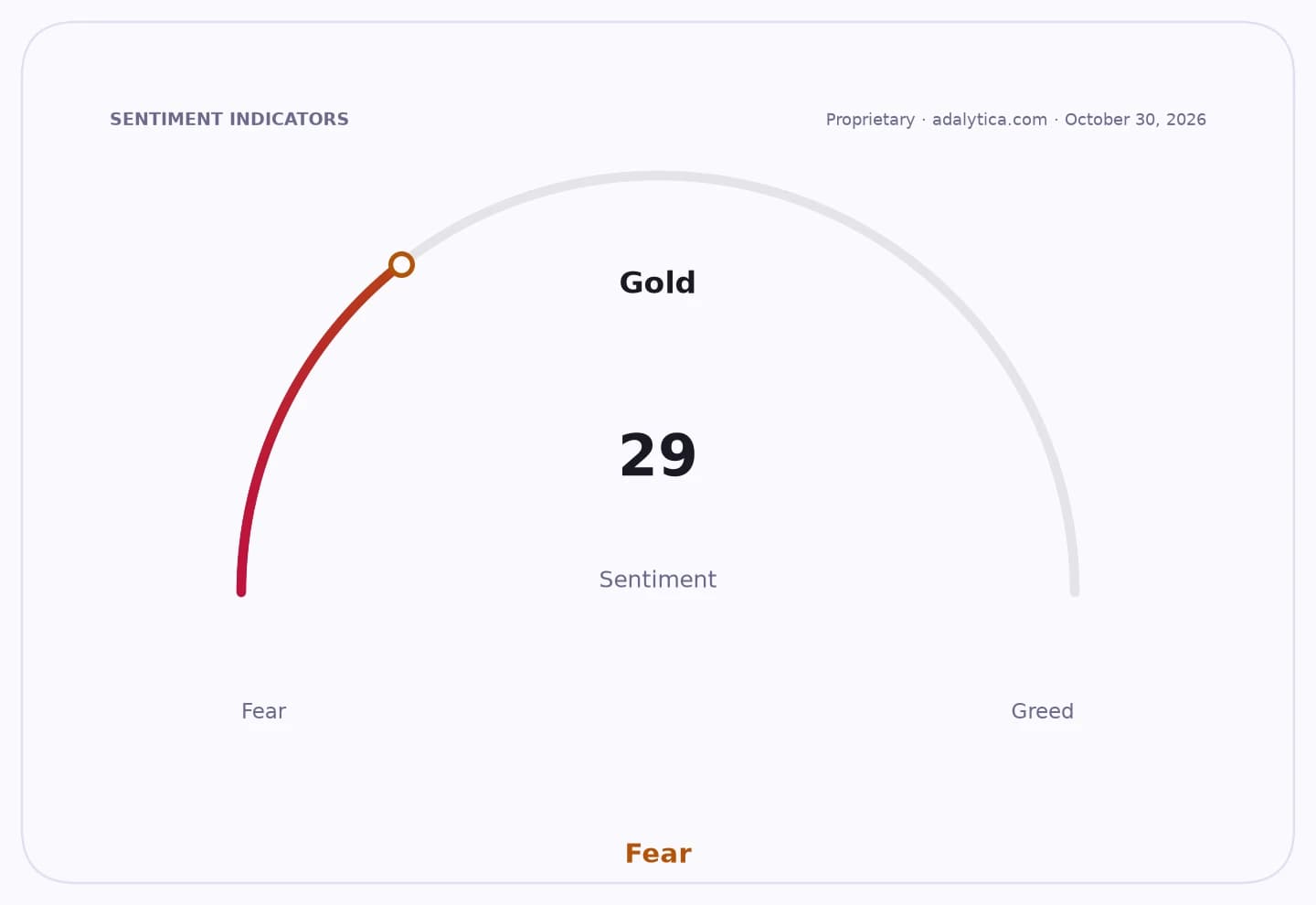
Sentiment Indicators
The economic significance is straightforward: when real yields stay firm, gold loses some of its shine. The 10-year U.S. Treasury yield was at 4.98% on Nov. 10 and rose further into the following sessions, reinforcing the headwind for precious metals. A stronger rate backdrop tends to lift the opportunity cost of holding gold, while also supporting the dollar’s relative attractiveness. Adalytica’s Gold Fear & Greed Index has collapsed to 1.0, an extreme fear reading, underscoring how quickly sentiment has reversed.
That pressure is visible in gold equities and exchange-traded funds. SPDR Gold Shares, which tracks bullion, has fallen to around $354.40 after trading above $379 just days earlier, with its price now well below its 200-day moving average. The MACD remains negative and RSI readings have cooled, technical signs that the correction is not just noise but part of a broader unwind. Gold miners are also feeling it: the VanEck Gold Miners ETF has slipped to about $80.99 from recent highs above $90, with the sector caught between softer bullion prices and the possibility of margin compression if input costs do not fall as quickly as the metal itself.
For investors, the key question is not whether gold can bounce — it almost certainly can, especially if rate-cut expectations return — but who benefits most from the reset. The near-term winners are jewelry buyers, manufacturers and consumers in markets such as India, where lower domestic prices can revive demand. The losers are momentum traders, bullion ETFs and mining stocks that were priced for a much stronger gold tape.
Our view is that this pullback matters because it may be the market’s first meaningful test of whether gold can hold a premium without a clear monetary-policy tailwind. If U.S. yields stay near current levels and the dollar remains firm, bullion could keep drifting lower before bargain hunters step back in. For long-term investors, that creates a better setup in quality miners and physical-demand plays than in chasing the metal itself.
| Entity | Gains | Losses |
|---|---|---|
| Jewelry buyers | ▲Lower purchase prices | ▼— |
| Gold miners | ▲Potential long-term value buyers | ▼Near-term margin pressure |
| GLD bullion ETF holders | ▲— | ▼Price decline, technical weakness |
| GDX gold-miner investors | ▲— | ▼Sector selloff, weaker sentiment |