Gold and silver are sliding at the worst possible time for bullion bulls and the best possible time for jewellery shoppers, with a third straight day of declines in the run-up to the festival season forcing prices back from recent extremes.
Gold and Silver Fall as Festival Demand Nears
That matters because gold and silver sit at the intersection of consumer demand, inflation hedging and global liquidity. When they drop sharply, retail buyers in India tend to step back in, but the move also tells investors that the market is no longer rewarding the crowded “buy everything precious” trade that dominated earlier this year.
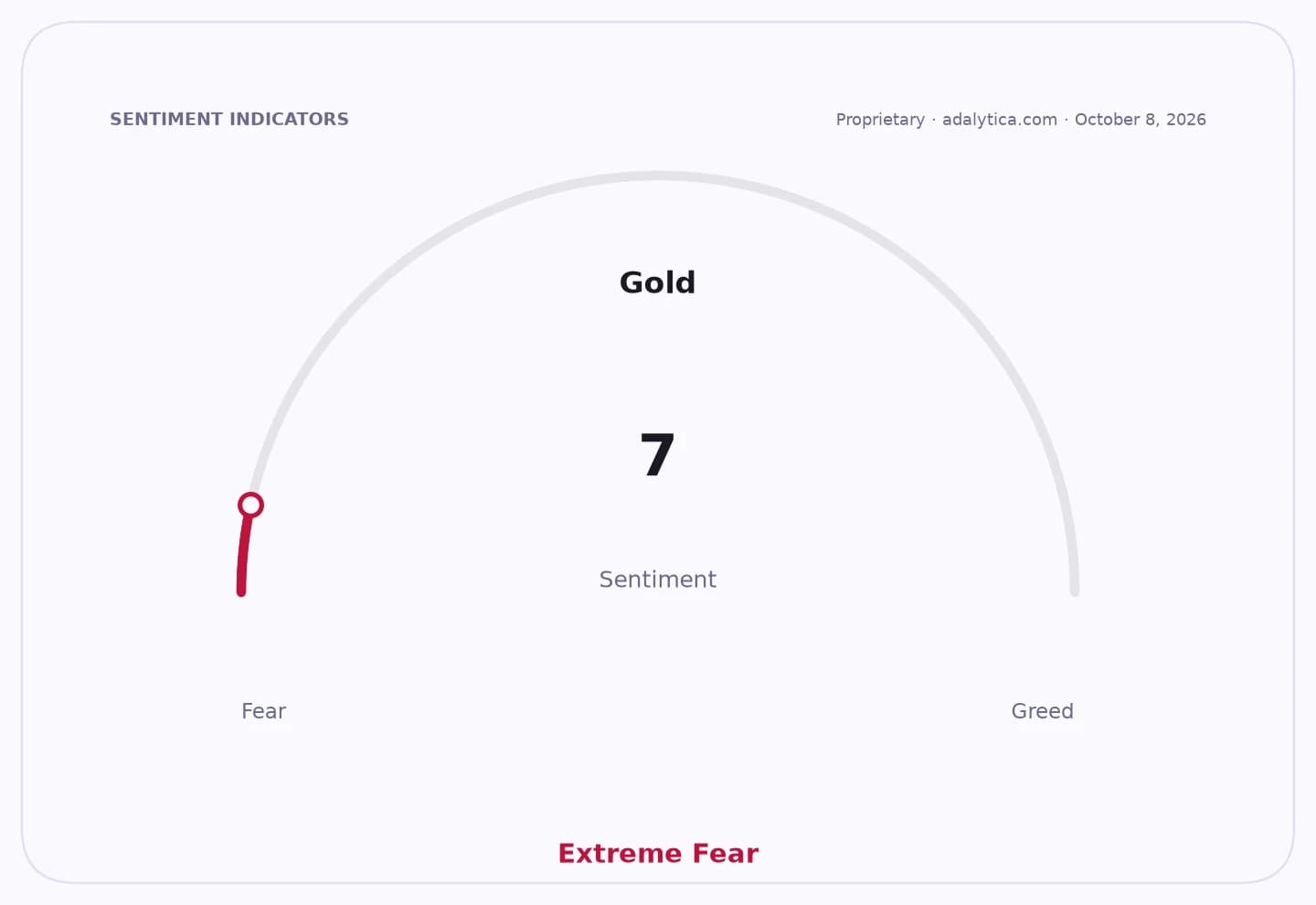
Sentiment IndicatorsⓘProprietary · adalytica.com · October 15, 2026
This is a snapshot — live sentiment, awareness and momentum for 130+ markets update continuously in the dashboard.Open AlphaPulse
In spot terms, the weakness has been broad-based. In domestic trade, SJC 9999 gold prices in Vietnam fell more than 1% in a record drop, with bars quoted around 140.5 million to 143.5 million dong per tael, according to market reports. Globally, gold ETFs are also correcting: GLD slipped to $375.99 on Oct. 14 from $382.15 two days earlier, while silver ETF SLV fell to $50.22 from $54.35 over the same period. Newmont, one of the sector’s bellwethers, dropped to $111.56 from $117.15, underscoring that the pressure is hitting miners as well as metal prices.
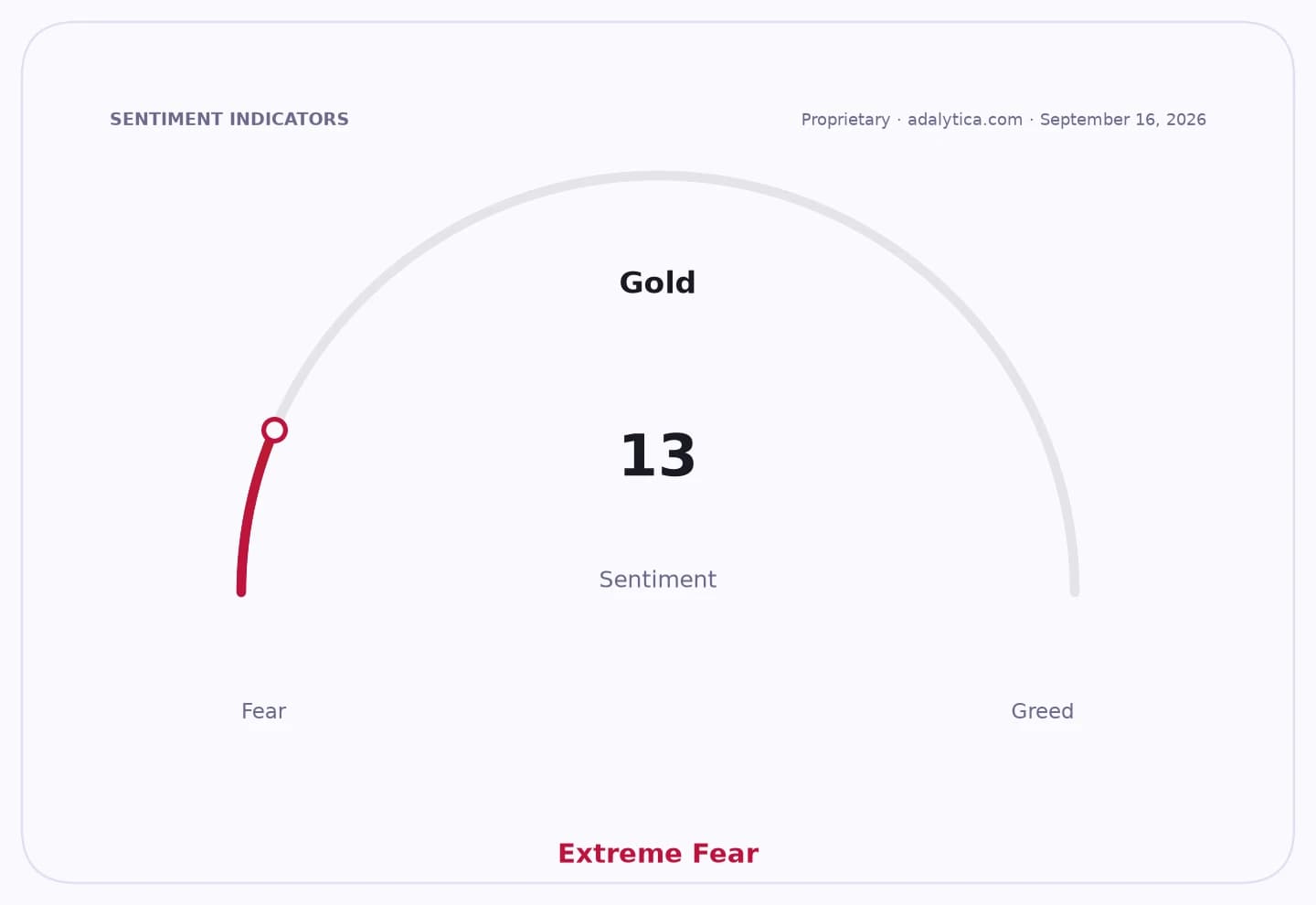
The technical picture reinforces that this is not just a one-day wobble. GLD is trading below both its 50-day and 200-day moving averages, and its relative strength index has eased into the mid-30s, a sign of fading momentum after the earlier surge. SLV is even more stretched on the downside, with its RSI near 25, while Newmont has also rolled over from overbought levels. At the same time, Adalytica’s Gold Fear & Greed Index still shows extreme greed, suggesting sentiment has not fully reset even as prices fall.
For investors, that combination creates a very different setup from the frenzy that drove bullion higher earlier in the year. Gold’s retreat has pulled some of the heat out of defensive trades, and it may ease pressure on consumers facing festival purchases, where jewellery demand can be highly price-sensitive. It also shifts the burden back onto miners and related producers that had been priced for perfection, particularly those with higher operating leverage to metal prices.
The macro backdrop is still doing part of the work. The 10-year Treasury yield remains elevated at about 5.2%, and the US dollar has steadied, both of which reduce some of gold’s appeal as a non-yielding hedge. But the bigger narrative is positioning: after a powerful run-up, the market is digesting gains, and that often creates the best entry point for long-term buyers before the next inflation or geopolitical shock brings fresh demand for hard assets.
My view is that this pullback should not be read as the end of the precious-metals cycle. It is a reset. For investors, the opportunity is to stay selective: use weakness to build exposure to the miners with the strongest margins and balance sheets, while waiting for the next leg of macro uncertainty to revive the metals trade. For consumers, the drop is an immediate relief. For traders, it is a warning that the easy money in gold and silver may already have been made.
| Entity | Gains | Losses |
|---|---|---|
| Jewellery buyers | ▲Lower festive-season prices | ▼None near term |
| Gold and silver bulls | ▲Potential future re-entry level | ▼Near-term price losses |
| Miners like Newmont | ▲Cheaper input-linked demand support later | ▼Softer near-term margins and share prices |
| Dollar and higher yields | ▲Relative appeal versus bullion | ▼Less urgency for hedging flows |