Argentina’s President Javier Milei used a trip to the United States to sell a bigger idea than diplomacy: that his government is trying to turn the country into a long-term investment destination for capital chasing energy, mining and food growth.
Argentina Investment Push Under Milei Gains Attention
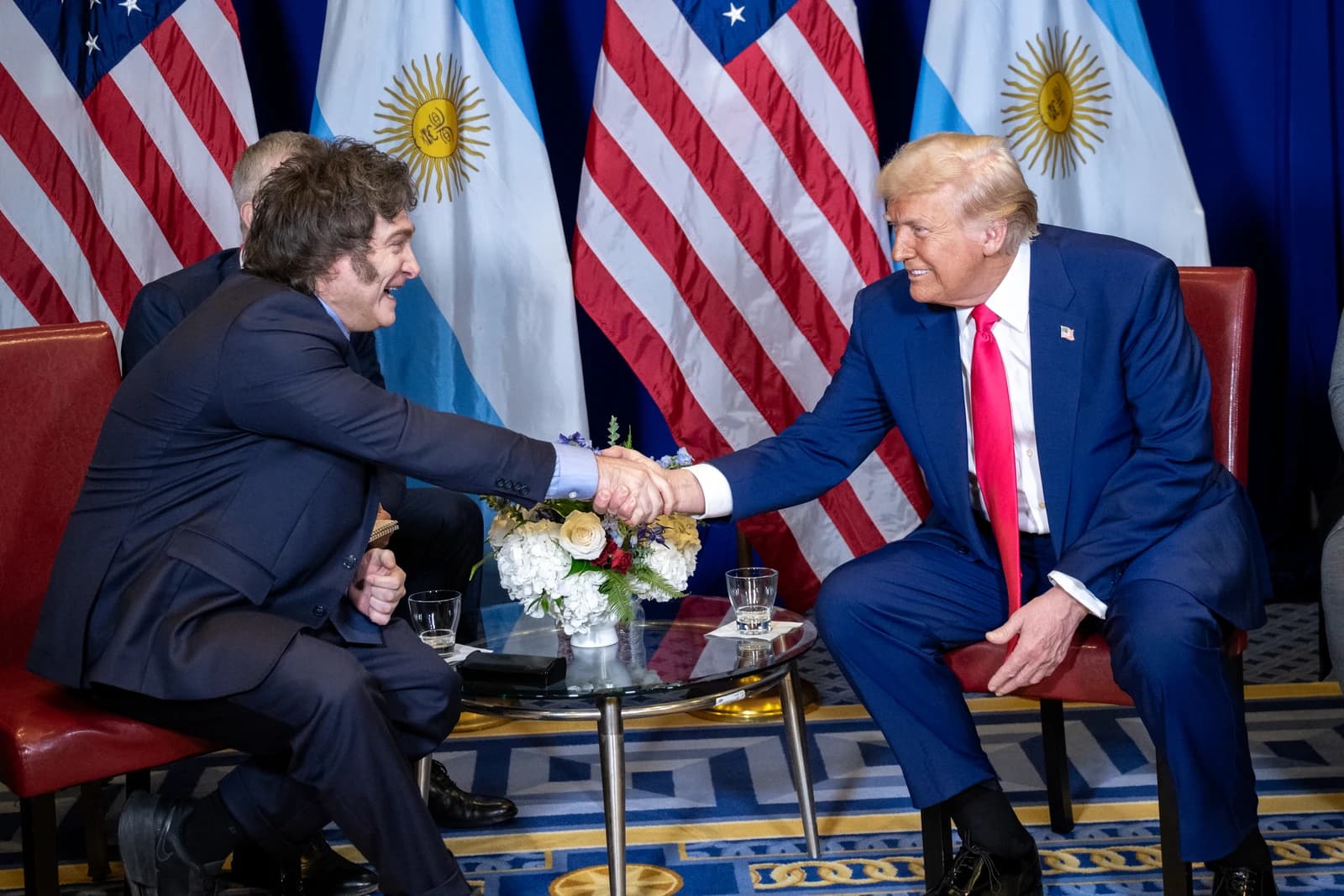
That matters because investors do not buy speeches — they buy policy durability. Milei’s message in New York, where he headlined the Hispanic Heritage Month gala, was that Argentina has shifted from populism to a more predictable, Western-aligned framework built around property rights, fiscal discipline and incentives for large-scale investment. His government says the RIGI investment regime already has more than $76 billion in approved projects, a figure that, if sustained, could reshape Argentina’s growth story over several years.
Sentiment IndicatorsⓘProprietary · adalytica.com · October 17, 2026
This is a snapshot — live sentiment, awareness and momentum for 130+ markets update continuously in the dashboard.Open AlphaPulse
For markets, the appeal is straightforward. Argentina has abundant natural resources but a long record of capital controls, debt distress and policy reversals that kept foreign money on the sidelines. Milei’s pitch is that those days are ending. By aligning closely with Donald Trump and the United States, while also emphasizing ties with Israel, he is signaling that Argentina wants to be viewed less as a volatile emerging market and more as a strategic supplier in a world hungry for energy, minerals and agricultural output.
That is why the RIGI number matters. Projects of that scale suggest real money is being committed to sectors with multi-year runways, not just short-cycle speculation. For investors, that can support everything from the peso outlook to local equities, sovereign debt and commodity-linked names with Argentine exposure. The country’s exchange-traded fund, ARGT, has been trading below its 50-day and 200-day moving averages recently, reflecting the market’s caution. But if Milei can keep the reform agenda intact, those technical pressures could eventually give way to a more durable re-rating.
The broader backdrop is not exactly friendly. Global risk sentiment has weakened, and investors remain wary of political noise, rate volatility and execution risk in emerging markets. In that environment, Argentina’s message has to be more than ideological. It has to be credible on inflation, regulation and enforcement. Milei knows that, which is why he keeps returning to the same themes: shock therapy first, growth second.
Long term, that is the real investment case. If Argentina can convert rhetoric into stable rules, it could become one of the more interesting turnaround stories in global markets. If it cannot, the country risks remaining what it has been for decades: rich in resources, poor in trust. For now, Milei is asking investors to believe the former. That makes Argentina worth watching, and perhaps worth adding to the watchlist.
| Entity | Gains | Losses |
|---|---|---|
| Argentina government | ▲Investment inflows | ▼Policy skeptics |
| Foreign investors | ▲Resource exposure | ▼Capital-control risk |
| Local reform agenda | ▲Credibility | ▼Populist model |
| ARGT ETF holders | ▲Re-rating upside | ▼Near-term volatility |