Threat actors are no longer just experimenting with artificial intelligence — they are increasingly using it to run parts of cyberattacks at machine speed, and that shift could reshape the security market for years.
Google warns AI is speeding up cyberattacks
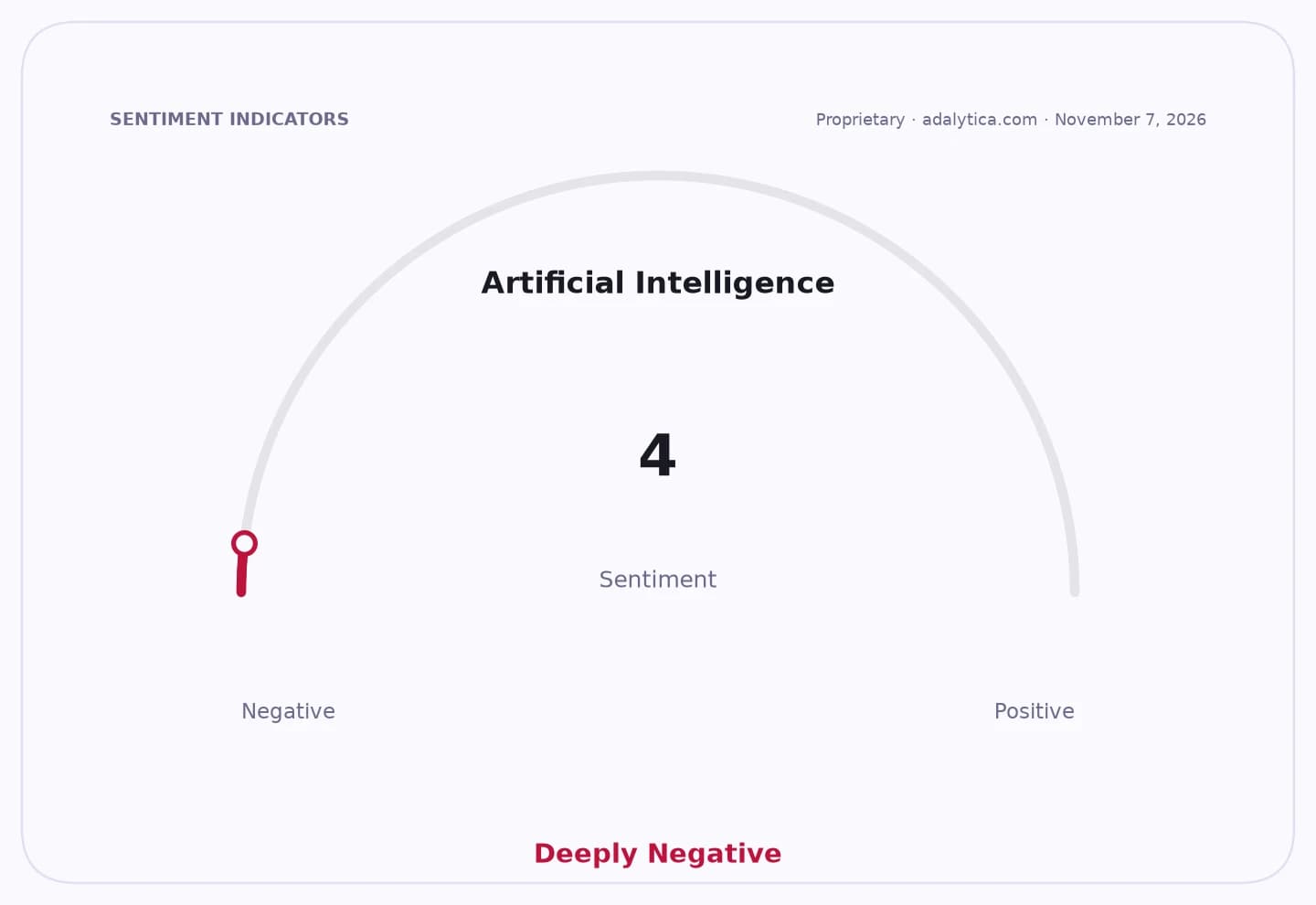
Artificial Intelligence
That is the central warning from Google Threat Intelligence Group and Mandiant, which said this week that multiple malicious actors have begun abusing open-source agentic pen-testing frameworks to automate intrusions, vulnerability scanning and exploit development. For investors, the message is straightforward: AI is amplifying the number of attacks, shrinking the time companies have to patch flaws and raising the stakes for every business with valuable data, cloud access or exposed infrastructure.
Sentiment Indicators
Google’s researchers said the change marks a “paradigm shift” because the mechanics of attacks are mostly the same — stolen credentials, unpatched systems and familiar weak spots — but the speed and scale are fundamentally different. In other words, the defensive burden is rising not because attackers have invented a new kind of weakness, but because they can now exploit old ones much more efficiently.
That matters economically because faster intrusion cycles translate into higher incident response costs, more operational disruption and potentially larger losses from fraud, extortion and data theft. Google said threat actors are also using multi-agent systems and large language models to analyze patches and weaponize proof-of-concept exploits, shortening the window between a vendor’s disclosure and real-world abuse. For companies, that means traditional patch management — already a costly and imperfect process — becomes even harder to execute in time.
The report also points to a new and potentially lucrative criminal business line: “LLMjacking,” or the theft of LLM credentials and cloud resources for resale. Mandiant said it had responded to incidents in recent weeks where fraudulent charges topped $100,000 a day and reached as much as $1 million in some cases. That is not just a cybersecurity headache; it is a direct cloud and software spend problem for enterprises, and a reminder that AI usage itself is becoming an attack surface.
Google said financially motivated gangs and state-backed actors are both likely to use these tools more often, and that their use is “a virtual certainty.” It also warned that the rise in LLM-generated exploits that do not actually work adds another layer of waste and verification work for defenders. The result is a classic arms race: attackers are getting leverage from automation, while defenders are forced to spend more to separate real threats from AI-generated noise.
The development also reinforces why cybersecurity remains one of the most durable investment themes in technology. Companies such as CrowdStrike, Palo Alto Networks and Fortinet all benefit when customers are pushed to spend more on detection, identity protection and response tools. Google itself, meanwhile, is both a target and a beneficiary: it is exposed to the security risks around AI, but it also stands to gain from growing demand for cloud, security and AI governance services.
For Alphabet investors, the report is a mixed but ultimately constructive signal. Google’s own 10-Q recently warned that AI agents can be exploited for hacking, privilege escalation and data exfiltration, underscoring that the company sees these risks as real and immediate. But the same threat environment can deepen demand for the tools, infrastructure and managed protections that hyperscalers and security vendors sell.
The bigger picture is that AI is not only changing how companies build products — it is changing how attackers operate. That should keep cybersecurity spending elevated, especially on tools that can detect machine-speed activity, harden identities and secure AI workflows themselves. For long-term investors, this is one more reason to view cyber as a secular growth industry, not a passing theme, and to keep the strongest security names on the watchlist.
| Entity | Gains | Losses |
|---|---|---|
| Cybersecurity vendors | ▲Higher demand for defense tools | ▼Greater pressure to keep pace |
| Cloud providers | ▲More need for secure AI services | ▼Higher abuse of cloud resources |
| Enterprises | ▲Better security budgets over time | ▼Rising breach and remediation costs |
| Threat actors | ▲Faster, cheaper attacks | ▼More defender scrutiny |