A remote Norwegian island has become a proving ground for one of the market’s most underpriced risks: the possibility that modern infrastructure can be knocked off balance by attacks on GPS time.
GPS Jamming Risk Raises Infrastructure Security Costs

The annual Jammertest on Andøya is designed to show how easily navigation signals can be jammed or spoofed, but the economic significance runs far beyond aviation. Power grids, telecom networks, data centers, transport systems and trading infrastructure all rely on the timing precision delivered by global navigation satellite systems. If those signals are disrupted long enough, back-up clocks and fibre links become the only thing preventing a wider failure of digital coordination.
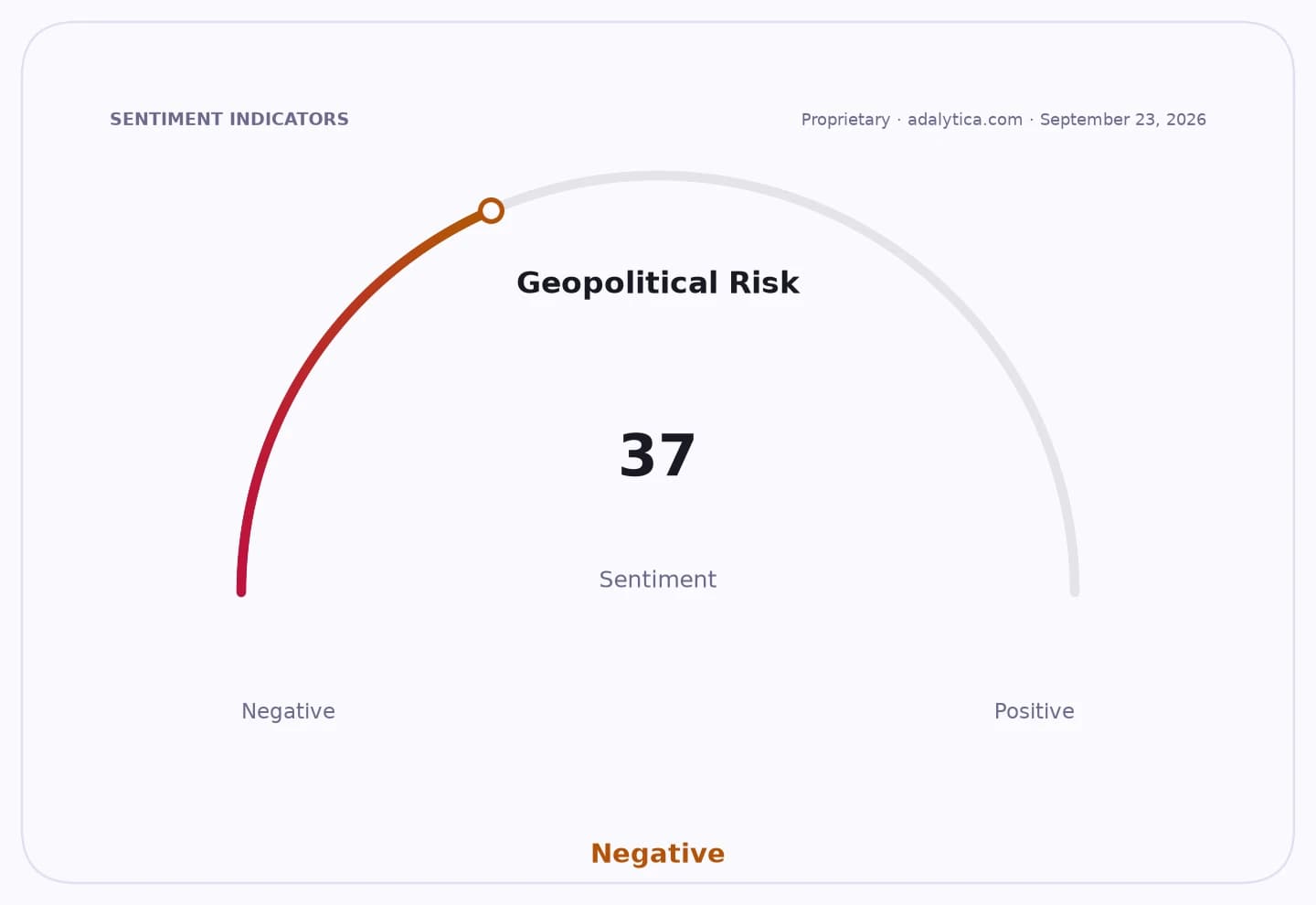
Sentiment IndicatorsⓘProprietary · adalytica.com · September 11, 2026
This is a snapshot — live sentiment, awareness and momentum for 130+ markets update continuously in the dashboard.Open AlphaPulse

That matters because the cost of resilience is no longer theoretical. The more companies and governments rely on GNSS to synchronise operations, the more expensive it becomes to build redundant terrestrial timing systems. The article’s central warning is that the world has moved from GPS as a convenience to GPS as critical infrastructure — and critical infrastructure has a security premium.
The test programme in Bleik, on a remote island north of the Arctic Circle, underscores how serious the risk has become since Russia’s invasion of Ukraine. Interference has been rising across northern Europe, with authorities reporting regular disruption near borders and even in areas far from the original source. In one recent example, experts warned that Russian satellites themselves had been used to beam interference across Europe, expanding the threat beyond land-based jammers that were once limited by geography.

For investors, the story cuts across several asset classes and sectors. Aerospace and defence names stand to benefit from higher spending on resilient navigation, anti-jam receivers and alternative timing systems. Telecom operators, utilities and transport operators face higher capital expenditure as they harden networks against timing failures. Cybersecurity and industrial technology vendors may also see stronger demand as spoofing and jamming are treated more like cyberattacks than traditional radio noise.
The market backdrop suggests the theme is gaining traction, even if not always in a direct way. Adalytica’s S&P 500 trade signals show extreme fear, while FX volatility signals have moved to extreme greed, indicating a market environment that is already sensitive to geopolitical and infrastructure shocks. Cybersecurity-focused ETFs remain firmly above their longer-term averages in the price data provided, with both IHAK and CIBR trading above their 200-day moving averages, suggesting investors continue to assign a structural premium to digital defence.
There is also a broader policy message. Norway and other European governments are no longer treating GNSS interference as a nuisance but as a strategic vulnerability. The logic is straightforward: if timing is degraded, then physical systems that appear unrelated — from grid frequency control to financial market timestamps — can start failing together. The weak point is not the app on a phone but the invisible synchronisation layer underneath the modern economy.
Bullish investors will argue this creates a durable investment cycle in resilient timing, secure communications and satellite-hardening technologies. The bearish view is that much of the spending will be slow, fragmented and driven by public procurement rather than a rapid private-sector upgrade cycle. Even so, the direction of travel is clear: the cost of ignoring GPS security is rising, and so is the value of the companies that can keep the world on time when the satellites go dark.
| Entity | Gains | Losses |
|---|---|---|
| Aerospace & defence contractors | ▲Anti-jam demand | ▼Complacent budgets |
| Utilities & telecom operators | ▲Resilience upgrades | ▼Higher capex |
| Cybersecurity vendors | ▲Infrastructure-security spending | ▼Undifferentiated hardware rivals |
| Jammers/spoofers | ▲Operational leverage | ▼Detection and redundancy systems |