Greece is widening housing support and tightening taxes on foreign buyers as real estate prices and rents keep climbing, a move aimed at easing a shortage that has pushed homeownership down and rental costs sharply higher.
Greece Raises Housing Support, Taxes Foreign Buyers
The policy response matters because the market is still running ahead of supply. Average asking prices for homes rose 5% in August from a year earlier to 2,779 euros per square meter, up from about 1,900 euros in August 2019, while rents are rising about 4% annually and have reached 11 euros per square meter nationwide, according to indomio data cited by the source.
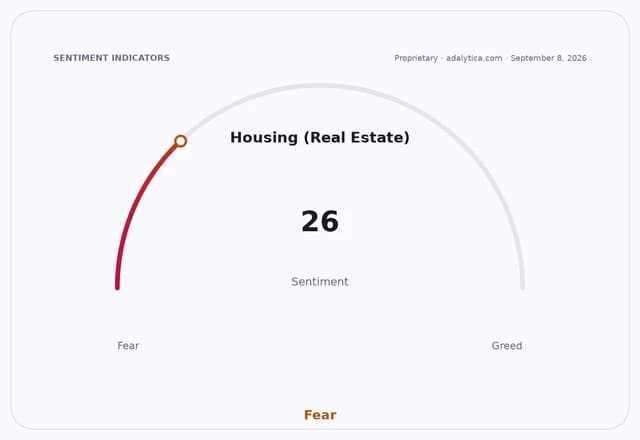
Sentiment IndicatorsⓘProprietary · adalytica.com · September 8, 2026
This is a snapshot — live sentiment, awareness and momentum for 130+ markets update continuously in the dashboard.Open AlphaPulse

In Attica, the pressure is even more acute. Average rents have climbed to 12.5 euros per square meter, up almost 60% over eight years, while the region’s home-price gauge has topped 3,200 euros per square meter. That leaves households with less disposable income and raises the risk of more inflation stickiness in a market where roughly 30% of households rent.
The government is betting that more supply, not just price controls, is the only durable fix. It is extending a three-year income tax exemption for vacant homes moved into long-term leases, a tax break for building upgrades and the VAT exemption on new construction, while also keeping restrictions on short-term rentals in central Athens and Thessaloniki.
It is also moving to make speculative foreign purchases more expensive. From July 2027, the transfer tax on property bought by non-EU buyers not covered by exemptions will rise to 15% from 3%, a sharp hike after foreign investors from outside the bloc bought more than 1.2 billion euros of property last year, with Turkish buyers among the most active.
At the same time, Athens is expanding its subsidized “Home 2” program set to start in early 2027 with 2 billion euros in funding. Eligibility rises to age 55 from 50, the cap on eligible property values increases to 300,000 euros from 250,000 euros and the maximum loan rises to 230,000 euros from 190,000 euros.
The measures reflect a broader economic problem: Greece still has about 180,000 to 200,000 fewer homes than it needs to restore balance, while roughly 700,000 properties remain closed. A renovation scheme may help bring about 20,000 units back to market, but that is not enough to shift prices quickly.
Investors in housing-linked assets are already trading with that tension in mind. U.S. homebuilding ETF ITB and residential REIT tracker VNQ have both pulled back from earlier highs, while Adalytica’s Housing Fear & Greed Index for XHB sits in “Fear,” underscoring how sensitive the sector is to affordability pressures, policy risk and supply constraints.
The near-term catalyst is execution: whether Greece can actually unlock vacant stock and whether the tougher tax regime slows foreign demand without choking off construction and transactions.
| Entity | Gains | Losses |
|---|---|---|
| Greek renters | ▲More supply support | ▼Persistent rent pressure |
| First-time buyers | ▲Higher subsidy access | ▼Still need large down payments |
| Local residents | ▲More housing availability | ▼Higher prices near prime areas |
| Foreign non-EU buyers | ▲Few direct gains | ▼Higher transfer tax, higher costs |