Greece’s government is leaning hard on a simple message: workers are better off than critics say, and the numbers now back it up. The Ministry of National Economy and Finance said net earnings for a single-person household rose 42.3% from 2019 to 2025, a claim aimed squarely at opposition attacks on living standards and one that matters because it goes to the heart of consumer spending, household resilience and the political case for the country’s economic rebound.
Greece net income rises as wages outpace inflation

That improvement is not just a statistical flourish. Net income is what households actually spend after taxes and social contributions, so it is a better gauge of purchasing power than gross pay alone. The ministry said Greece now ranks ahead of 10 European Union countries on that measure for single-person households, and it cited similar gains for two-earner families with children, where annual net earnings climbed 36.5% over the same period. For investors, that is important because sustained real-income growth supports retail sales, services demand and tax receipts while helping reduce the fragility that has long weighed on Greek consumption.
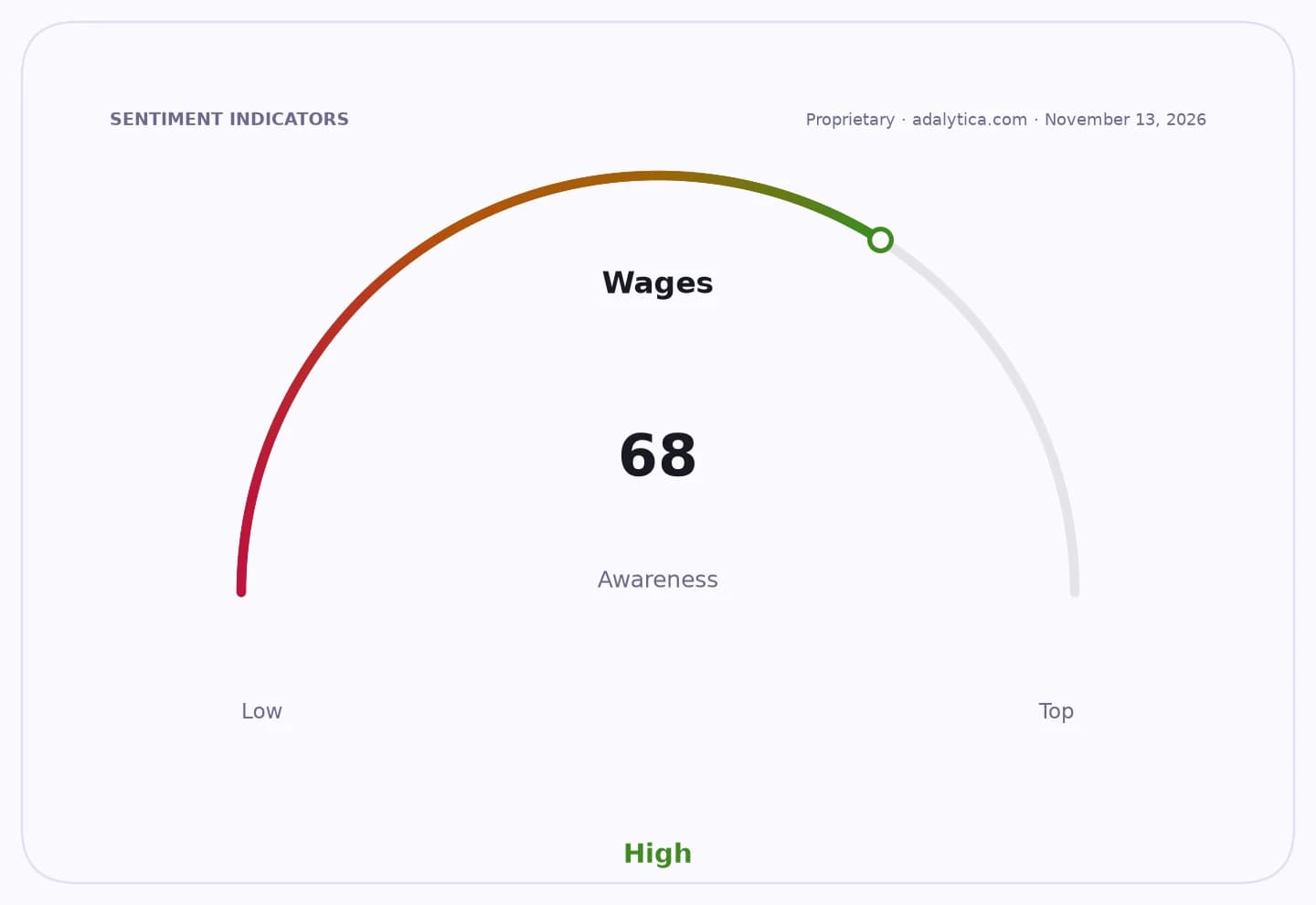
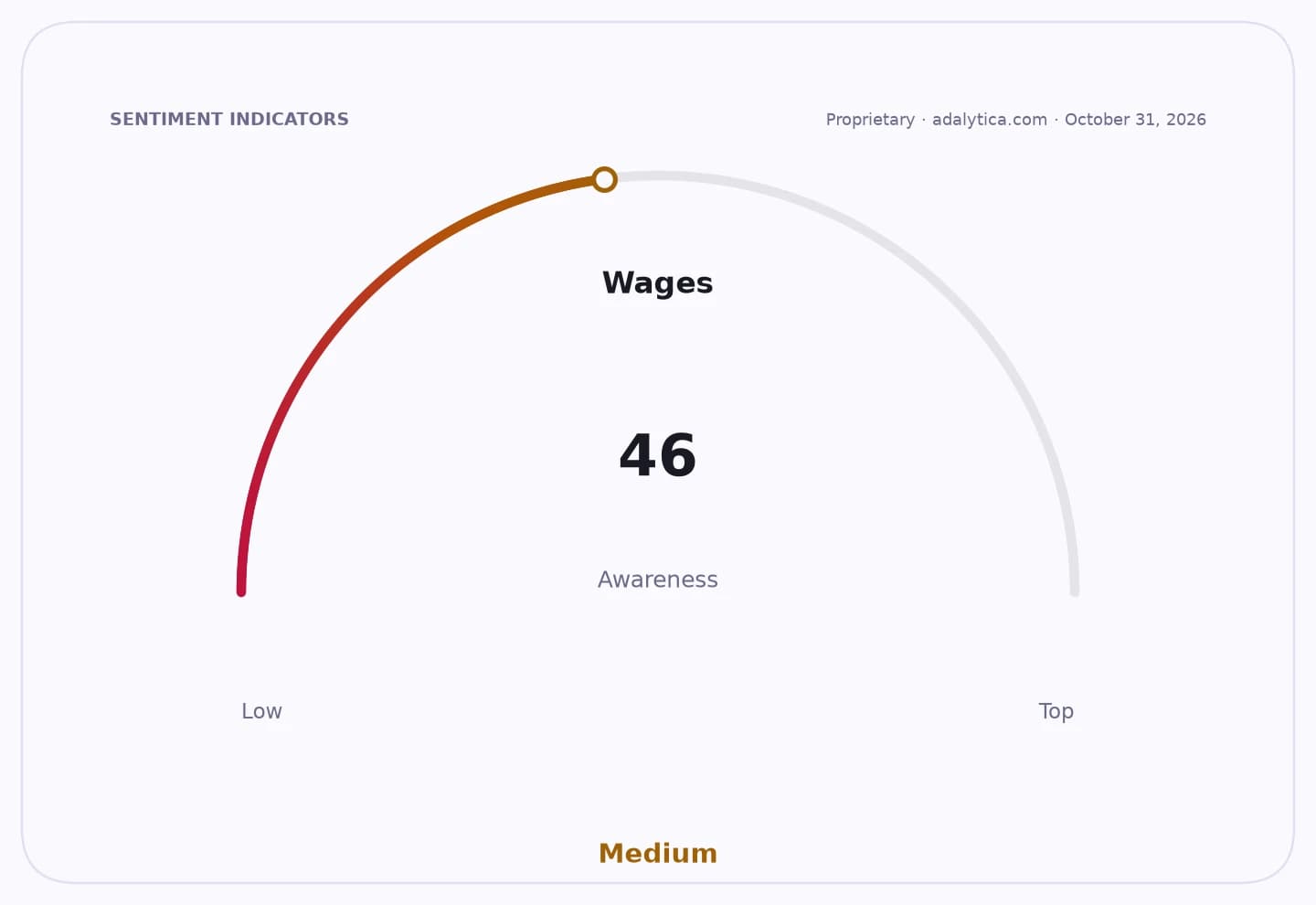
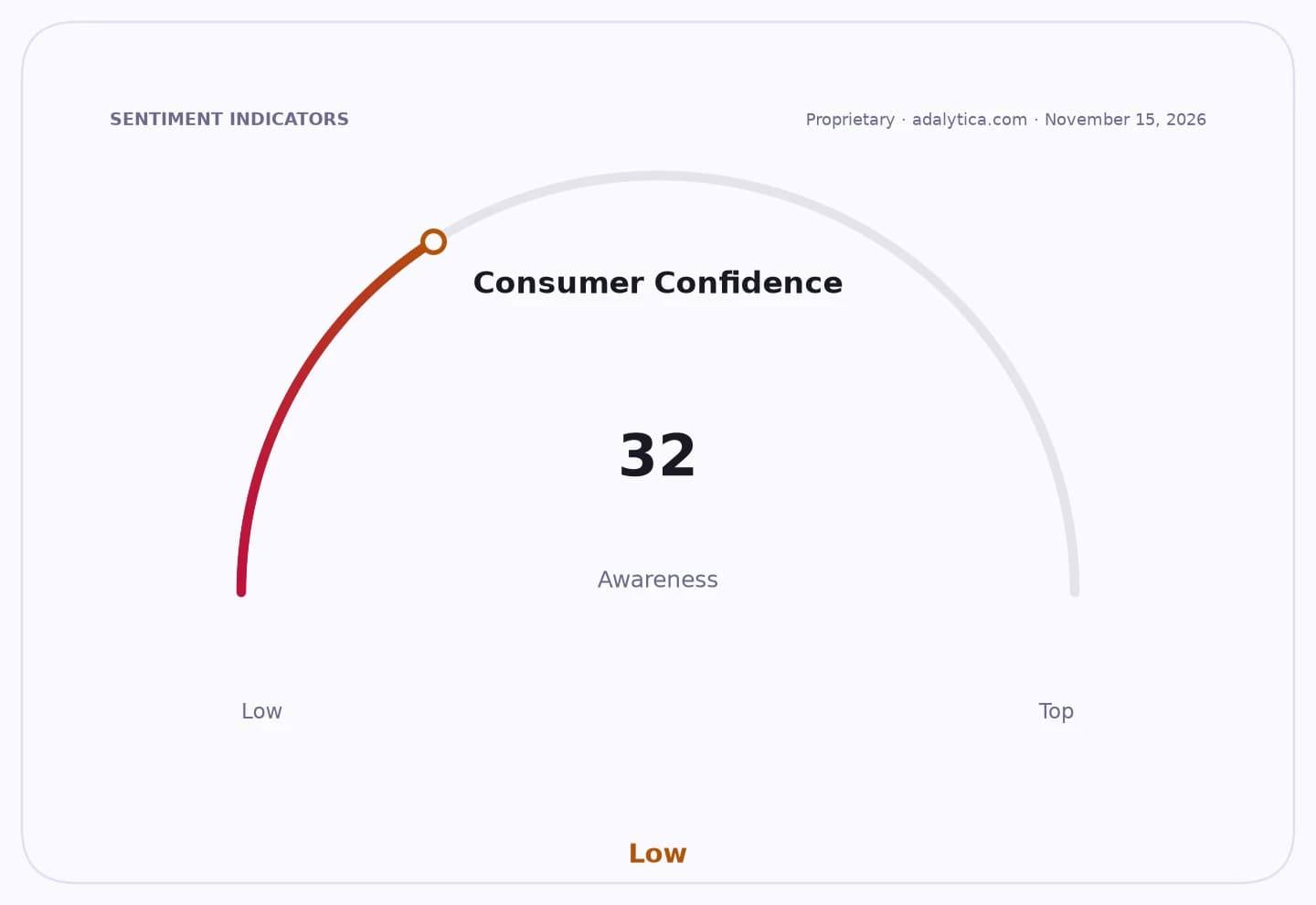
Sentiment Indicators
CPI
The government is also trying to show that wage growth has outpaced inflation. It pointed to a 38.6% rise in Greece’s labour cost index between the second quarters of 2019 and 2026, compared with a 24.4% increase in the consumer price index over the same span. In other words, wages and labour costs have risen faster than prices, even after the inflation shock and repeated economic disruptions. That matters economically because it suggests some of the pressure on households has been offset by pay growth rather than simply eroded by inflation.
The headline minimum wage story tells the same broader tale. Greece’s gross minimum monthly wage has climbed from 650 euros in 2019 to 920 euros in 2026, a 41.5% increase, while the ministry said the annualised minimum wage reached 1,073 euros in the second half of 2026, putting Greece on par with Portugal and ahead of several lower-wage EU peers. The government is already planning another 5.3% minimum-wage increase to 1,286 euros per month in 2027, underscoring that the policy focus remains on lifting disposable income rather than relying on austerity-era discipline alone.
CPI
For long-term investors, the deeper narrative is that Greece is still a work in progress, but it is not the same economy that came out of the debt crisis. The ministry said unemployment has fallen, employment is higher, per-capita consumption has improved, absolute poverty has eased and household debt relative to disposable income has declined. That combination strengthens the case that domestic demand can keep growing even if external conditions turn less friendly. It also helps explain why policymakers are trying to turn wage gains into a political and economic asset heading into 2027.
The catch, of course, is that Greece still trails the European average and inflation remains a real burden for many households. Higher pay does not erase housing costs, food prices or uneven income distribution. But for investors looking at Greece over a three- to five-year horizon, the message is constructive: a labour market that is gradually healing, rising net incomes and a government intent on supporting purchasing power can be a powerful mix for consumption-driven companies, banks and the broader economy. Worth watching, and for patient investors, worth keeping on the watchlist.
| Entity | Gains | Losses |
|---|---|---|
| Greek households | ▲Higher net pay | ▼Still-pressured budgets |
| Greek government | ▲Stronger recovery narrative | ▼Credibility risk if prices bite |
| Retailers and consumer firms | ▲Better spending power | ▼Weak-income households |
| Opposition parties | ▲Political opening on costs | ▼Less persuasive wage critique |