Greece is set to give low-paid private-sector workers a double boost from April 2027, combining a planned minimum wage increase with a cut in employee social-security contributions that should lift take-home pay more than the gross wage change alone.
Greece plans 2027 minimum wage and contribution cut
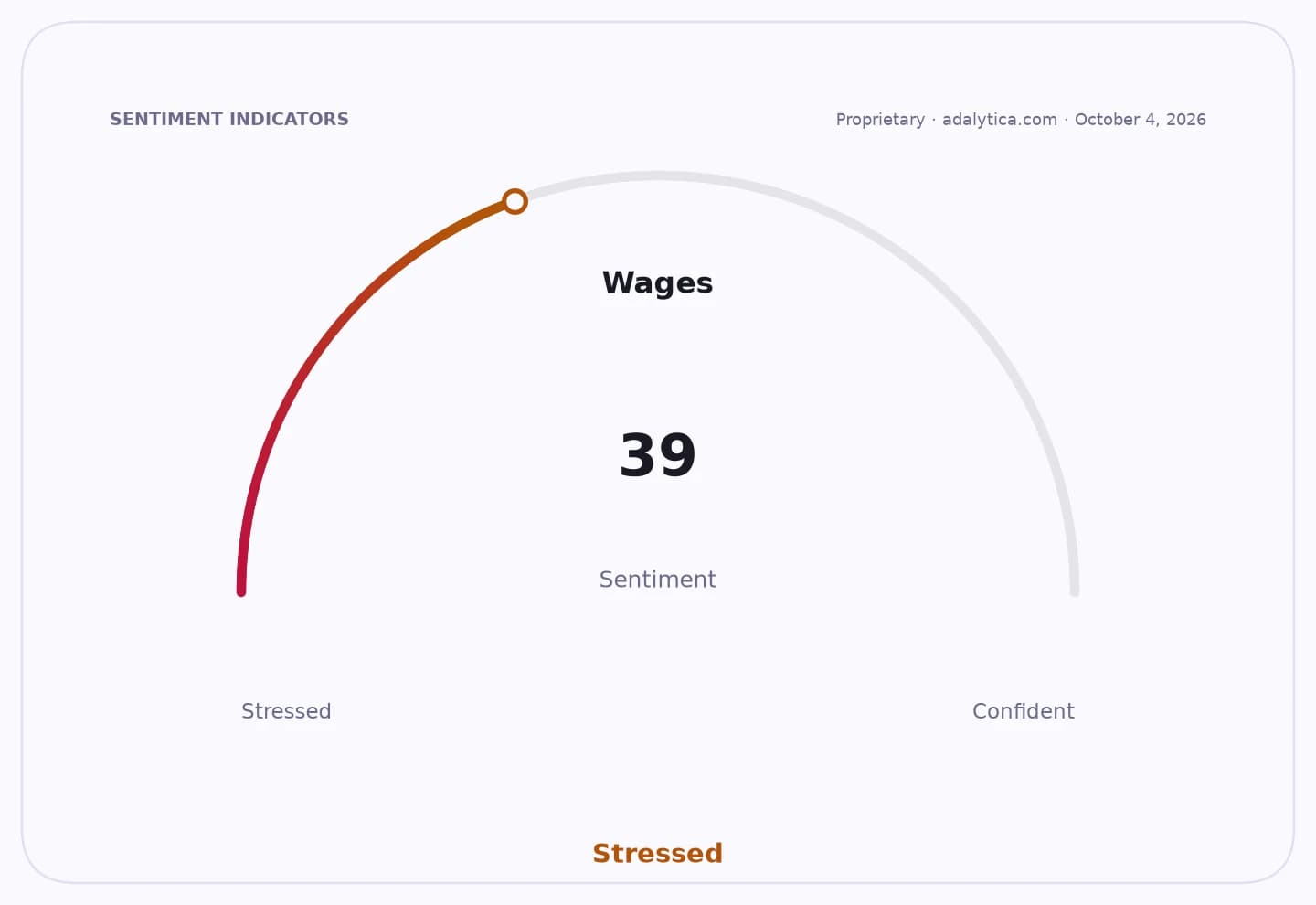
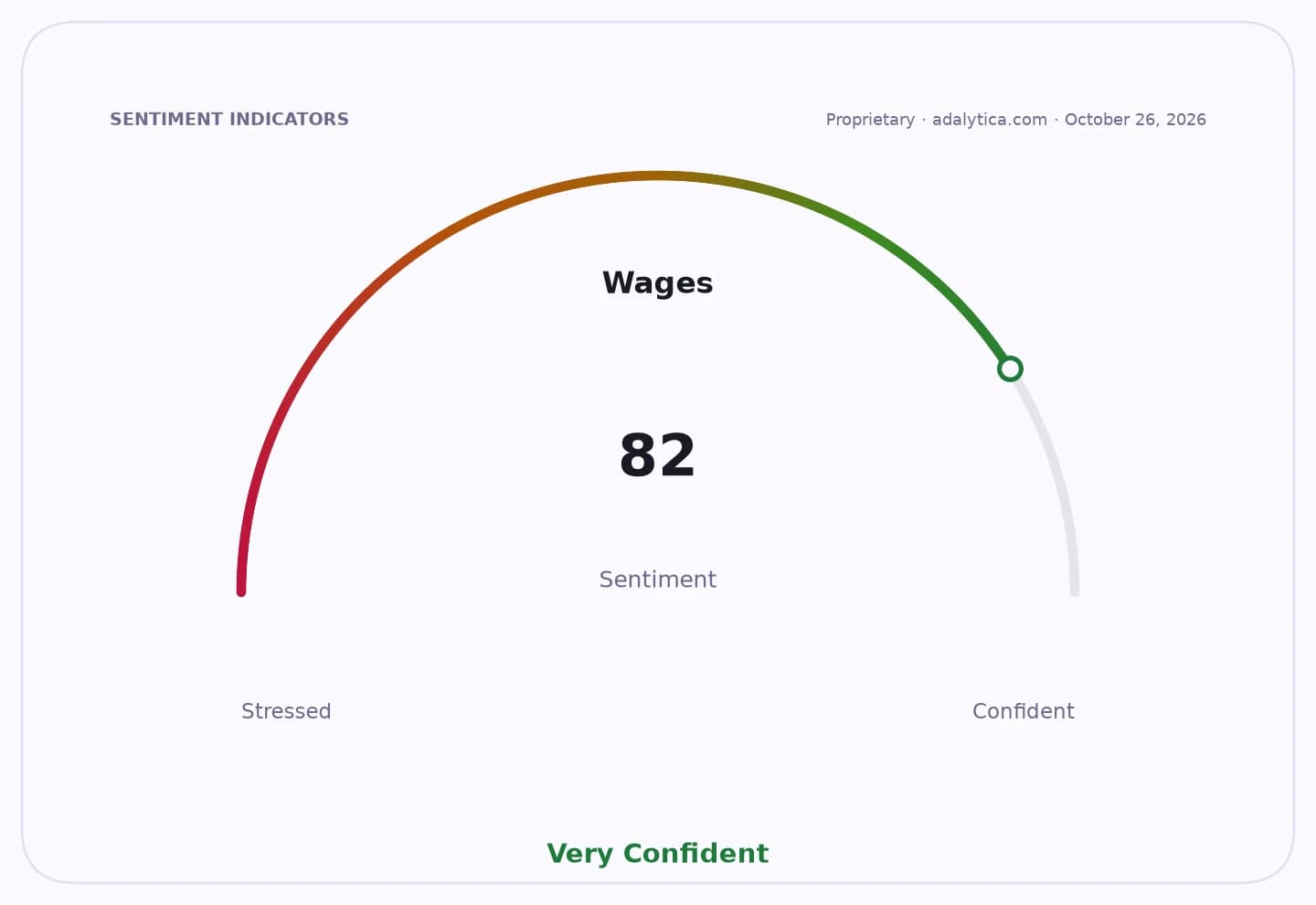
Wages
The government’s published scenario would raise the monthly minimum wage to 960 euros from 920 euros, a 4.35% increase, while reducing the employee unemployment contribution by half a percentage point to 0.70%. For workers on the floor, that means a cleaner income gain at a time when inflation is still eating into household budgets and wage policy remains a key political and economic lever.
Sentiment Indicators
The headline increase is only part of the story. Because statutory seniority bonuses are calculated as a percentage of the minimum wage, employees with recognized three-year service increments would see larger gross pay gains than the base 40-euro lift suggests. Under the government’s model, the legal minimum gross pay could reach as high as 1,248 euros for workers with three recognized triennia.
Roughly 700,000 private-sector jobs are expected to be directly affected, based on the labor ministry’s previous estimate when the minimum wage was raised to 920 euros in April 2026. That makes this one of the largest disposable-income measures in the Greek labor market in years, and one with broader spillovers for consumer spending, payroll costs and fiscal optics.
The contribution cut matters because it extends beyond the lowest earners. While the minimum wage increase only hits workers at or near the legal floor, the lower employee charge applies to any salaried worker subject to that insurance levy. The government says the change trims employee deductions by 5 euros for every 1,000 euros of gross pay, although the final net benefit will be partially offset by slightly higher taxable income.
For workers on the basic insurance package, total employee contributions are expected to fall to 12.87% from 13.37%. The net monthly gain in the ministry’s examples ranges from 31.56 euros for a 35-year-old worker without children and without service increments to 40 euros for a worker with three recognized triennia and two children.
For investors, the policy is a two-sided trade. It supports consumption across a large swath of the labor market, which should be constructive for retailers, supermarkets, leisure and consumer staples. But it also reinforces wage pressure for employers already dealing with tighter margins, especially in labor-intensive businesses. The losers are the companies most exposed to payroll inflation; the winners are the consumer-facing groups that can capture higher household spending.
The market’s bigger takeaway is that Greece is moving toward a more durable wage floor while softening the employee tax wedge. That combination is designed to make nominal wage growth translate more directly into spending power, a useful policy mix in an economy where real incomes remain politically sensitive. With inflation still a live issue and labor income a central driver of domestic demand, the 2027 package could prove more stimulative than the gross numbers initially imply.
Investors should read this as a consumption tailwind, not just a labor-cost story. If the measure survives the legislative process in its current form, the beneficiaries will be Greek consumer stocks, discount retail and domestically focused businesses. The pressure point will be labor-heavy employers that cannot fully pass on higher pay costs. Position for stronger household demand, but stay selective on margins.
| Entity | Gains | Losses |
|---|---|---|
| Low-paid private-sector workers | ▲Higher net pay | ▼— |
| Greek consumers and retailers | ▲Stronger spending power | ▼— |
| Labor-intensive employers | ▲— | ▼Higher wage bill |
| Government | ▲Political support, consumption boost | ▼Higher fiscal sensitivity |