Greece’s planned minimum wage increase from April 2027 will give workers a modest boost in take-home pay, but the heavier economic burden will fall on employers that do not get a corresponding cut in their labour charges.
Greece minimum wage rise lifts pay, raises employer costs
The key point for the economy is that Athens is pairing a higher statutory wage floor with a 0.5 percentage-point reduction in employee social security contributions, a move that raises net pay at the bottom of the market while leaving employer contributions unchanged. That means disposable income rises, but payroll costs for businesses still increase, a combination that supports consumption more than corporate margins.
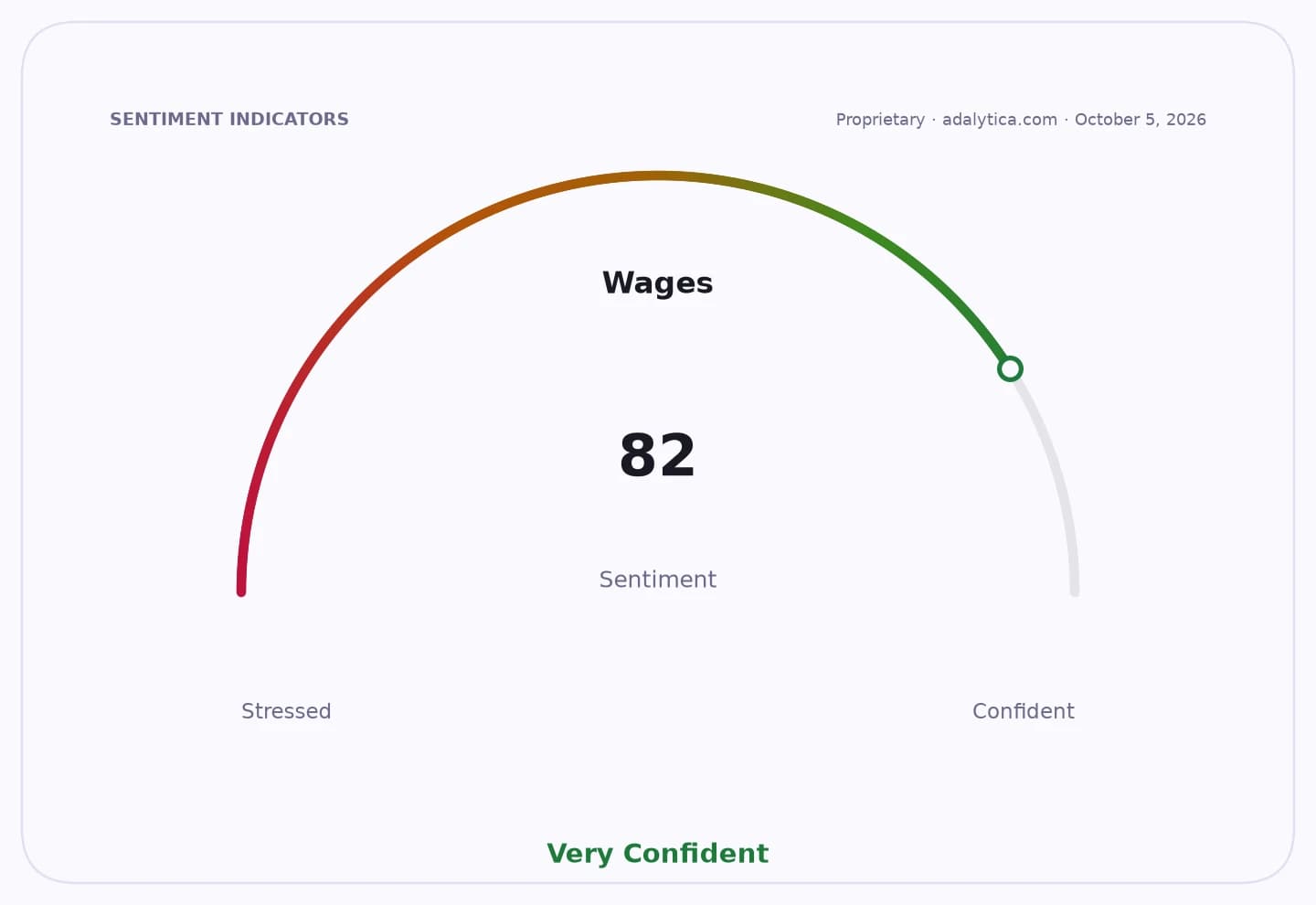
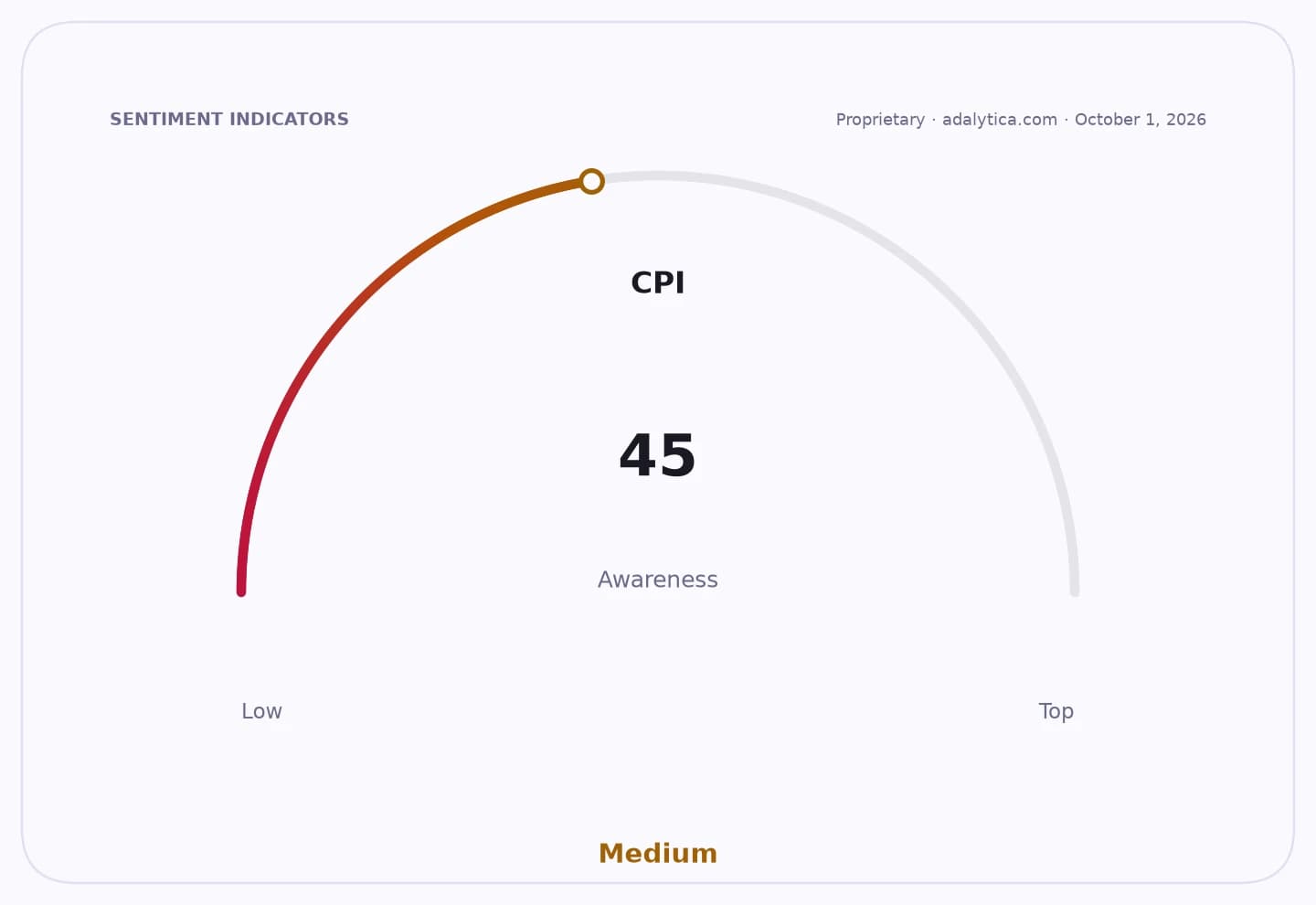
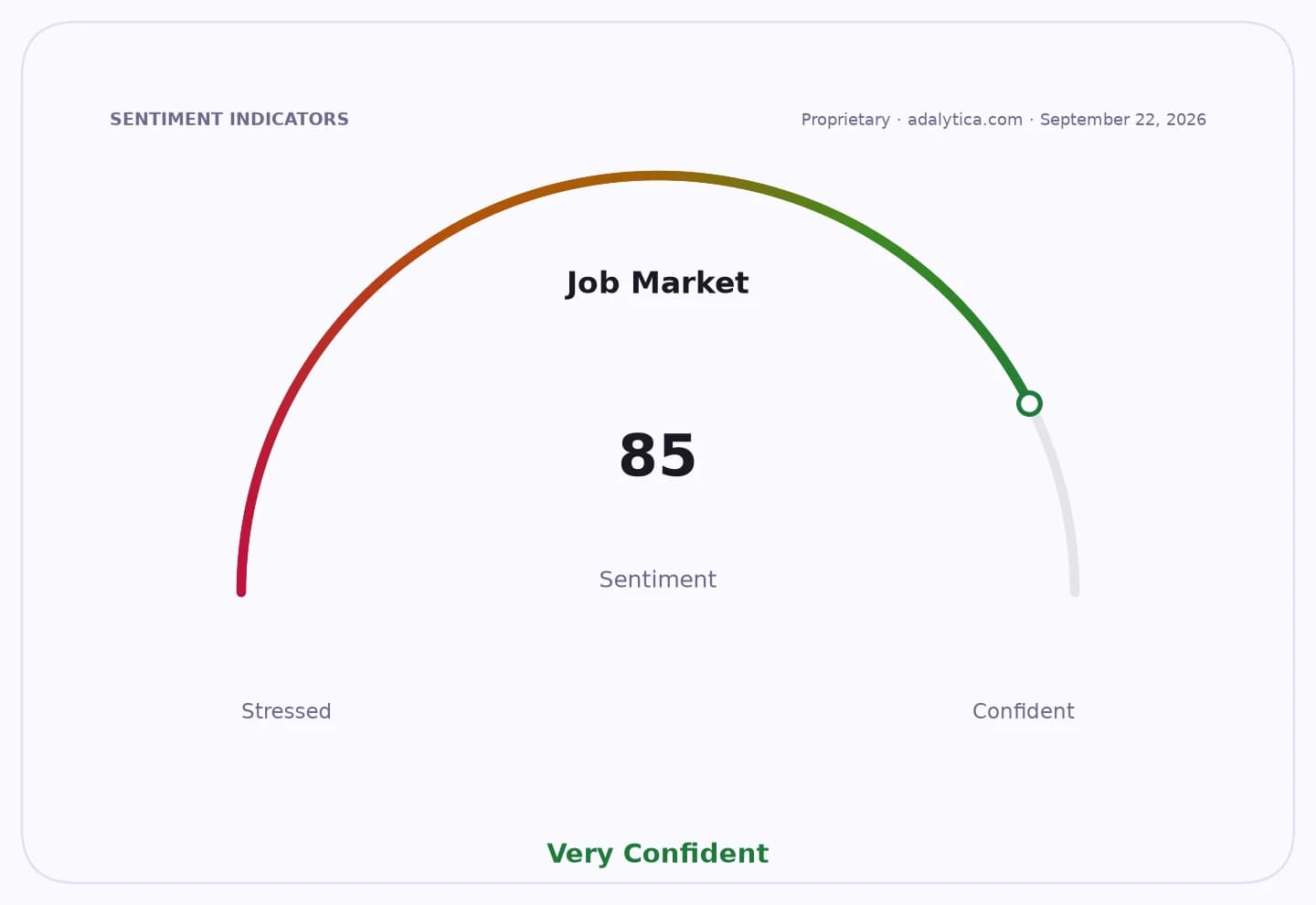
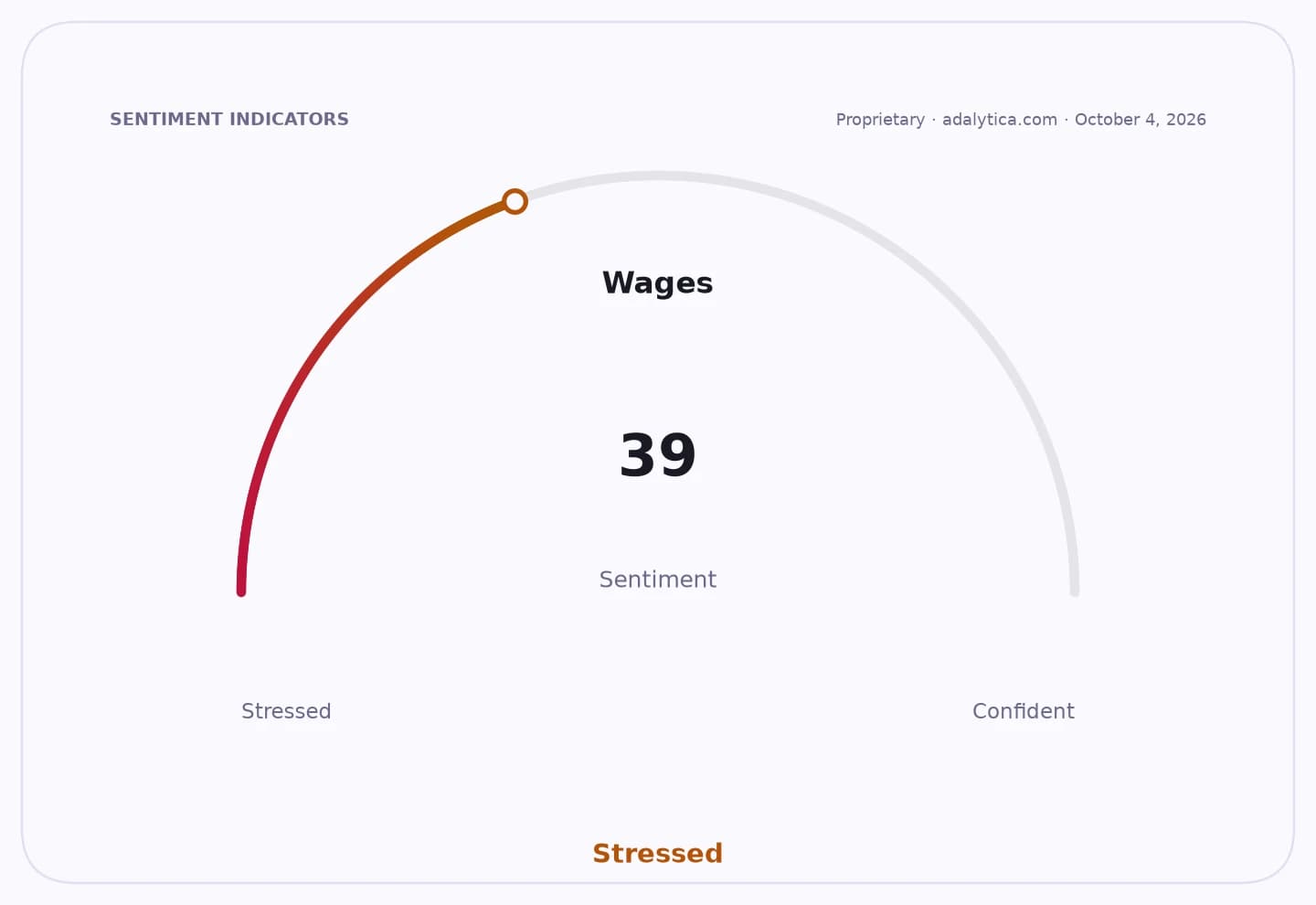
Sentiment IndicatorsⓘProprietary · adalytica.com · October 4, 2026
This is a snapshot — live sentiment, awareness and momentum for 130+ markets update continuously in the dashboard.Open AlphaPulse
Under the government’s working assumption, the monthly minimum wage would rise to 960 euros from 920 euros, with the legal floor then targeted to reach 1,000 euros in January 2028. On the same date, worker contributions would fall to 12.87% from 13.37%, while the total standard social insurance burden drops only slightly, to 34.66% from 35.16%, because the employer share stays at 21.79%.
The asymmetry matters. For an employee on the minimum wage, the lower contribution rate does not fully offset the larger wage base. The government’s own examples show a worker would pay about 123.55 euros a month in contributions on a 960-euro wage, versus roughly 123 euros today, meaning the tax-and-contribution relief is partly swallowed by the higher wage floor. Without the cut in worker contributions, the monthly payment would have been about 128.35 euros, so the reform still leaves roughly 4.80 euros more a month in the employee’s pocket from the insurance side alone.
For businesses, the impact is more direct. The total monthly cost of a minimum-wage employee without seniority pay would climb to about 1,169.18 euros from 1,120.47 euros, an increase of around 48.72 euros a month, even though the gross wage rises by only 40 euros. On an annual basis, using the private sector’s 14-pay system, that implies about 682 euros in extra cost per worker. For someone with three three-year seniority increments, the increase becomes larger, with the employer’s monthly burden rising by about 63.3 euros and the annual hit approaching 887 euros.
That is why the policy is economically significant: it redistributes income toward households without offering firms a full offset on labour costs. In a labour market where private payroll employment is still a key driver of domestic demand, the measure should support spending power, but it also tightens margins for low-wage employers in labour-intensive sectors such as retail, hospitality and food service.
The broader macro backdrop makes that trade-off more important. Inflation has eased from earlier peaks, but living-cost pressure has not disappeared, and the government is using the wage floor to protect purchasing power while preserving a path toward a 1,000-euro minimum wage in 2028. That creates a politically attractive story for workers, yet it also risks keeping unit labour costs elevated for firms already dealing with weak productivity gains and higher financing costs.
Investor implications are straightforward. Consumer-facing companies may benefit from slightly stronger household income, but the cost side is more immediate for employers with a high share of minimum-wage staff. Listed retailers and restaurant operators with thin margins are the most exposed, while larger chains with pricing power, scale efficiencies or stronger balance sheets can absorb the move more easily. The policy also leaves open the possibility that firms pass part of the cost on through prices, which would blunt the boost to real wages and complicate the inflation outlook.
The government’s examples also show why headline wage gains should not be confused with uniform gains in living standards. A 23-year-old worker without seniority pay would see net monthly pay rise from 797 euros to 836 euros in the official illustration, while a 34-year-old with three seniority increments would move from about 959 euros to 999 euros net. Those gains are real, but they vary sharply by age, children and tax bracket, which means the reform’s economic effect will be uneven across the workforce.
For investors, the main question is whether the wage increase arrives as a manageable demand support or as another cost pressure layered on top of already fragile margins. The answer will depend on how much of the extra payroll cost businesses can offset through pricing, productivity or staffing adjustments. If wage growth outpaces productivity, the policy will help households more than shareholders. If companies preserve margins through efficiency gains, the reform could be broadly neutral for the listed sector while still boosting consumer demand.
| Entity | Gains | Losses |
|---|---|---|
| Low-wage workers | ▲Higher net pay | ▼Limited offset from contributions cut |
| Employers | ▲Possible demand boost | ▼Higher payroll costs |
| Consumer firms | ▲Stronger household spending | ▼Margin pressure from wages |
| Government | ▲Social support, political credit | ▼Larger fiscal cost |