Coffee prices in Greece are heading higher again as volatile global bean markets, stubborn inflation and supply worries feed through to retail shelves, squeezing consumers and putting another cost item under pressure for households already stretched by expensive living costs.
Greek Coffee Prices Face Renewed Upward Pressure

The immediate driver is a renewed rebound in coffee costs across producing and trading markets, with Vietnam’s Central Highlands seeing domestic prices climb and robusta edging higher again after sharp swings earlier this month. That matters because coffee is one of Greece’s most widely consumed beverages, and even modest wholesale increases tend to filter quickly into café menus, takeaway cups and supermarket packs in a country where coffee is a daily purchase, not a luxury.
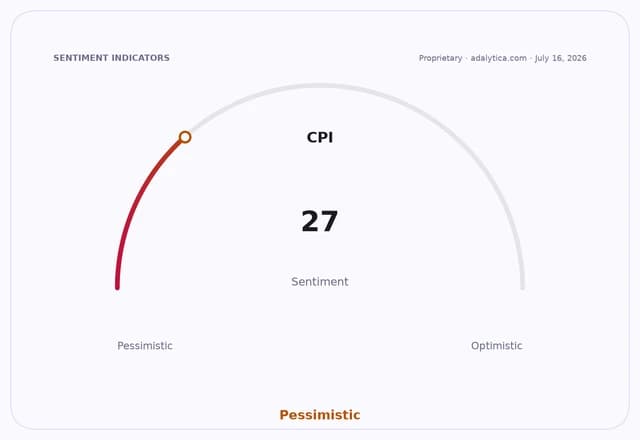
Sentiment IndicatorsⓘProprietary · adalytica.com · July 16, 2026
This is a snapshot — live sentiment, awareness and momentum for 130+ markets update continuously in the dashboard.Open AlphaPulse
The broader backdrop is still inflationary. Greece is dealing with consumer prices that remain elevated after years of global shocks, while Brent crude at about $78 a barrel and a 10-year U.S. Treasury yield near 4.6% underscore that financing and transport costs are not benign. Coffee roasters and café operators are being hit from multiple directions at once: green bean costs, freight, labor and higher borrowing costs.
For investors, the key issue is margin pressure and demand elasticity. Starbucks shares have moved above both their 50-day and 200-day moving averages, but the stock is still sensitive to input-cost inflation and consumer trading down. U.S.-listed Luckin Coffee has also seen heavy swings, reflecting how quickly sentiment can shift when commodity costs and demand signals change.
The coffee market itself remains unstable. World prices fell 2.8% in June to a nearly two-year low, then rebounded on climate concerns tied to El Niño risks for yields in Brazil and West Africa. Adalytica’s Consumer Spending Sentiment gauge is still deep in “Extreme Greed,” suggesting households are willing to spend, but that does not protect them from higher prices at the counter.
In Greece, that combination points to another round of repricing across cafés, bakeries and retail chains. Unless global coffee futures stabilize and logistics costs ease, consumers should expect the next menu update to be higher, while operators and branded sellers try to preserve volumes without giving up margins.
| Entity | Gains | Losses |
|---|---|---|
| Coffee roasters/cafés | ▲Pass through higher costs | ▼Squeezed margins if demand softens |
| Consumers in Greece | ▲None | ▼Higher everyday beverage bills |
| Coffee growers/exporters | ▲Better farmgate pricing | ▼Less price stability |
| Starbucks and other chains | ▲Potential revenue uplift from pricing | ▼Input-cost pressure and volume risk |