Hainan Island’s draw for Russian vacationers is becoming a live case study in how geopolitics, airline access and cheaper alternative destinations are redirecting Asia’s tourism money.
Hainan Gains Russian Tourists as Travel Reroutes
What looks like a beach-season curiosity is actually a demand shift with earnings implications for Chinese hotel operators, travel platforms and regional airlines. Hainan is capturing more of the Russian outbound market at a time when travel patterns between Russia and the West remain fractured, and that is helping Chinese leisure destinations fill rooms and keep pricing power intact even as broader consumer sentiment remains uneven.
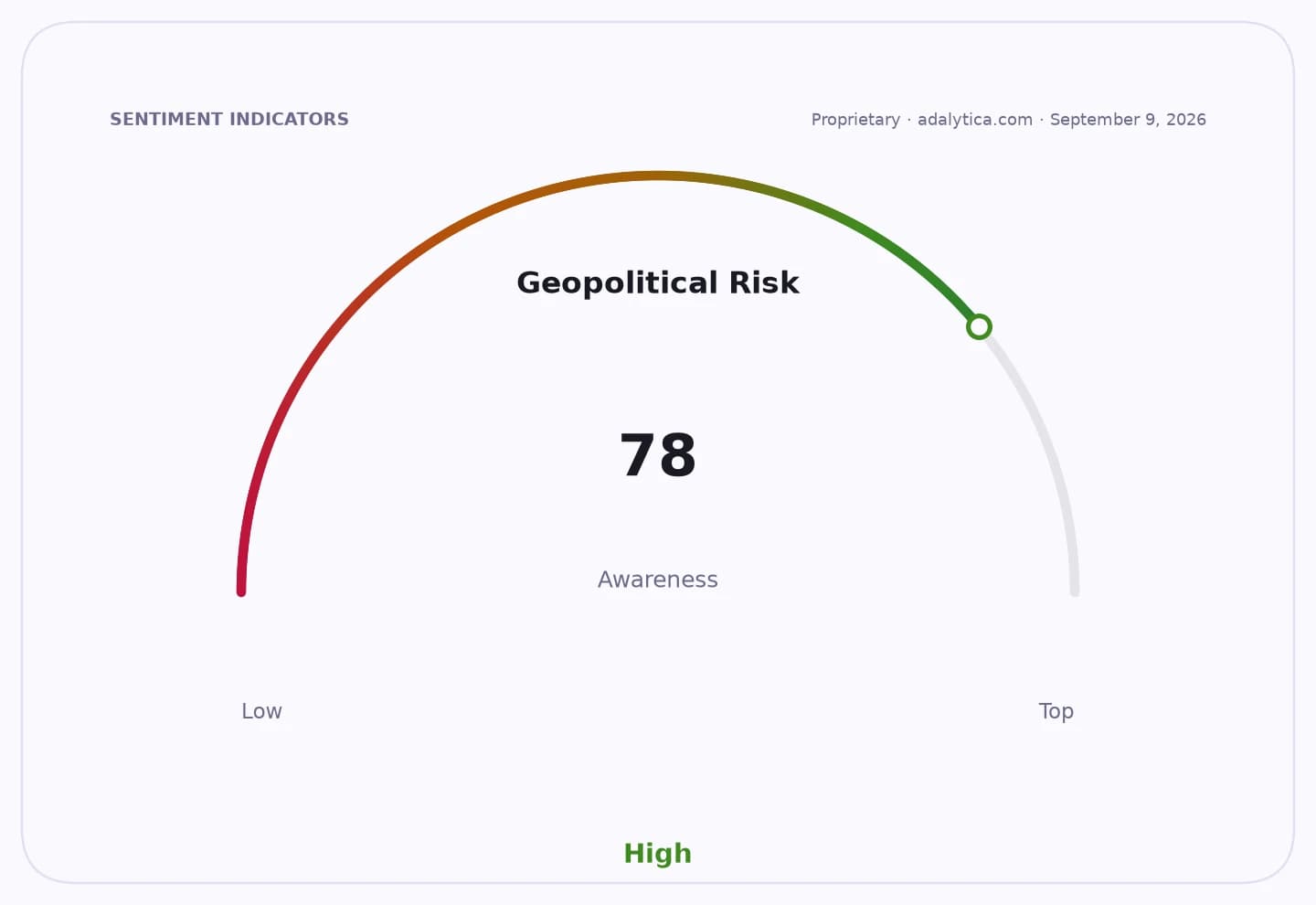
Sentiment IndicatorsⓘProprietary · adalytica.com · September 9, 2026
This is a snapshot — live sentiment, awareness and momentum for 130+ markets update continuously in the dashboard.Open AlphaPulse
For investors, that matters because tourism is no longer just a cyclical rebound story. It is becoming a rerouting story. When Russians book package holidays to southern China instead of European resorts, the beneficiaries are the operators with exposure to Chinese domestic leisure, cross-border booking platforms and airport and airline infrastructure tied to inbound traffic. The losers are the destinations and carriers still dependent on traditional Russia-Europe travel corridors.
That is the backdrop for Huazhu Group, the Chinese hotel chain behind the HTHT ticker, and Trip.com, the online travel platform represented by TCOM. Both have shown recent stock strength before pulling back, with HTHT trading at $44.18 after touching $53.59 in late February, while TCOM closed at $40.50 on Sept. 8 after a sharp slide from its January highs near $78.96. The moves underscore a market that is willing to pay for Chinese travel exposure when demand is visible, but still treats the sector as tactical rather than structural.
The market may be underestimating how durable this rerouting is. Hainan is not just another holiday island; it is one of China’s key leisure gateways, and every additional foreign visitor helps absorb hotel supply, support ancillary spending and reinforce the case for continued investment in tourism infrastructure. If Russian travelers are becoming a steady presence, that is a modest but meaningful source of incremental occupancy for operators and booking commissions for platforms.
There is also a broader macro angle. Adalytica’s US–China relations gauge shows “Extreme Greed” at 100 for sentiment, but awareness at just 4, reflecting how quickly headlines can swing while the underlying commercial ties remain constrained. China’s policy-direction gauge is still in “Fear” territory, but its recent improvement suggests a willingness to keep supporting domestic consumption and services. In that environment, tourism is one of the cleaner ways to capture spending without depending on a full industrial-cycle recovery.
The timing is favorable for Hainan, but the real opportunity is in the second-order effects. If more Russian travelers choose China, airlines, tour operators, airport retailers and hotel chains with scale on the island all gain leverage. If that pattern broadens beyond Russia to other travelers seeking cheaper, geopolitically neutral beach destinations, the rerouting trade could become a multi-year theme instead of a seasonal quirk.
For investors, the takeaway is straightforward: watch the Chinese travel stack, not just the beach. Hainan’s Russian visitor surge is a demand signal for the operators built to monetize it, and the best positioning is in the picks-and-shovels of leisure travel rather than the headline destination itself.
| Entity | Gains | Losses |
|---|---|---|
| Hainan hotels | ▲Higher occupancy | ▼Unfilled rooms |
| Trip.com / OTAs | ▲More bookings | ▼Lower transaction volume |
| Chinese airlines / airports | ▲More traffic | ▼Idle capacity |
| European resorts | ▲Less Russian demand | ▼Lost winter-sun spending |