UK savers looking for gilt exposure are increasingly being steered toward brokers that allow gilt trading, gilt ETFs, money-market funds or cash ISAs, highlighting how access rather than appetite has become the key constraint in a market still shaped by elevated yields and shifting rate expectations.
Hargreaves Lansdown Gains as UK Savers Buy Gilts

The issue matters because gilts remain one of the few large, liquid tools available to UK investors seeking income, duration or a parking place for cash without taking full equity risk. When direct access is limited, the spillover is immediate: investors migrate into listed proxies such as gilt ETFs, money-market funds or easy-access wrappers, while platforms that support bond dealing can win deposits, trading commissions and balances from those looking for a more precise way to manage yield.
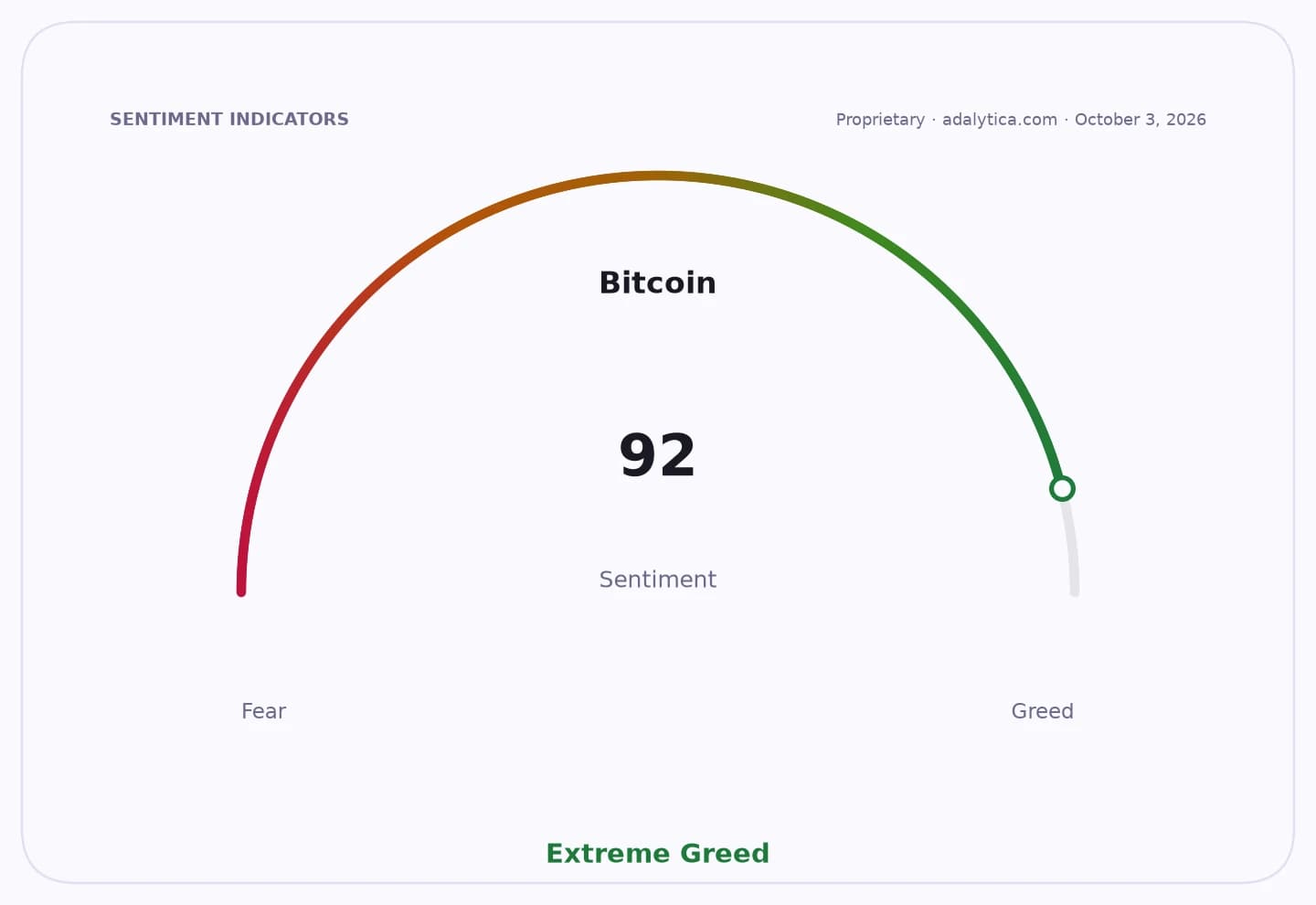
Sentiment IndicatorsⓘProprietary · adalytica.com · October 2, 2026
This is a snapshot — live sentiment, awareness and momentum for 130+ markets update continuously in the dashboard.Open AlphaPulse
That dynamic helps explain why brokers and investment platforms with fixed-income access can gain share even when the underlying bond market is little changed. Hargreaves Lansdown, for example, has seen its shares rise sharply over the past year, with the stock recently trading at 17.0 pence after touching 22.26 earlier in the period, while technical readings have cooled from overbought levels to an RSI of 29.7, suggesting sentiment has become more fragile even as the longer-term business case around platform-led asset gathering remains intact. For investors, the message is that product breadth is becoming a competitive advantage: the platforms that can offer direct gilt dealing, alongside cash solutions and funds, have a better chance of retaining assets when households and advisers want to fine-tune duration and liquidity.
The trade also sits against a broader macro backdrop in which bond markets are being watched closely for clues on inflation, growth and policy. Adalytica’s British pound trade signals show elevated “greed” sentiment at 78, while US Treasury bond signals point to “extreme greed” in awareness terms, underscoring how fast expectations can shift around sovereign debt once investors start repositioning for central-bank cuts or fiscal stress. In the UK, gilts are not just a yield story; they are part of a household balance-sheet decision between bank deposits, money-market funds, income ETFs and direct sovereign debt.
For platforms such as Hargreaves Lansdown and AJ Bell’s rival retail-investing peers, the opportunity is to capture flows from savers who want something better than cash but less volatile than equities. For brokers that do not offer direct gilt trading, the risk is disintermediation: clients may simply move elsewhere or substitute into cheaper ETF wrappers. For investors, the choice comes down to control and convenience. Direct gilts can offer maturity certainty and cleaner exposure to rates, while ETFs and money-market funds trade some precision for liquidity and ease.
The next catalyst is whether UK retail demand for income and defensive assets keeps rising as rate expectations evolve. If it does, brokers with fixed-income access and strong cash propositions are likely to benefit most, while platforms without those features may struggle to hold on to higher-balance clients who now have more ways than ever to express the same view on gilts.
| Entity | Gains | Losses |
|---|---|---|
| Hargreaves Lansdown | ▲More fixed-income flows | ▼Clients lacking bond access |
| AJ Bell / broker peers | ▲Higher platform stickiness | ▼ETF-only substitutes |
| Gilt ETFs and money-market funds | ▲Retail demand spillover | ▼Direct bond dealers if access widens |
| UK savers | ▲More yield choices | ▼Simpler cash-only holdings |