HCLTech’s opening of a new technology centre in GIFT City, with plans to employ 500 engineers, underscores how fiercely Indian technology firms are competing for scarce engineering and technical talent even as the broader labour market remains uneven.
HCLTech Talent Push Signals Tight Engineering Market
The move matters because it points to a structural shift in how the country’s IT services players are spending: away from broad-based hiring and toward targeted investment in specialist engineering capabilities that can support higher-value work. For HCLTech, the new centre is not just a headcount announcement; it is an attempt to deepen technical capacity in a location designed to attract business, talent and capital, and to do so at a time when clients are demanding more from providers facing pressure from global rivals and fast-moving AI platforms.
Sentiment IndicatorsⓘProprietary · adalytica.com · July 18, 2026
This is a snapshot — live sentiment, awareness and momentum for 130+ markets update continuously in the dashboard.Open AlphaPulse
The Ministry of Labor’s bulletin on available engineering and technical jobs, including roles offering lucrative salaries, fits that same pattern. It suggests demand for skilled labour is being driven by the same companies that are trying to protect margins and win more complex contracts. When firms pay up for engineers, it usually reflects either a shortage of the right skills, a need to localize advanced work, or both. That makes the hiring push economically relevant beyond one company: it can lift wages in the segment, tighten the supply of experienced technical workers, and intensify competition among employers across India’s technology ecosystem.
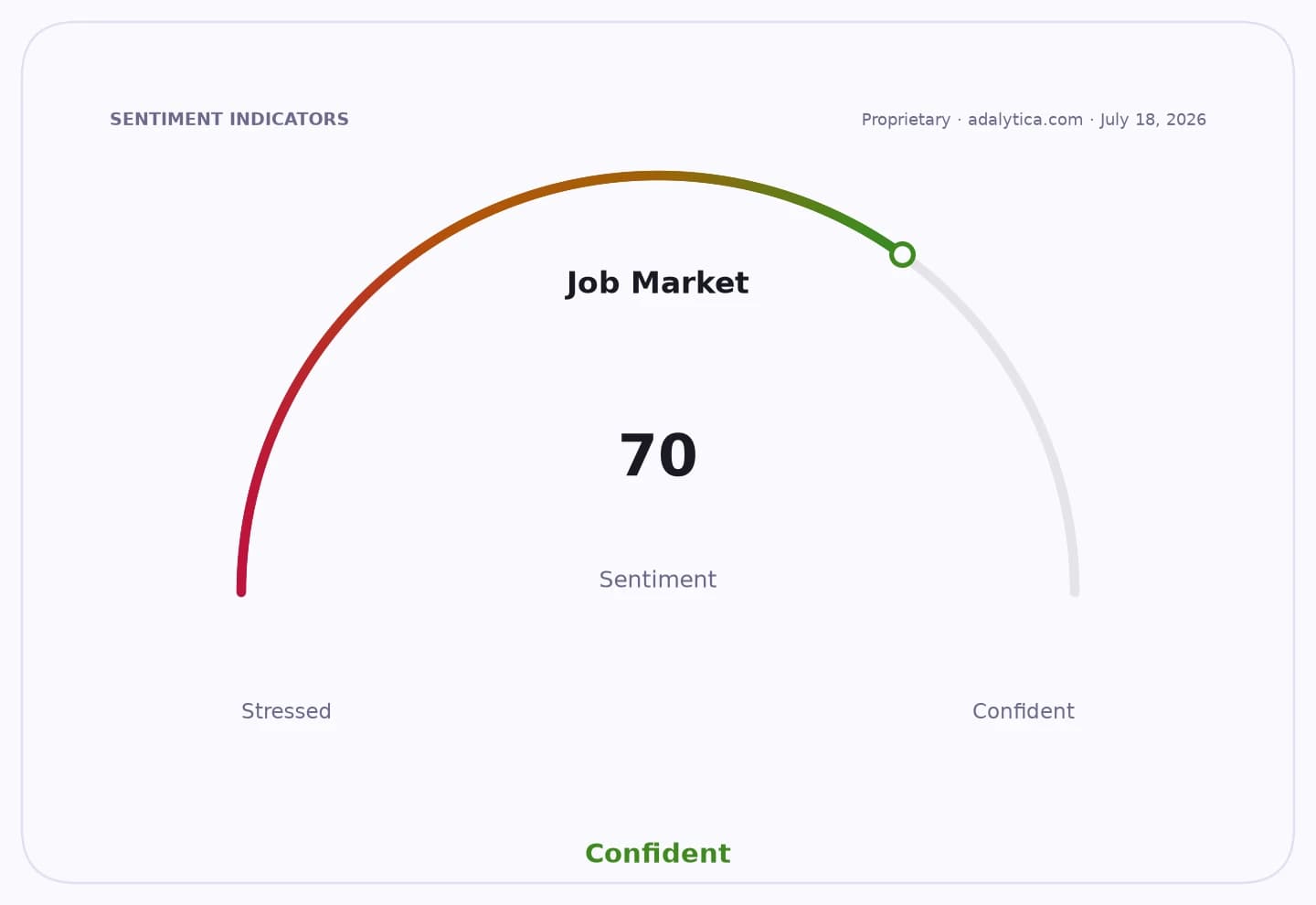
The sentiment backdrop is consistent with that interpretation. Adalytica’s Job Market Sentiment gauge is at 70, which it classifies as neutral, while awareness remains in fear territory at 19. Nonfarm payroll sentiment is lower at 34, also neutral but still reflecting caution. Taken together, the data point to a labour market that is not uniformly overheating, but where specific technical niches are still commanding attention and compensation. In other words, the market is not broadening evenly; it is concentrating around skills that can directly support digital transformation, AI adoption and engineering-led services.
Job Market — 30-day sentimentadalytica.com
Explore this data interactively — full history, time series and cross-market comparisons.Open AlphaPulse
For investors, the implications cut both ways. The bull case is that companies like HCLTech that can secure talent early may preserve competitiveness, capture premium work and support revenue growth in higher-margin service lines. The bear case is that rising compensation and the cost of building new centres could pressure operating margins if wage inflation outruns pricing power. That trade-off is especially important for IT services firms already under pressure to prove they can compete with larger platforms and emerging AI-native competitors.
The broader narrative is that India’s technology hiring cycle is becoming more selective and more strategic. The winners are likely to be firms that can pair scale with specialized capability and access to talent hubs such as GIFT City. The losers may be employers that cannot match compensation or offer enough technical depth to keep engineers from migrating to better-paying projects. The next catalyst will be whether this hiring trend spreads beyond a few marquee centres into a wider reset in salary expectations and workforce strategy across the sector.
| Entity | Gains | Losses |
|---|---|---|
| HCLTech | ▲Deeper engineering capacity | ▼Higher hiring costs |
| Skilled engineers | ▲Better pay and roles | ▼Less bargaining slack |
| Competitors | ▲Talent benchmark clarity | ▼Poaching pressure |
| Margin-sensitive IT firms | ▲— | ▼Wage inflation |