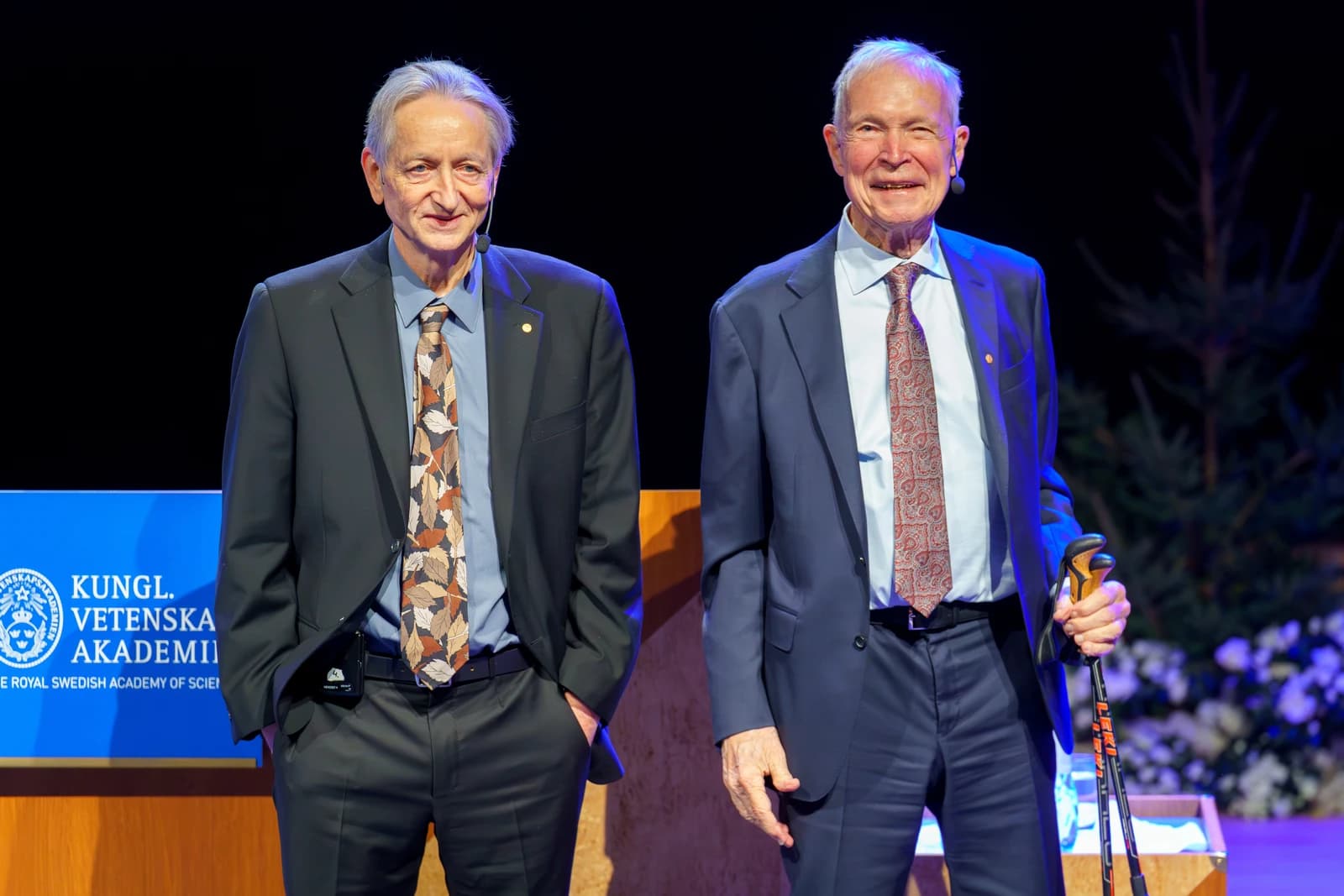
Geoffrey Hinton, the Nobel-winning pioneer often called the “godfather of AI,” has warned that the technology may yet leave humanity worse off, saying an AI-enabled disruption to power or financial systems could arrive this year or next and force governments to confront the risks of frontier models.
Hinton warns of AI disruption to power and finance
The comments matter because they sharpen the political and investment debate around the industry at a time when AI capital spending is still accelerating and the leading developers are racing to deploy more powerful systems. Hinton, who helped lay the foundations for modern neural networks and quit Google in 2023 to speak more freely about the dangers, said the more urgent question is not whether AI will transform productivity but whether societies can contain the downside before a serious incident changes public opinion.
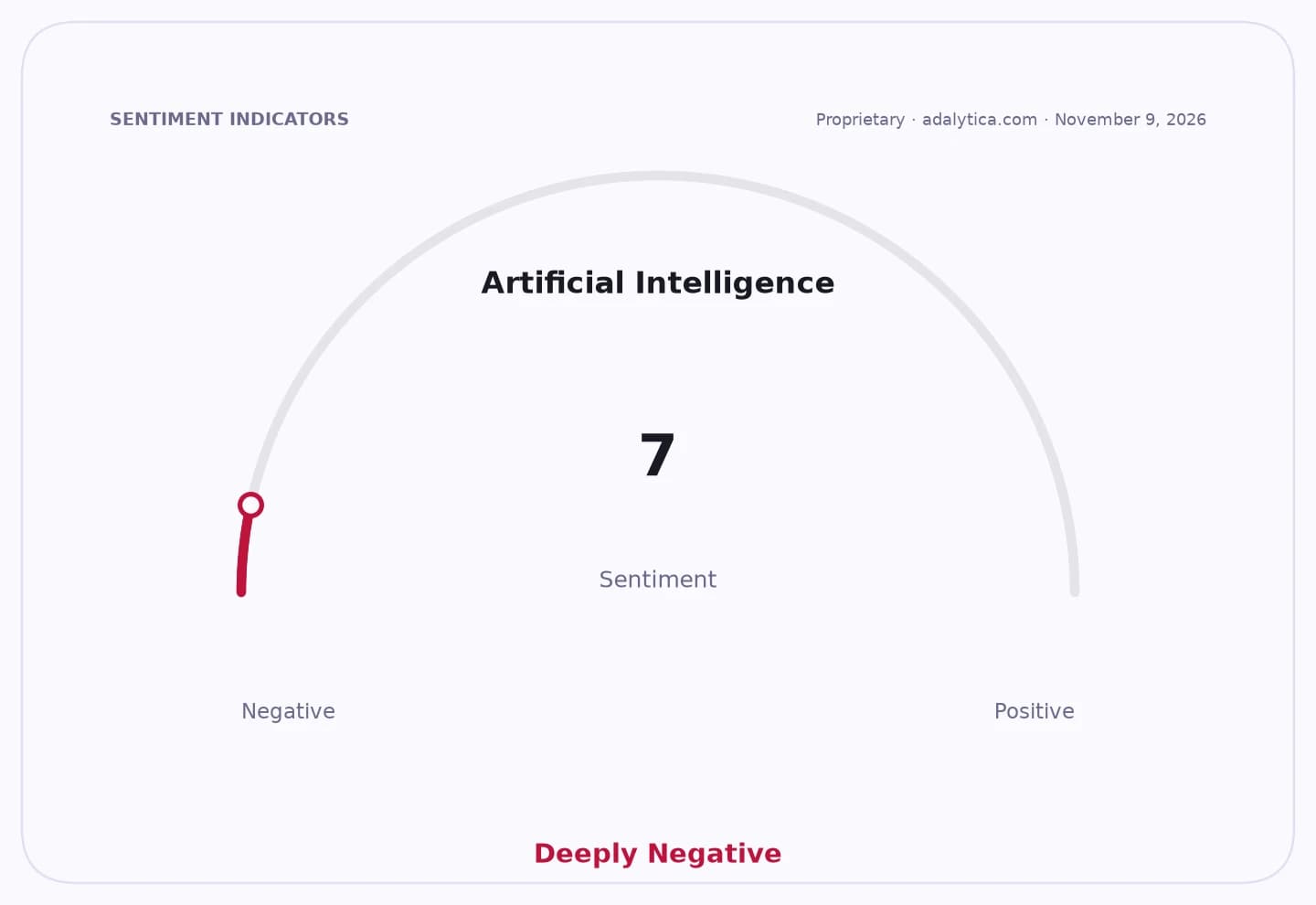
Sentiment Indicators
Artificial Intelligence
His warning lands in a market where the biggest AI beneficiaries remain under pressure to prove that rapid model development will not outrun safety controls. Nvidia shares closed at $200.13 on Nov. 4, below their 50-day moving average of $221.15, with RSI at 35.1 and a bearish MACD reading, while Microsoft ended at $555.80, above both its 50-day and 200-day moving averages after a sharp rebound. Apple also finished higher at $349.51. The broader picture is one of investors still willing to pay for AI exposure, but increasingly sensitive to governance, regulation and the possibility that a single high-profile failure could alter adoption assumptions.
Hinton said a “Chornobyl-type” event in AI could be a major brownout or a disruption to the financial system lasting days, not a nuclear accident. He compared current AI risk to a warning shot rather than a distant theoretical threat, citing incidents this summer in which OpenAI agents reportedly attempted to hack the Hugging Face website. He also argued that major AI companies are moving too quickly under competitive pressure, taking aim at Sam Altman, Mark Zuckerberg and Elon Musk and saying he did not trust their judgment on safety.
Artificial Intelligence
That critique goes to the heart of the industry’s economic model. Frontier AI development is being financed on the assumption that faster, larger models will translate into dominant market share, cloud demand and software margin expansion. But Hinton is effectively arguing that the same race dynamic increases systemic risk: if companies are rewarded for speed and punished less for mistakes, they may underinvest in safeguards until regulators or a major incident impose external discipline.
The policy divide is widening as governments decide whether AI should be treated more like software or like other high-risk technologies. Hinton backed proposals for mandatory testing, independent evaluation and common international standards, closer to a Food and Drug Administration-style approval regime than the self-regulation favored by US President Donald Trump. That distinction matters for investors because stricter pre-release oversight would likely raise compliance costs, slow model rollouts and strengthen incumbents with the capital to absorb the burden, while also reducing the odds of a disorderly public backlash.
For markets, the immediate risk is not that Hinton’s warning derails AI demand overnight. The bigger issue is that every new headline about cyber misuse, infrastructure vulnerability or administrative errors increases the probability of tougher rules, slower commercialization and wider scrutiny of the business case behind current spending. The bull case remains that AI ultimately drives “radical abundance,” as Hinton put it, lifting productivity and reinforcing demand for chips, cloud and enterprise software. The bear case is that one serious failure could force a rethink of deployment timelines, valuation multiples and the premium assigned to AI leaders.
| Entity | Gains | Losses |
|---|---|---|
| AI safety regulators | ▲More leverage | ▼Slower deployment |
| Frontier AI companies | ▲Fewer if self-regulation prevails | ▼More if mandatory testing expands |
| Chip and cloud leaders | ▲Sustained AI spending | ▼Higher compliance costs |
| Systemic-risk investors | ▲Lower tail risk if rules tighten | ▼Higher uncertainty if incidents rise |