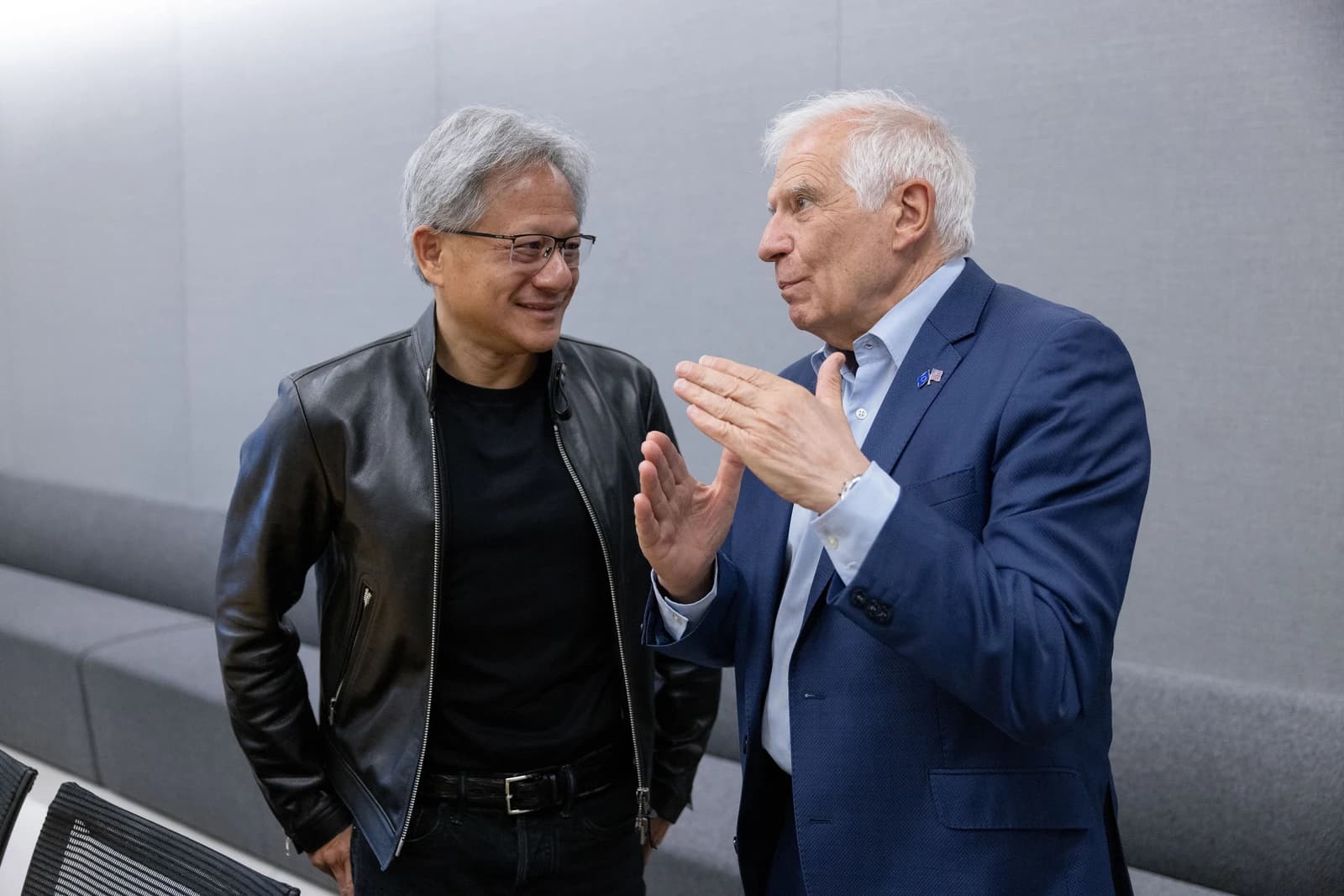
Nvidia chief executive Jensen Huang is pushing back hard against the doomsday narrative around artificial intelligence just as the industry races to spend billions on the next wave of compute.
Nvidia, Microsoft, TSMC Gain From AI Capex Boom

Why that matters is simple: the AI trade is still being priced on the assumption that demand, not catastrophe, will dominate the next several years. Huang’s message that the odds of AI causing human extinction by 2030 are “exactly zero” is more than a sound bite — it is a defense of the capital-spending supercycle that has made Nvidia, Microsoft and Taiwan Semiconductor the market’s core AI beneficiaries.
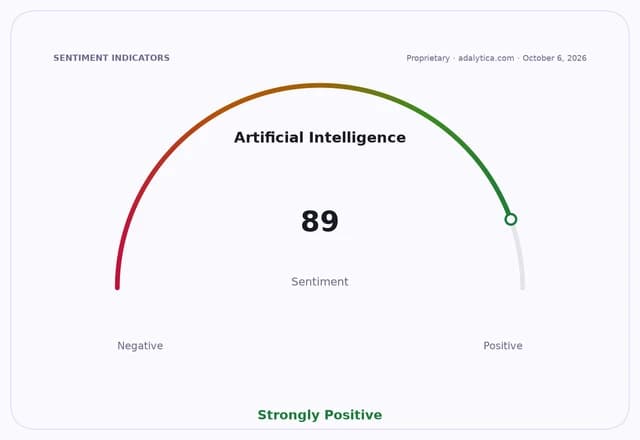
Sentiment IndicatorsⓘProprietary · adalytica.com · October 6, 2026
This is a snapshot — live sentiment, awareness and momentum for 130+ markets update continuously in the dashboard.Open AlphaPulse
The debate was ignited by warnings from former Anthropic researcher Jacob Coxon, who said advanced systems could pose existential risks within a decade. Other Anthropic researchers backed the concern, and Anthropic’s own safety report has shown its Claude models being probed by criminals, state-backed groups and spyware makers for help with missiles, bombs, lethal pathogens and surveillance tools. That is the real economic issue: AI is no longer a theoretical risk story, it is a dual-use infrastructure race with national-security implications, regulatory overhang and enormous commercial upside.
Huang’s counterargument is that fear should not become a pretext for slowing a technology that already has laws governing cybersecurity and liability. For investors, that is crucial because the stock market has treated Nvidia as the toll collector on the AI buildout. The chipmaker has now raised its supply and capacity commitments to $279 billion from $119 billion last quarter, a staggering jump that signals the spending cycle is still accelerating rather than peaking.
That helps explain why Nvidia shares remain near record territory, even as conventional technical indicators flash overbought conditions: the stock closed at $242.15 on Oct. 6, well above its 50-day moving average of $219.68, with RSI at 85.2. Microsoft is in a similar position. Its shares finished at $533.17, also above the 50-day average of $493.17, as the software giant keeps leaning into cloud and AI infrastructure despite rising scrutiny over whether demand and capacity can stay aligned.
Taiwan Semiconductor is the other clear winner. The foundry closed at $483.67, above both its 50-day and 200-day moving averages, as its role as the manufacturing backbone of advanced chips becomes more strategically valuable. If the market is underestimating anything, it is the degree to which AI infrastructure is becoming a geopolitical asset class as much as a technology theme.
There is also a policy angle the market cannot ignore. U.S. officials, including Treasury Secretary Scott Bessent, have said Washington and Beijing are creating an AI communication mechanism to reduce the risk of accidents and escalation. At the same time, Donald Trump is attacking slower AI development as a threat to U.S. competitiveness, underscoring that regulation will likely remain fragmented and politically contested rather than a clean brake on spending.
The investable takeaway is unchanged but sharpened: this is still a “pick-and-shovels” market, and the biggest winners are the firms selling the infrastructure of intelligence, not the warnings about it. I believe investors should stay with Nvidia, Microsoft and TSMC on pullbacks, because every new safety scare, policy debate or geopolitical flashpoint is likely to slow rhetoric before it slows capex.
| Entity | Gains | Losses |
|---|---|---|
| Nvidia | ▲AI capex boom | ▼Doomsday-regulation narrative |
| Microsoft | ▲Cloud and AI demand | ▼Capacity skepticism |
| TSMC | ▲Advanced chip orders | ▼Supply-chain bottlenecks |
| Anthropic critics | ▲Safety scrutiny | ▼Accelerated deployment pace |