AI became one of the few issues to cut across party lines in New Zealand’s final election debate, underscoring how quickly artificial intelligence has moved from a niche technology issue to a mainstream economic and political concern.
New Zealand Election Debate Puts AI in Focus
Artificial Intelligence
That matters because the election is increasingly being shaped not just by taxes, housing and public spending, but by how lawmakers plan to manage a technology that can lift productivity while also amplifying risk. For investors, the debate is a reminder that AI policy is moving toward the center of campaign politics globally, with implications for regulation, labor markets, data governance and the companies expected to supply the next wave of infrastructure and software.
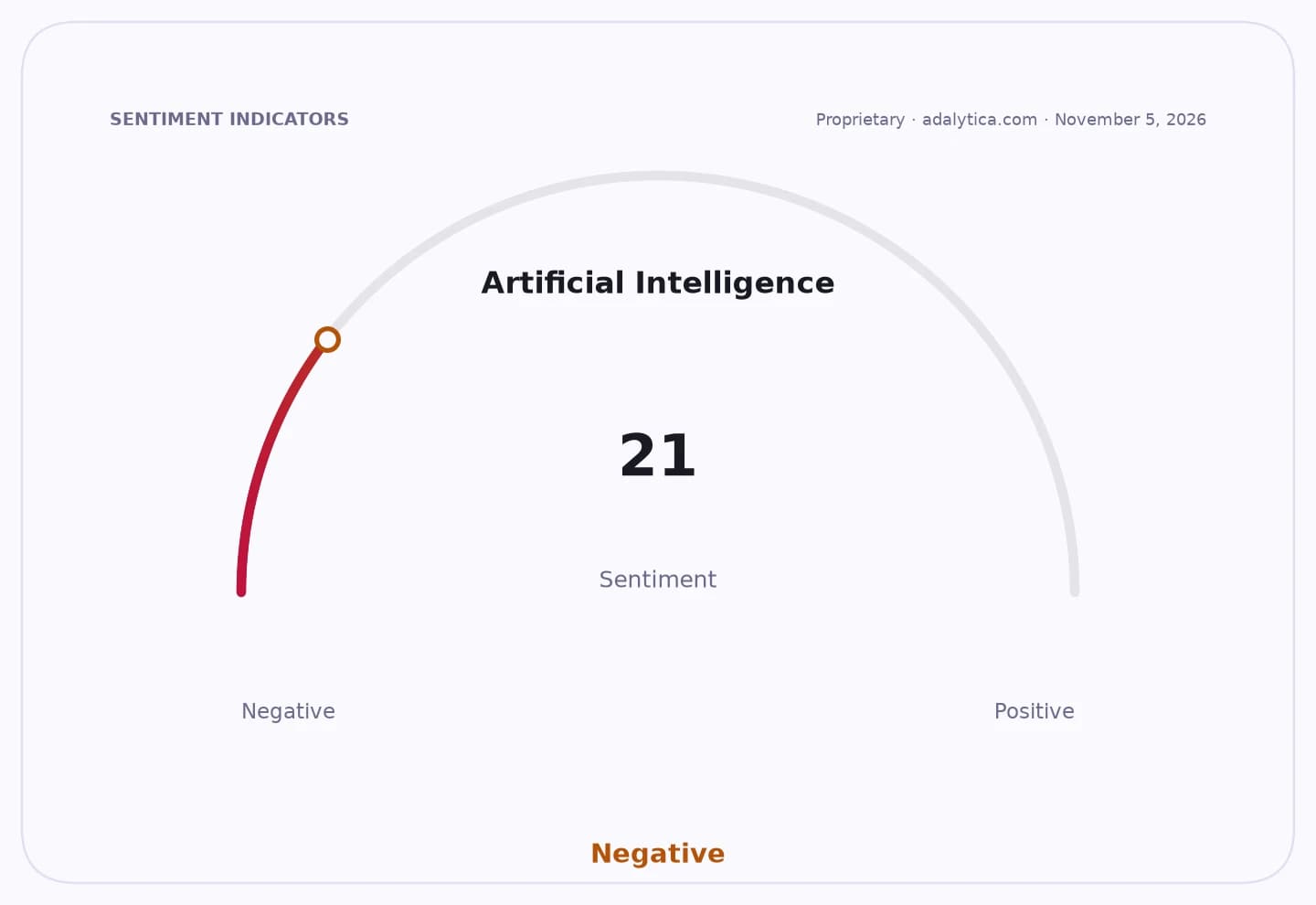
Sentiment Indicators
The political convergence comes as governments around the world sharpen their focus on AI safety and use cases. New York has moved to ban unsafe AI chatbots aimed at children, while South Korea is pushing ahead with military AI applications to improve maintenance of tanks and fighter jets. The broader shift is clear: the question is no longer whether AI should be adopted, but how quickly it can be deployed and how tightly it should be controlled.
That tension is already visible in markets. Investors have been treating AI as both a growth engine and a policy risk, especially for companies tied to chips, cloud computing and security. Nvidia and Microsoft, two of the sector’s bellwethers, have seen sharp swings in recent months, reflecting the market’s struggle to balance enthusiasm for AI spending against concerns about valuation, regulation and the durability of demand. Nvidia’s latest trading indicators show heavy volatility and an oversold reading after a steep drop, while Microsoft has held up better but remains sensitive to any shift in sentiment around AI capital expenditure.
The policy backdrop matters because AI buildout depends on a long chain of approvals, infrastructure and public acceptance. Nvidia has already flagged in filings that restrictions on AI hardware, software and systems could materially affect its business. That makes election rhetoric more than campaign theater: a tougher regulatory stance can alter the economics of AI deployment, from data-center investment and export controls to the pace at which enterprises and governments adopt new tools.
For voters, AI also touches a more immediate fear — job disruption — which helps explain why it has become politically salient even in a debate dominated by domestic issues. For investors, the key question is whether New Zealand’s next government treats AI as a productivity lever to encourage, or as a consumer protection and competition issue to restrain. The answer will help define whether the country becomes a relatively open market for AI adoption or a more cautious one.
The bigger narrative is that AI is no longer a peripheral technology discussion. It is becoming part of the core economic agenda, and the final debate suggests politicians are starting to recognize that the public expects both innovation and safeguards. That combination may support long-term adoption, but it also raises the odds of more regulation, more compliance costs and a more selective market for AI winners.
| Entity | Gains | Losses |
|---|---|---|
| AI adopters | ▲clearer policy focus | ▼regulatory uncertainty |
| Consumers | ▲more safety scrutiny | ▼slower rollout |
| Nvidia and suppliers | ▲continued demand narrative | ▼tighter controls risk |
| Regulators | ▲broader mandate | ▼greater political pressure |