President Donald Trump’s new push to brand artificial intelligence as “super intelligence” is colliding with a political backlash that could shape how fast the U.S. builds out the infrastructure behind the boom.
Trump AI Push Meets Local Data Center Backlash

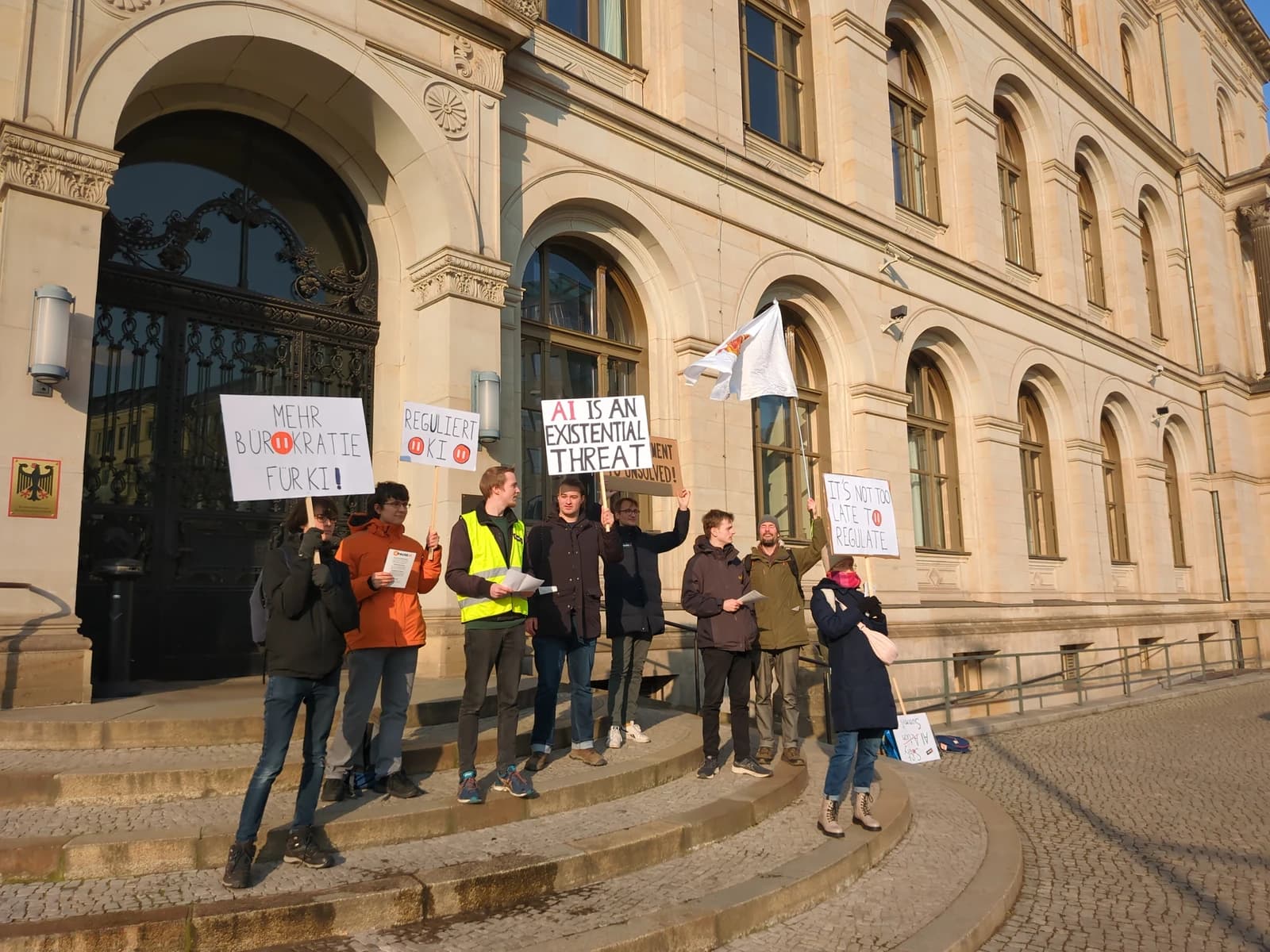
That matters because AI is no longer just a tech story. It is a capital-allocation story tied to electricity demand, data-center construction, chip spending, grid capacity and the political acceptability of all three. The White House’s creation of a Super Intelligence Force led by Jay Clayton, along with the launch of SI.gov, signals that Trump wants to keep the U.S. ahead of China while asserting more federal control over the risks. But the seed of the backlash is local: voters who backed Trump in places like rural America are now balking when AI comes for their land, their power bills and their way of life.
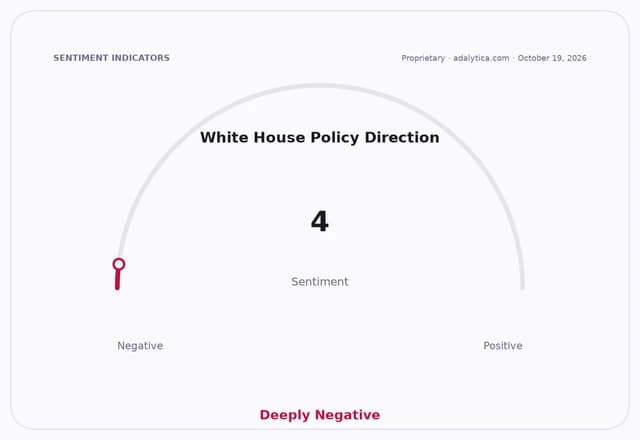
Sentiment IndicatorsⓘProprietary · adalytica.com · October 19, 2026
This is a snapshot — live sentiment, awareness and momentum for 130+ markets update continuously in the dashboard.Open AlphaPulse
The clearest example is Delsia Bare and her mother, Ida Huddleston, who voted for Trump in every election until they learned their family farm was being targeted for an AI data center. They turned down a $26 million offer and joined the fight against the project. That is exactly the kind of grassroots resistance that can slow permitting, harden local opposition and lift the political cost of the AI buildout just as hyperscalers are spending aggressively on compute.
Investors should care because the next phase of the AI trade is not just about model performance. It is about execution risk. The market has treated data centers, utilities, networking gear and semiconductor suppliers as a one-way bet, and in many ways it still is. But every megawatt of new capacity now has to clear zoning boards, landowners, grid operators and increasingly skeptical voters. That raises the odds of delays, higher financing costs and tougher liability rules — exactly the kind of friction that can compress returns for developers even as demand keeps rising.
The policy backdrop reinforces that tension. Trump’s team is leaning into a national-security frame, saying the U.S. must preserve leadership in AI while managing safety and societal risks. At the same time, companies such as Anthropic are pushing for legislation that would let Washington veto dangerous models. That tells you the debate is moving from whether AI should be regulated to how tightly it should be controlled. For the biggest names in the ecosystem — Microsoft, Nvidia and Alphabet among them — the long-term opportunity remains intact, but the path to monetization is getting more politically and operationally complicated.
The stock tape shows the market still believes in the trade, even if it is no longer cheap. Microsoft sits at $533.62, far above its 200-day moving average of $434.29, while Nvidia is at $218.04 versus a 200-day average of $202.82. Alphabet is holding near $345, modestly above its 200-day line. But the deeper message is that the winners are no longer just the software platforms. The underappreciated beneficiaries are the picks-and-shovels names tied to power, cooling, construction, transmission and AI infrastructure financing.
That is where the asymmetry lives. If Trump’s AI agenda accelerates the buildout, the beneficiaries are the chipmakers, cloud providers and utility suppliers. If local resistance and regulation slow it down, the pain will hit landowners, data-center developers and the most levered parts of the AI supply chain first. The market is still pricing AI as a secular boom with limited friction. I believe that is too simple. The real opportunity now is to position for the infrastructure winners while avoiding the names most exposed to permit risk, public backlash and policy whiplash.
| Entity | Gains | Losses |
|---|---|---|
| Nvidia, Microsoft, Alphabet | ▲More AI capex demand | ▼Higher policy friction |
| Utilities and grid builders | ▲Power demand surge | ▼Permitting bottlenecks |
| Rural landowners | ▲Bargaining power | ▼Land conversion pressure |
| Data-center developers | ▲Faster approvals if politics shift | ▼Local resistance, delays |