Hungary’s central bank kept its benchmark rate unchanged at 6.50%, signaling that policymakers are still prioritizing currency stability over any near-term relief for borrowers as inflation risks linger.
Hungary Central Bank Holds Rate at 6.50%

The decision matters because Hungary is trying to balance two competing pressures: cooling domestic demand without allowing the forint to weaken further. With the currency still vulnerable and inflation expectations fragile, the bank has little room to ease policy without risking a fresh price spike that would hit households and companies through imports, energy and financing costs.
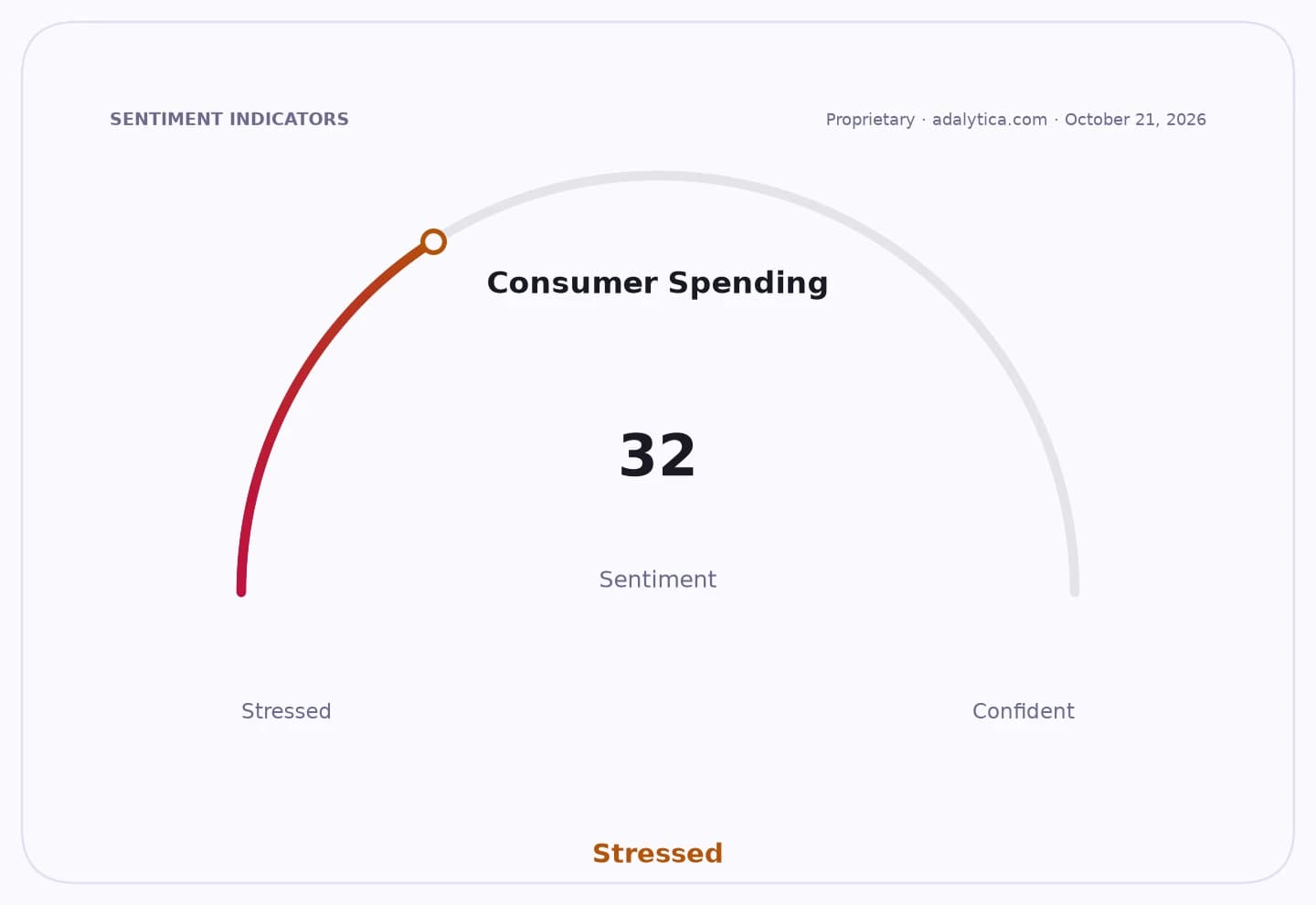
Sentiment IndicatorsⓘProprietary · adalytica.com · October 25, 2026
This is a snapshot — live sentiment, awareness and momentum for 130+ markets update continuously in the dashboard.Open AlphaPulse

The hold also keeps Hungary among the more hawkish central banks in central Europe, reflecting the country’s tighter policy stance relative to the euro zone and the Federal Reserve. That spread is important for the forint, which tends to weaken when investors see less reward for holding Hungarian assets against higher-yielding alternatives abroad. A softer currency can feed directly into inflation in an economy that imports a large share of consumer and industrial inputs.
For investors, the message is that the policy path is likely to stay restrictive for longer. Hungarian government bonds may continue to offer carry, but the risk is that inflation persistence and currency volatility limit any rally in local debt. Equities with heavy domestic exposure also face a mixed backdrop: a stable policy rate may help confidence, but borrowing costs remain elevated and consumer purchasing power is still under pressure.
The broader market context suggests caution rather than complacency. The iShares MSCI Hungary ETF, EWG, has been trading below its 50-day moving average in recent sessions, a sign that investors remain hesitant on the country’s risk assets even after a partial rebound. Technical indicators on the fund have also pointed to choppy momentum rather than a clean reversal, underscoring how sensitive Hungarian assets remain to policy signals and inflation data.
That leaves the central bank with a narrow path. If inflation continues to ease, rate cuts could eventually follow. But if the forint weakens again, policymakers may be forced to keep policy tight longer than markets want. For now, the bank appears more concerned with defending price stability than delivering growth support.
| Entity | Gains | Losses |
|---|---|---|
| Hungarian central bank | ▲Inflation credibility | ▼Growth stimulus |
| Forint holders | ▲Higher rate support | ▼Currency volatility |
| Borrowers and consumers | ▲Stability if inflation eases | ▼Higher financing costs |
| Hungarian equities and bonds | ▲Policy clarity | ▼Faster easing hopes |