Eurozone inflation will remain elevated in the first half of 2027, European Central Bank President Christine Lagarde said, signaling that price pressures are proving stickier than policymakers expected and that rate cuts will likely stay cautious.
Eurozone Inflation Seen Elevated Into 2027

The warning matters because it reinforces the ECB’s core problem: inflation is not fully beaten even after a long tightening cycle, leaving borrowing costs higher for longer and limiting how quickly the central bank can support growth. For investors, that keeps pressure on rate-sensitive assets, especially banks, bonds and the euro, and reduces the odds of an aggressive easing path.
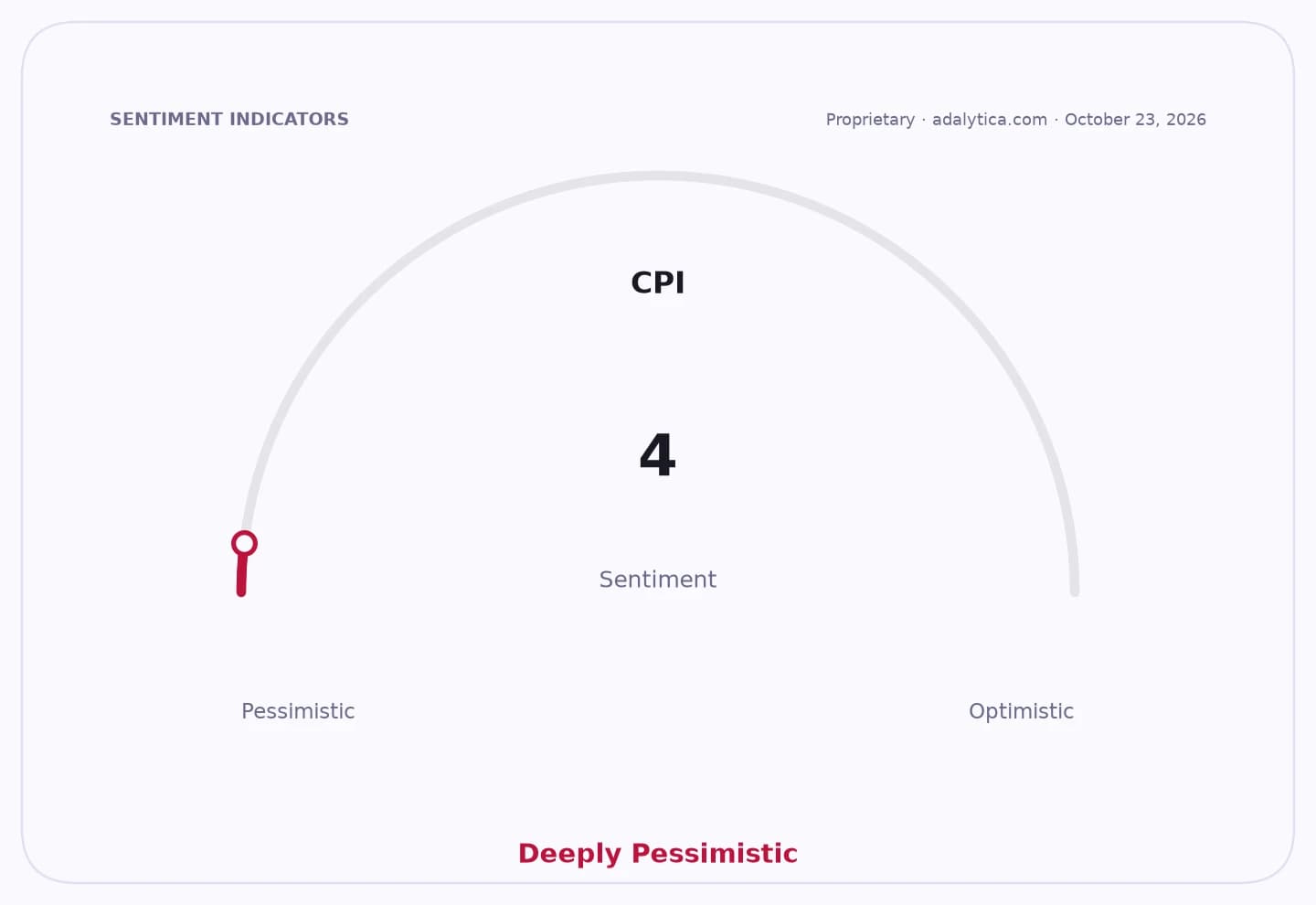
Sentiment IndicatorsⓘProprietary · adalytica.com · October 23, 2026
This is a snapshot — live sentiment, awareness and momentum for 130+ markets update continuously in the dashboard.Open AlphaPulse

The euro was little changed around $1.12 in recent trading, but technical indicators show the currency below both its 50-day and 200-day moving averages, with momentum still soft. That reflects a market that has already priced in a relatively restrained ECB easing path, even as inflation remains stubborn.
Longer-dated yields are also under scrutiny. The U.S. 10-year Treasury yield was recently above 5.1%, underscoring how global term premia remain elevated, and any perception that the ECB will have to stay restrictive for longer could keep European borrowing costs from falling meaningfully.

The implication for European financial stocks is mixed. Banks typically benefit from higher rates, but a prolonged inflation problem also risks weaker loan demand and slower economic activity. Deutsche Bank and the broader European financial sector have both seen sharp swings in recent weeks, with the EUFN financials ETF and DB shares well off recent highs, showing investors are already pricing in a more volatile policy backdrop.
Lagarde’s message also fits a broader shift in the inflation narrative: the central bank is not talking about declaring victory, but about managing a slow return to target. That leaves the ECB with less room to move quickly if growth deteriorates, and it keeps markets focused on every new data point for signs that price pressures are finally easing.
The next catalyst is the eurozone inflation print and subsequent ECB guidance, which will determine whether Lagarde’s caution hardens into a more delayed cutting cycle.
| Entity | Gains | Losses |
|---|---|---|
| Eurozone banks | ▲Wider margin support | ▼Credit demand risk |
| Bond investors | ▲Higher carry in near term | ▼Slower price gains |
| Eurozone borrowers | ▲— | ▼Higher-for-longer funding costs |
| ECB hawks | ▲Policy credibility | ▼Growth room for easing |