Inflation is back at the center of global markets as a heavy week of data and central bank decisions threatens to keep policy tighter for longer even as growth shows signs of cooling.
UK, Japan and Canada Inflation Data in Focus
That is the key message from the week ahead, with consumer price reports from the UK, Japan and Canada, preliminary PMI surveys in the US and Europe, and rate decisions across several emerging-market economies set to shape expectations for the next moves by the world’s major central banks. For investors, the issue is not just whether inflation is easing, but whether it is easing fast enough to allow rate cuts without reigniting price pressure.
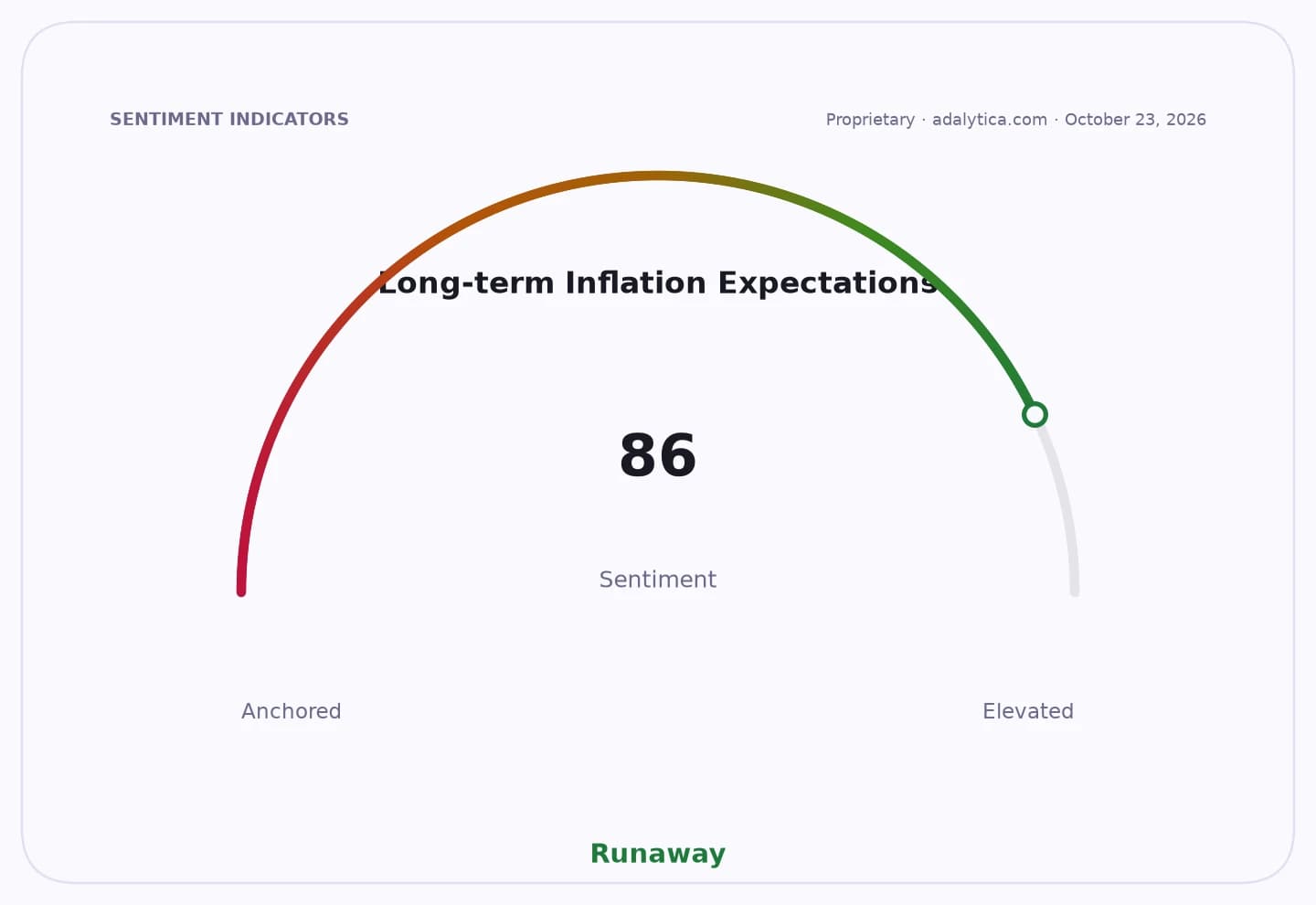
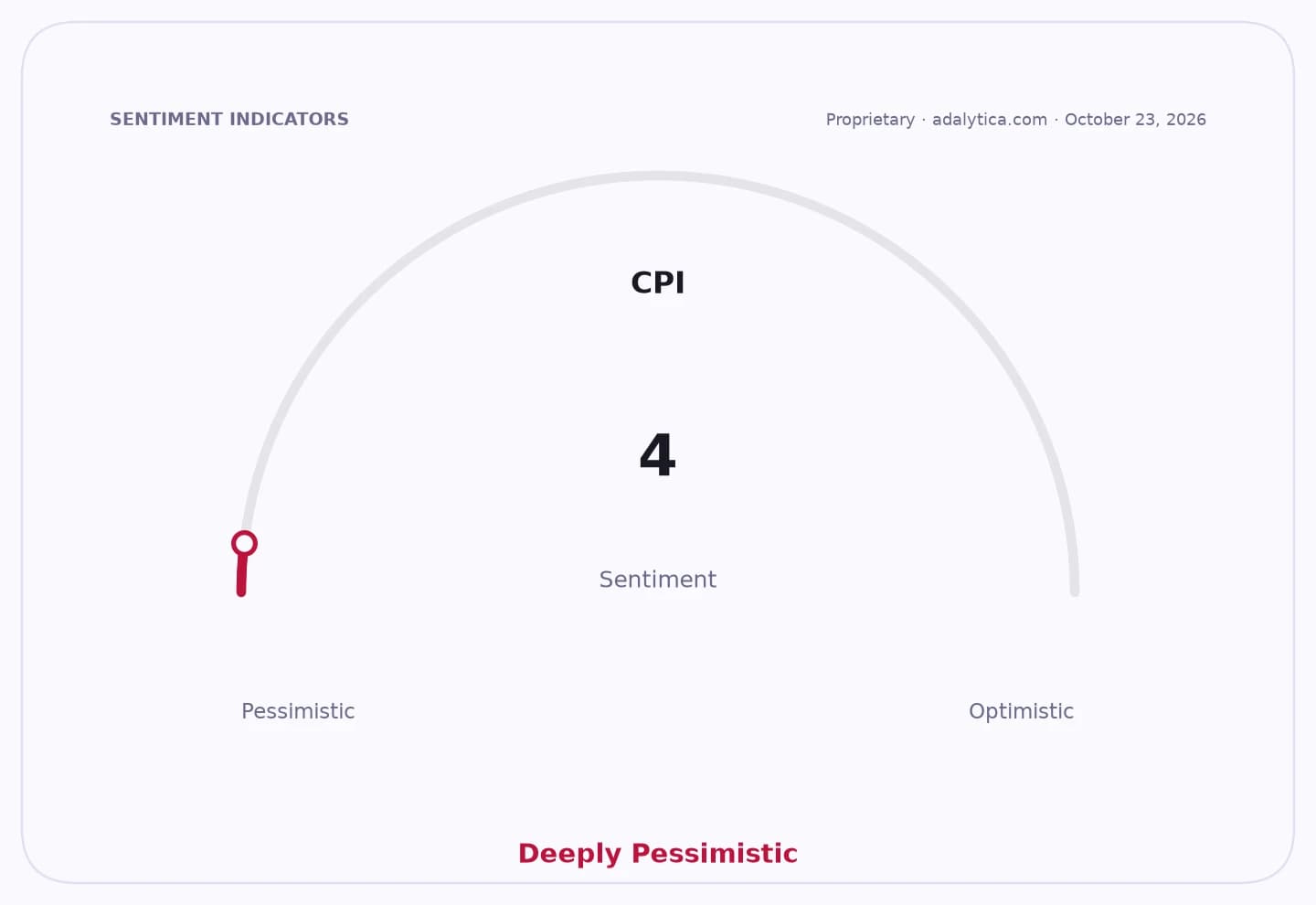
Sentiment IndicatorsⓘProprietary · adalytica.com · October 23, 2026
This is a snapshot — live sentiment, awareness and momentum for 130+ markets update continuously in the dashboard.Open AlphaPulse
In Britain, the most immediate test comes from a forecast acceleration in headline inflation to 3.5% from 3.1%, according to Bank of America, above the Bank of England’s estimate by 0.5 percentage point. Core inflation is seen rising to 2.8% from 2.6%, while services inflation is expected to edge up to 3.7% from 3.4%. Those numbers matter because services and wage-linked inflation are the stickiest parts of the UK basket and the ones most likely to keep policymakers wary of easing. Private-sector wage growth is also expected to quicken to 3%, even as unemployment holds at 4.9%, reinforcing the argument that underlying price pressures are still not fully tamed.
Japan is facing a different but equally important problem: inflation is firming enough to complicate the Bank of Japan’s gradual normalization, but not yet in a way that guarantees a clean exit from years of ultra-loose policy. National core CPI is expected to rise to 2.2% from 1.7%, while the BOJ’s preferred core measure is seen at 2.4% from 1.9%. Bank of America says the national increase should be milder than the recent Tokyo reading, in part because of local policy distortions, but the broader point remains that inflation is no longer just a transitory import story. For markets, that keeps pressure on Japanese yields and the yen, while limiting the room for policymakers to remain passive.
Canada’s inflation picture is also expected to worsen, with annual CPI seen at 3.17% from 3%, driven by gasoline and price strength in clothing and transport. That has added weight because it comes alongside a Bank of Canada business outlook survey that will be watched for signs of weakening sales expectations. A hotter inflation print would strengthen the case for another policy tightening or, at minimum, push back expectations for cuts. In rate-sensitive markets, that matters for the Canadian dollar, short-end bond yields and domestic equities with high exposure to borrowing costs.
The broader backdrop is one of slowing momentum rather than outright contraction. In the euro area, the composite PMI is expected to slip to 52.8 from 53.1, with services weakening and manufacturing broadly flat. Germany’s ZEW expectations gauge is likely to soften, French business confidence may deteriorate and consumer sentiment is seen stuck at weak levels. That combination is important because it points to an economy that is still expanding, but only modestly, while energy costs and tighter financial conditions squeeze margins and demand. If inflation remains sticky while activity cools, the European Central Bank and other policymakers face the same uncomfortable trade-off seen elsewhere: keep policy restrictive to restore price stability, or risk over-tightening into a fragile economy.
The US will offer fewer headline releases, but they arrive just before the Federal Reserve’s Oct. 27-28 meeting and therefore carry outsized market importance. Housing data, weekly jobless claims, ADP employment figures, S&P Global PMI readings and consumer confidence will all feed into the debate over whether the economy is cooling enough to justify a pause in further tightening. The Fed is in its pre-meeting quiet period, so markets will be forced to infer the policy path from the data alone. That has helped keep Treasury yields elevated, with the 10-year note above 5.1%, a level that reflects both persistent inflation anxiety and the prospect of rates staying high for longer.
That tension between inflation fear and policy restraint is also visible in sentiment data. Adalytica’s CPI sentiment gauge shows “Extreme Fear,” while confidence in the Fed’s 2% target has fallen sharply. At the same time, Treasury bond trade signals show stronger appetite for duration, suggesting investors are still positioning for eventual economic slowdown even as they brace for stubborn price pressures. The split is telling: markets want lower inflation, but they are not yet convinced central banks can declare victory.
The week’s emerging-market rate meetings add another layer to the story. Policymakers in Turkey, South Korea, Indonesia, Hungary, Israel, Georgia and Kazakhstan are all scheduled to decide, underscoring how globally synchronized the inflation fight remains. Even where growth is softening, central banks are still being forced to weigh currency stability, imported inflation and financial stability against domestic demand. That means the policy cycle is increasingly less about a broad pivot and more about selective caution.
| Entity | Gains | Losses |
|---|---|---|
| Central banks | ▲Policy credibility if inflation cools | ▼Room to cut rates |
| Bond investors | ▲Higher yields if growth slows later | ▼Duration losses if inflation re-accelerates |
| Borrowers | ▲Lower rates if disinflation resumes | ▼Higher financing costs |
| Equities | ▲Relief from a softer growth/inflation mix | ▼Margin pressure from sticky rates |