The president of Germany’s Bundesbank is pressing the European Central Bank to keep tightening policy, a reminder that the battle against inflation in the euro zone is not over and that markets may be too quick to price in an easy policy path.
Bundesbank Presses ECB to Keep Tightening

That matters because inflation is still running uncomfortably above target, leaving the ECB with little room to declare victory. U.S. price pressures have also re-accelerated, with September CPI rising 3.7% as energy costs jumped on conflict-related supply fears, a warning that global inflation can reheat faster than central banks expect. For Europe, where growth is already fragile, any hesitation from the ECB risks letting price expectations harden again.
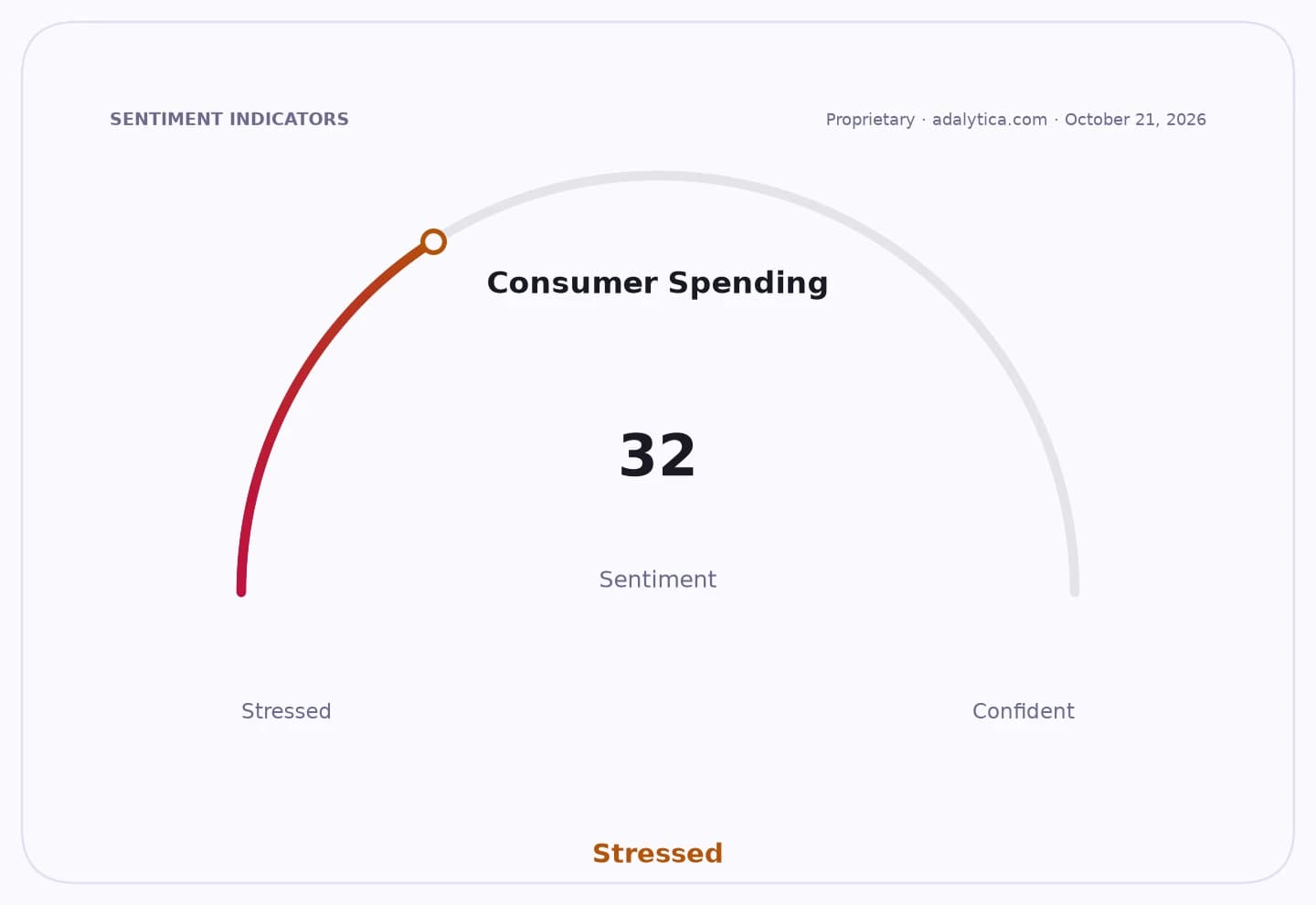
Sentiment IndicatorsⓘProprietary · adalytica.com · October 20, 2026
This is a snapshot — live sentiment, awareness and momentum for 130+ markets update continuously in the dashboard.Open AlphaPulse

The market backdrop reflects that tension. The euro ETF FXE has slipped to 103.48, below its 50-day moving average of 105.67 and 200-day average of 106.55, while its RSI reading of 38.5 points to weak momentum. The technical picture does not scream collapse, but it does show investors are still wary of a policy mistake or a prolonged period of restrictive rates. In the broader market, Adalytica’s S&P 500 trade signals show extreme fear, underscoring how quickly rate expectations and inflation anxiety can spill into risk assets.
For investors, the key point is that a hawkish Bundesbank stance keeps the bar high for rapid ECB easing. That supports the euro relative to currencies where rate cuts may come sooner, while weighing on rate-sensitive sectors, highly leveraged borrowers and companies dependent on cheap funding. Banks, by contrast, can benefit from a longer period of elevated rates, though only if credit quality holds.
The bigger narrative is that inflation remains the central macro variable for both Europe and the U.S., and central banks are still trying to prove they can get it back to 2% without reigniting growth concerns. The market underestimates how long that process can take. Until the ECB shows clear, sustained progress on price pressures, expect German policymakers to keep pushing for vigilance — and expect investors to keep treating rate cuts as a delayed, not immediate, catalyst.
| Entity | Gains | Losses |
|---|---|---|
| Euro zone banks | ▲Higher net interest margins | ▼Credit deterioration risk |
| Euro bulls | ▲Relative rate support | ▼Slower ECB easing |
| Rate-sensitive stocks | ▲— | ▼Higher discount rates |
| ECB doves | ▲— | ▼Less room to argue for cuts |