Hungary’s households are borrowing at a record rate, with mortgage and personal-loan volumes both accelerating sharply and helping to keep credit growth running far ahead of last year.
Hungary households record mortgage and personal loan growth
That matters because the jump is no longer just a property-market story. It points to a broader shift in household behavior, with consumers using debt to bridge affordability gaps, finance housing-related spending and sustain demand even as the economic backdrop remains uneven. For lenders, it means faster balance-sheet growth; for policymakers, it raises questions about how much of the borrowing surge is healthy demand and how much is leverage filling the gap left by stretched incomes and elevated costs.
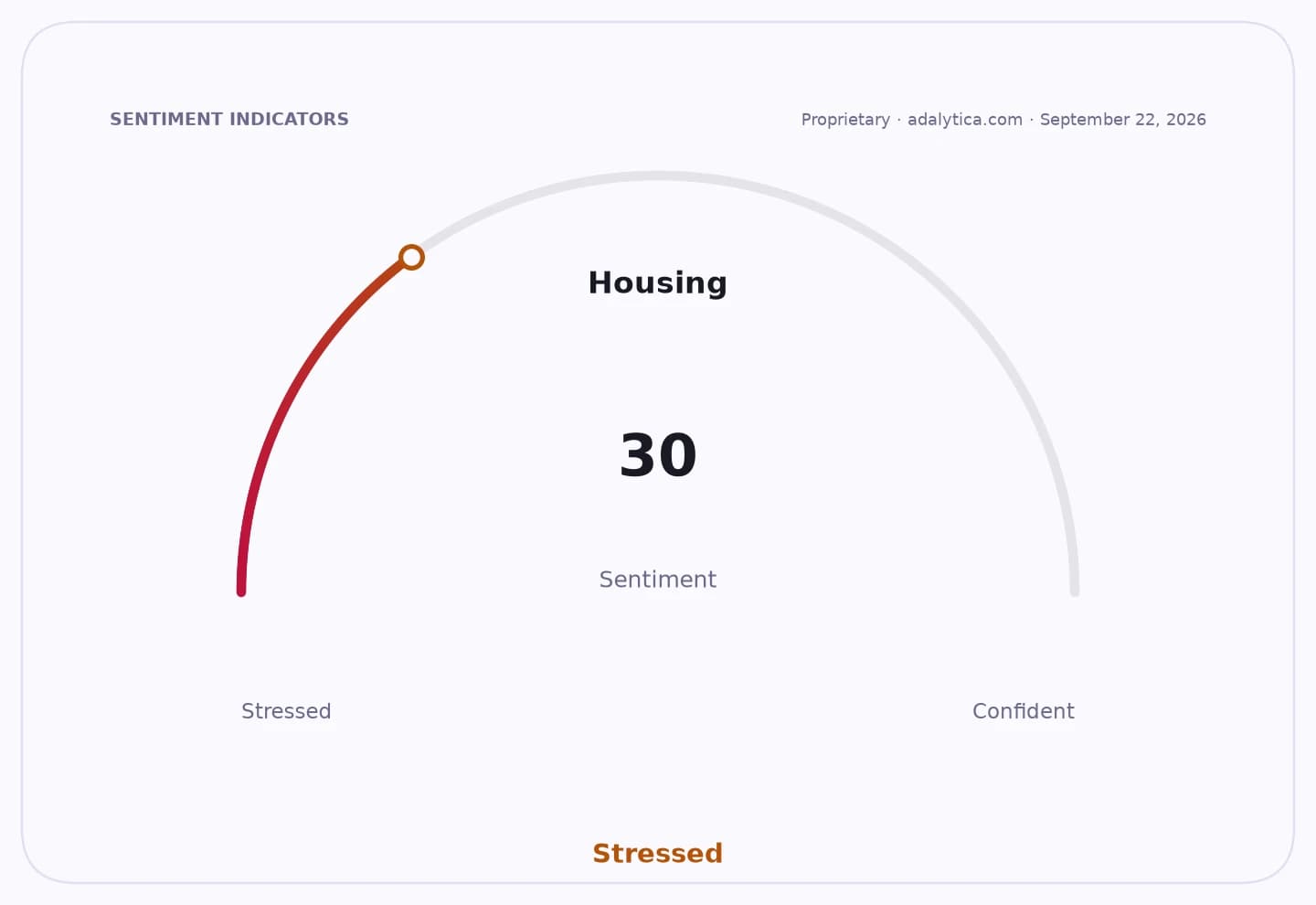
Sentiment IndicatorsⓘProprietary · adalytica.com · September 3, 2026
This is a snapshot — live sentiment, awareness and momentum for 130+ markets update continuously in the dashboard.Open AlphaPulse
In July, Hungarian households signed 255 billion forints of home-loan contracts, up 80% from a year earlier, while personal-loan disbursements reached 153 billion forints, a 43% increase. Personal loans also hit a record 43,508 contracts, underscoring that the surge is broad-based, not confined to a single product or borrower segment.
The pace has been striking all year. Cumulatively, mortgage lending is up 93% so far in 2026, while personal-loan origination has risen 35%. Even if the burst slows after a strong comparison base in the autumn, full-year lending could still exceed 3 trillion forints in mortgages and 1.36 trillion forints in personal loans, both record levels.
The story is especially notable because the growth appears to be driven less by a boom in housing transactions than by the financing itself. That suggests Hungary’s households are leaning on credit to keep up with demand for homes and home-related spending, a pattern that can support near-term consumption and construction activity but also makes the economy more sensitive to rates, labor-market softness and any deterioration in borrower quality.
For banks and consumer-finance lenders, the upswing is a clear volume tailwind. Higher origination boosts fee income and interest-earning assets, while the strength in personal loans indicates that demand is spreading beyond the mortgage market. But the bear case is equally clear: rapid credit expansion can eventually pressure underwriting standards, and unsecured lending is typically the first place stress shows up if households overextend.
For investors, the key question is whether this is a durable credit cycle or a late-stage borrowing rush. If wages and employment keep pace, the surge could extend lenders’ growth runway. If not, the same momentum that is supporting Hungarian credit now could turn into a source of higher defaults later, especially in consumer finance.
| Entity | Gains | Losses |
|---|---|---|
| Hungarian banks | ▲Faster loan growth | ▼Higher credit-risk exposure |
| Households borrowing | ▲Easier access to financing | ▼Rising debt burdens |
| Home sellers and builders | ▲Stronger mortgage demand | ▼More rate-sensitive buyers if conditions tighten |
| Conservative lenders | ▲Less aggressive competition | ▼Slower market share gains |