Cheaper borrowing and still-high home values are making it possible for Stockholm homeowners to sell a city apartment, buy a villa and clear the mortgage in one move, a sign that Sweden’s housing market is adjusting to a higher-rate world rather than cracking under it.
Stockholm Homeowners Can Upgrade Debt-Free
The key shift is not just that mortgage costs have eased, but that the price gap between Stockholm’s urban housing and detached homes in more affordable areas still leaves room for debt-free upgrading. That matters economically because housing wealth is a major transmission channel for household spending, and Sweden’s residential market has long been sensitive to interest rates, leverage and consumer confidence. When owners can trade up without adding debt, the market stops being a drag on balance sheets and becomes a source of optionality.
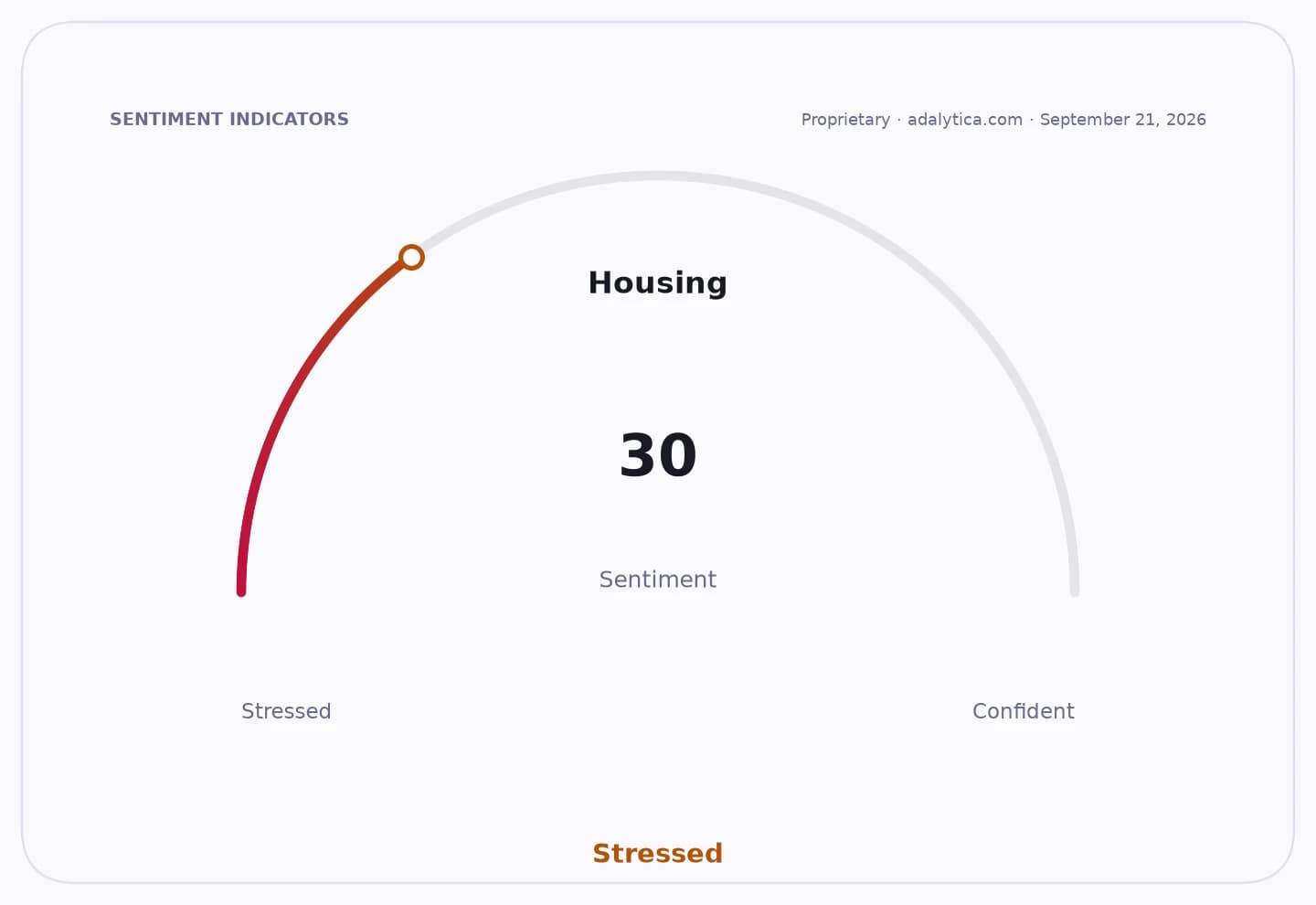
Sentiment IndicatorsⓘProprietary · adalytica.com · September 1, 2026
This is a snapshot — live sentiment, awareness and momentum for 130+ markets update continuously in the dashboard.Open AlphaPulse
The backdrop is a normalization in global rates rather than a return to the ultra-low era. The U.S. 10-year Treasury yield sits around 4.73%, while U.S. inflation remains elevated at 332.8 on the CPI index and unemployment near 4.1%, underscoring a world in which borrowing costs are still materially higher than the past decade. For Swedish households, that means fixed-rate assumptions from the 2010s no longer apply, and affordability is now being rebuilt through price adjustments, higher incomes and a more selective market rather than through cheap credit.
For investors, the story speaks to the resilience of Nordic housing demand and the uneven impact of rates on asset classes. Sellers with equity and low leverage are in a stronger position than highly indebted first-time buyers, which tends to support premium stock in established neighborhoods even as transaction volumes remain uneven. Developers, banks and brokers benefit if households keep trading rather than freeze, while leveraged borrowers and rate-sensitive buyers remain exposed if funding costs stay elevated.
The macro implication is that housing stress in Sweden may be less about forced selling and more about a redistribution of purchasing power. That is healthier for credit quality, but it also reinforces a two-speed market: owners with legacy equity can move up, while newcomers face tighter constraints. The path ahead will depend on whether rate relief continues, wages keep pace and Stockholm prices stay firm enough to preserve that debt-free upgrade window.
| Entity | Gains | Losses |
|---|---|---|
| Stockholm homeowners | ▲Equity unlocks | ▼Rising housing ladder |
| Bank lenders | ▲Lower credit risk | ▼Smaller mortgage growth |
| Property brokers | ▲More transactions | ▼Stalled first-time demand |
| First-time buyers | ▲— | ▼Affordability pressure |