Hungary’s politically sensitive utility price regime is back under scrutiny after opposition lawmaker Ákos Hadházy accused economy and energy minister István Kapitány of either misleading the public or revealing a government that is unprepared to reform household energy support.
Hungary Utility Subsidy Debate Stirs Policy Questions
The exchange matters because the rezsicsökkentés system remains one of the government’s most important social and fiscal tools: it cushions household energy bills, supports consumer spending and, by extension, helps shape inflation and the state budget. Any move to make subsidies more targeted would have direct consequences for millions of households, utility companies and the broader price outlook — but even the suggestion of such a shift can move expectations long before policy changes.
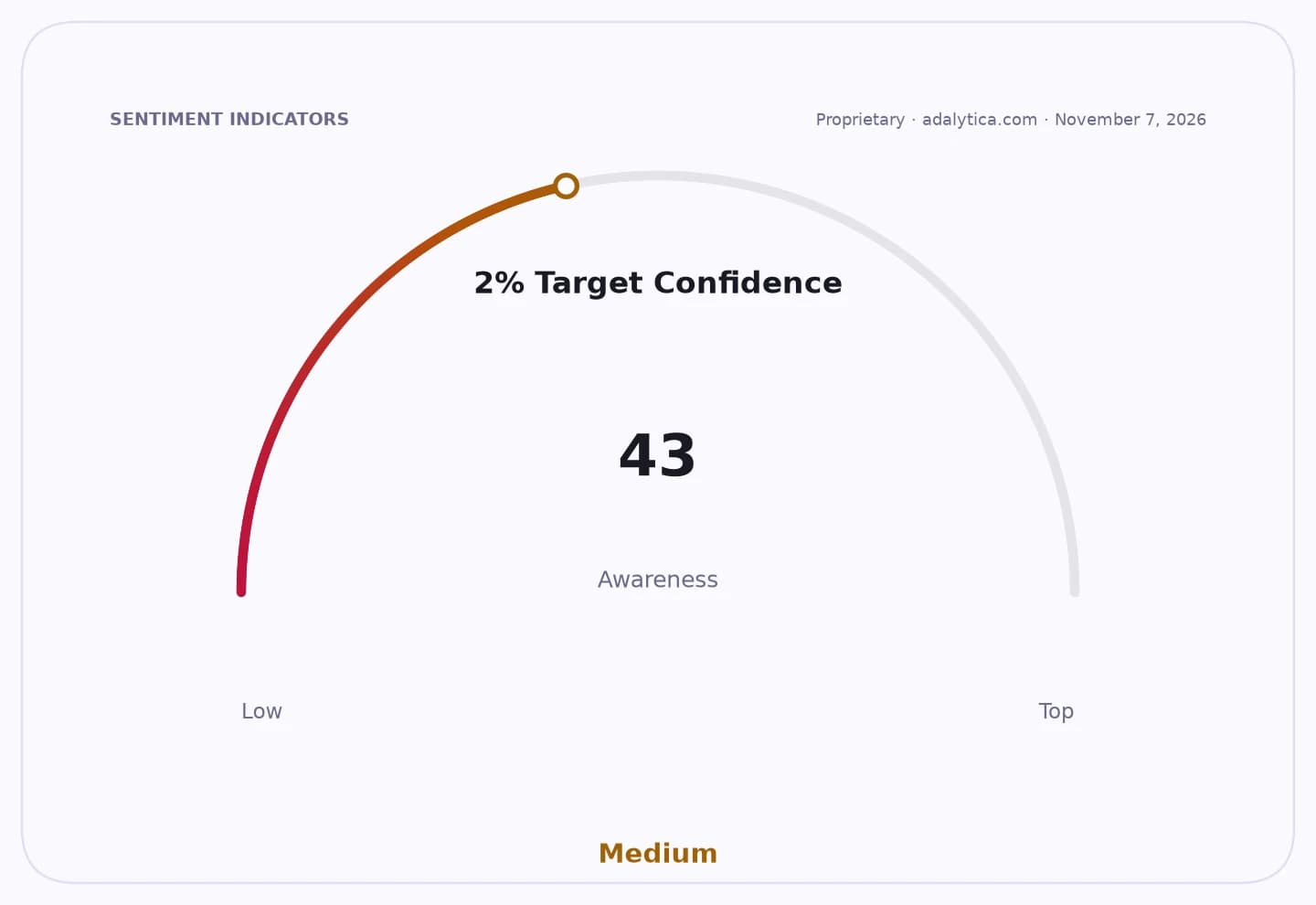
Sentiment Indicators
Kapitány tried to calm markets and voters alike on Monday, saying his ministry has not worked on a socially based redesign of the subsidy scheme and that changing the system is not currently at the center of government work. He also rejected reports of internal disputes over the future of the program and denied that the departure of state secretary András Tótth was linked to the issue.
Hadházy’s response was blunt: if Kapitány was not telling the truth, the problem is credibility; if he was telling the truth, then the ministry has no concrete plan for one of the government’s most consequential economic levers. That framing captures why the controversy resonates beyond partisan politics. Hungary’s utility pricing model is not just a political slogan; it is a mechanism that affects household disposable income, inflation dynamics and the fiscal burden of energy support.
The government’s broader energy strategy points in a different direction. Kapitány said the priority is to make energy supply more affordable through structural investment, including more wind power and more storage capacity. He wants wind capacity to reach 4,000 megawatts by 2030 and storage to rise from about 1,000 megawatts to 3,000-4,000 megawatts. At the household level, the Wekerle Plusz programme is intended to renovate 120,000 homes in its first round, with additional funding if demand is strong enough.
That investment-led approach is economically relevant because it could reduce household energy demand over time and lower the need for broad subsidies. But it also underscores the gap between long-term modernization and the near-term politics of utility bills. For now, Kapitány’s denial suggests the government is not ready to move to a means-tested model, even as energy efficiency improvements would eventually make such a shift more defensible economically.
For investors, the key issue is policy predictability. A targeted subsidy system could be more efficient and potentially less costly for the state, but it could also increase headline inflation for affected households and weigh on consumption. By contrast, maintaining the current framework supports near-term stability in living costs but leaves fiscal and distributional pressures unresolved. Utilities, renewable developers and infrastructure contractors will watch whether the government prioritizes broader electrification and grid investment over direct consumer support.
The dispute therefore reads less like a one-off political spat than an early warning that Hungary’s energy policy remains unsettled. If the ministry is preparing a reform quietly, investors may face a policy surprise later. If it is not, then the government still lacks a credible road map for a gradual transition away from blanket household energy protection.
| Entity | Gains | Losses |
|---|---|---|
| Households | ▲Stable bills | ▼Reform clarity |
| Government | ▲Short-term political cover | ▼Policy credibility |
| Utilities and grid builders | ▲Investment pipeline | ▼Near-term subsidy debate |
| Opposition | ▲Political attack line | ▼Less leverage if no reform emerges |