Hungary’s central bank is lowering its medium-term inflation target to 2.5% from 3% from 2028, and the move is less about optics than about positioning the economy for a future euro bid.
Hungary cuts inflation target to 2.5% by 2028
2% Target Confidence
That is the market-relevant takeaway from central bank governor Mihály Varga’s remarks at a V4 meeting in Slovakia: the Hungarian National Bank wants its policy framework to look more like the euro area’s, while the government is simultaneously trying to line up the fiscal and inflation conditions needed for euro adoption by 2030.
Sentiment Indicators
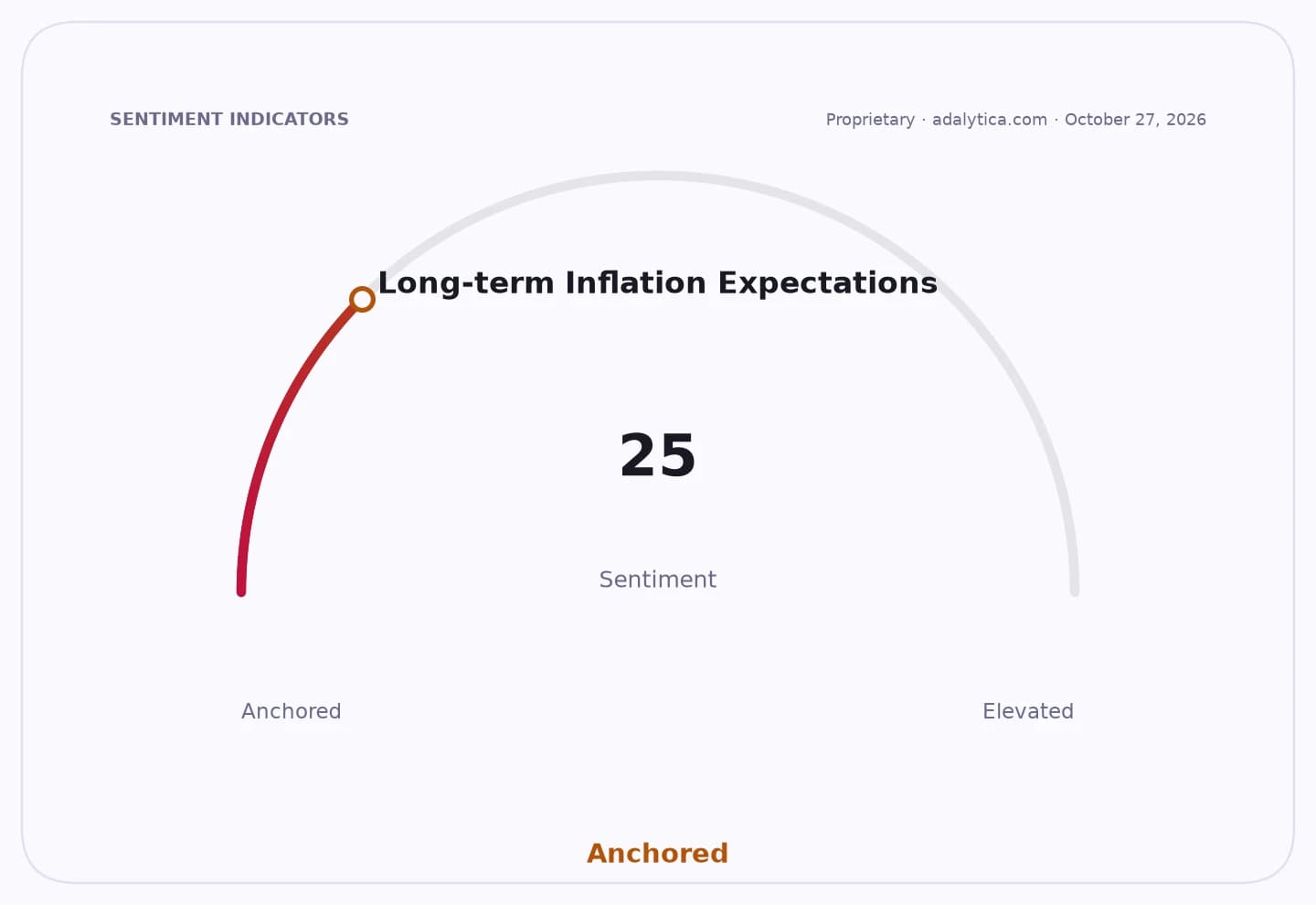
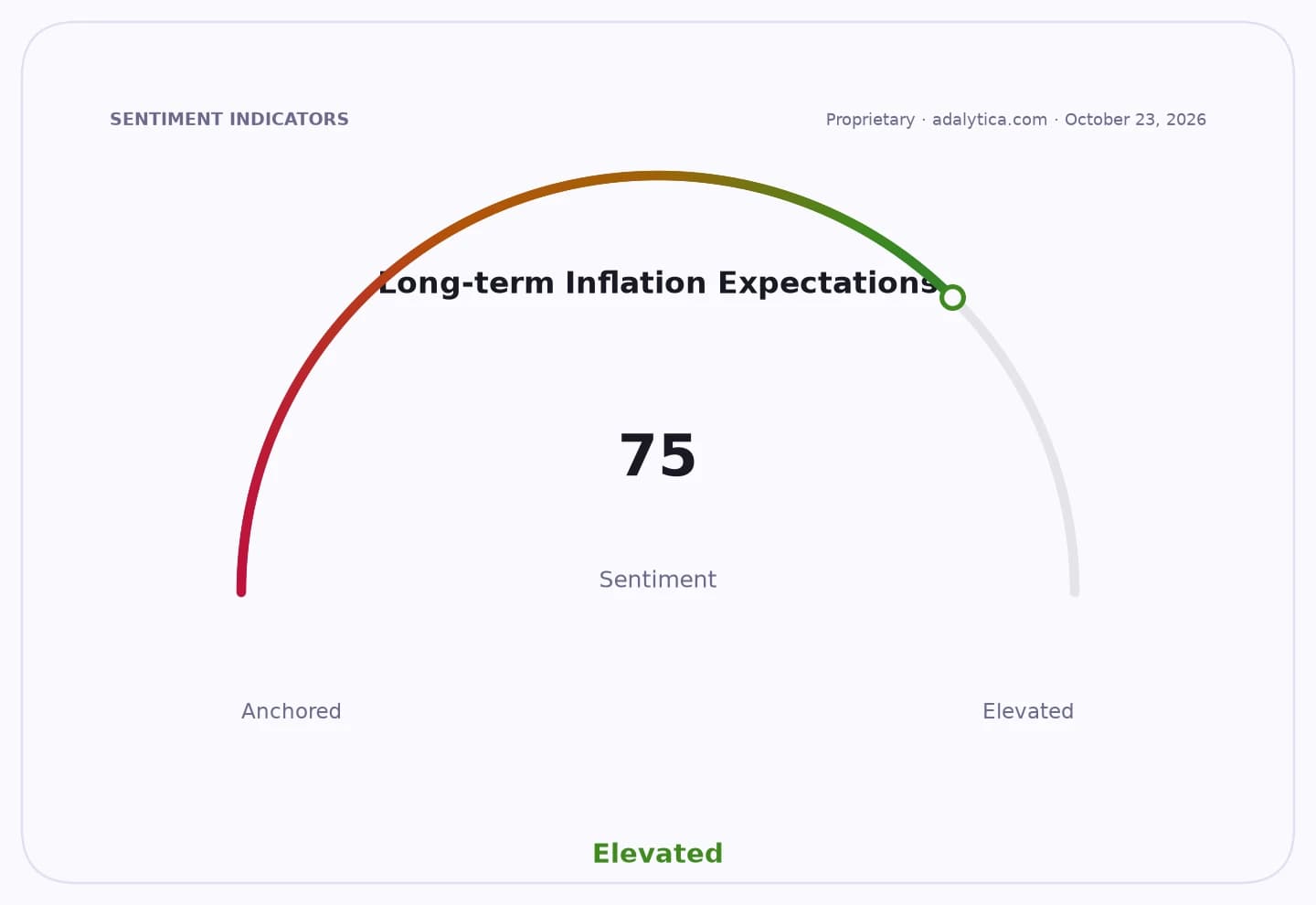
Long-term Inflation Expectations
For investors, that matters because a lower inflation target is a signal that Budapest is trying to re-anchor expectations after years of price instability and policy noise. If credible, it could support lower long-term borrowing costs, a steadier forint and a more predictable backdrop for domestic assets. If it is not credible, it only highlights the gap between Hungary’s euro ambitions and the hard arithmetic needed to get there.
Varga said price stability remains the central bank’s primary task and argued that anchoring inflation expectations is essential for sustainable growth, investment and higher-value jobs. He also stressed that the target cut helps align Hungary’s monetary framework with euro area standards and protect purchasing power.
The timing is telling. Hungary’s government says it wants to meet the economic and fiscal conditions for euro entry by 2030, but that is not the same as actually joining the single currency. The medium-term program presented by Finance Minister András Kármán aims to cut the budget deficit, accelerate growth and reduce debt-service costs, with the deficit seen falling to 2.8% of GDP by 2030 from 4.9% in 2027, slipping under the Maastricht 3% threshold.
That fiscal path is where the story gets tricky. Economists say the biggest risk is finding the 1,465 billion forints of state savings planned for 2027, while persistent inflation remains a threat if a fresh shock hits or price controls are altered again. In other words, the central bank can tighten the target, but it cannot deliver euro readiness on its own.
The investment implication is straightforward: Hungary is trying to buy credibility ahead of a possible regime shift, and the winners are the assets that benefit from lower inflation, tighter policy discipline and a stronger currency story. But the trade only works if fiscal consolidation follows through. Until then, euro optimism is more of a strategic narrative than a completed macro thesis.
| Entity | Gains | Losses |
|---|---|---|
| Hungarian National Bank | ▲Credibility, tighter expectations | ▼Policy room if growth slows |
| Hungarian government | ▲Euro narrative, lower funding costs | ▼Pressure to deliver fiscal cuts |
| Forint bulls | ▲Anchoring story, lower inflation risk | ▼If reform credibility fades |
| Hungary bondholders | ▲Potentially lower risk premium | ▼If deficit path slips |