György Surányi says Hungary’s monetary and fiscal setup is distorting prices, keeping inflation artificially low while drawing in foreign capital that can leave just as fast.
Hungary forint gains on high rates and capital inflows
The former central bank governor used a business conference in Hungary to argue that the country is not on a sustainably balanced path because inflation is being held down by policy rather than by lasting improvement in supply, productivity or demand. In his view, the forint’s strength is being amplified by an unusually wide gap between Hungarian short-term rates and euro-area rates, creating what he described as a risk-free trade for foreign investors.
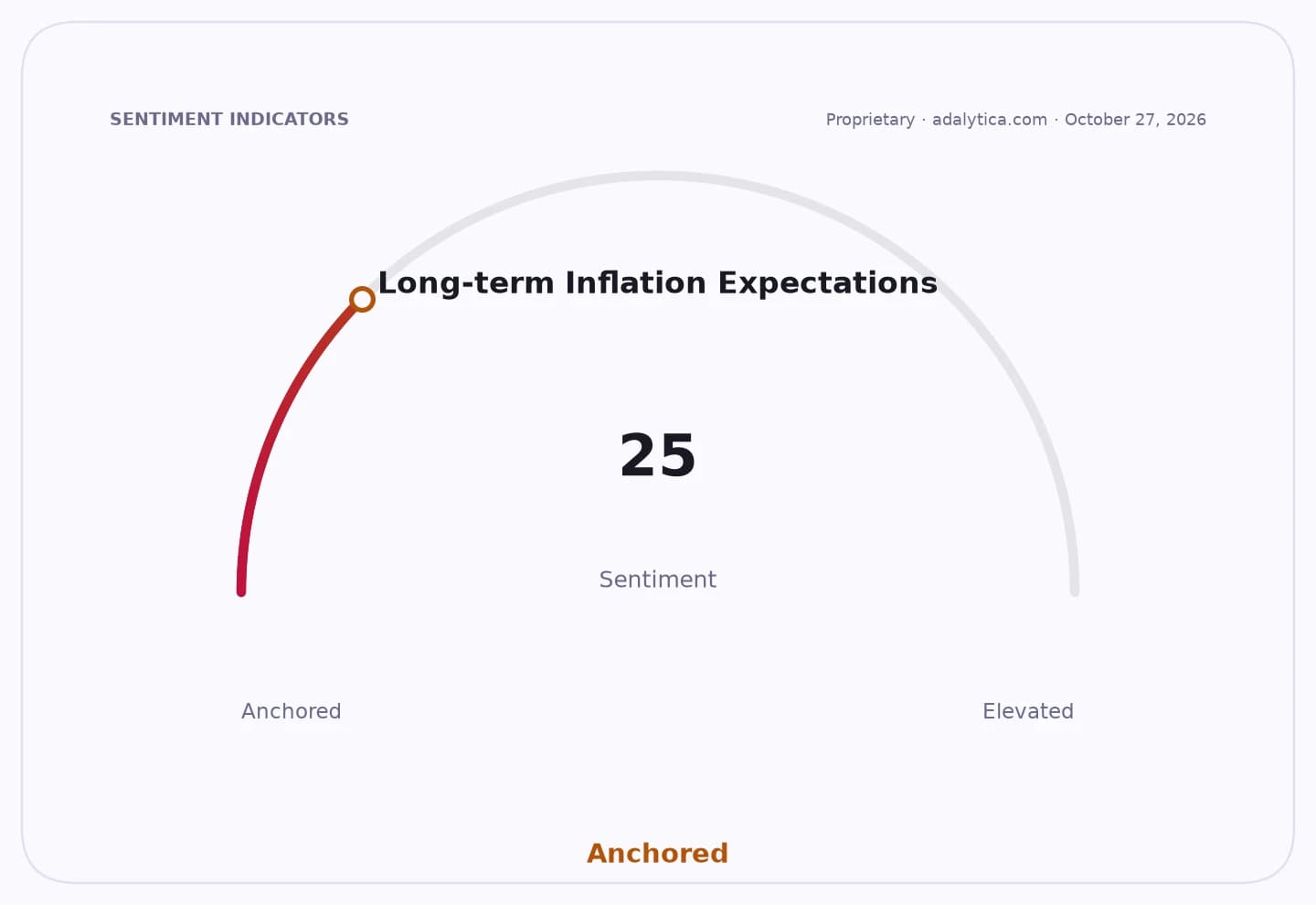
Sentiment IndicatorsⓘProprietary · adalytica.com · October 27, 2026
This is a snapshot — live sentiment, awareness and momentum for 130+ markets update continuously in the dashboard.Open AlphaPulse
That matters because a strong currency and subdued inflation can help headline price readings in the near term, but they also mask underlying pressure in the economy. Surányi warned that Hungary has effectively imported about 5,000 billion forints, or more than 14 billion euros, of capital since April, a flow that has helped push up the forint and suppress inflation. If confidence in euro adoption weakens or an external shock hits the economy, he said that money could just as quickly reverse, weakening the currency and rekindling price pressure.
The remarks go to the heart of Hungary’s policy debate: whether inflation can be brought under control through tight monetary policy alone, or whether that approach is merely postponing the adjustment. Surányi argued that a durable solution would require easing price caps, interest-rate controls and frozen utility charges, all of which he said contribute to “repressed inflation” by delaying the true cost of goods and services reaching households and companies.
That issue is economically important because artificial price suppression can distort consumption, investment and wage-setting. Hungary’s budget plan for next year keeps utility subsidies high at 1,165 billion forints, equal to 1.1% of GDP, reinforcing a system Surányi said is inefficient and encourages energy waste. He also said the scheme amounts to cross-subsidisation that leaves Hungarian firms with the third-highest energy bills in Europe, damaging competitiveness at a time when exporters are already facing a stronger forint.
For investors, the immediate question is whether the currency’s recent firmness is durable. HUF=X has strengthened sharply in recent weeks, with the exchange rate moving to 329.58 on Oct. 27 from 304.19 in June before stabilising near its 50-day moving average. Standard technical indicators point to a market that has already priced in a large part of the move: RSI readings jumped to 70.2, a level often associated with stretched momentum, while the pair remains only modestly above its 200-day moving average.
Adalytica’s long-term inflation expectations gauge also shows sentiment at 25, or “Fear,” underscoring how fragile confidence remains even as near-term price pressures ease. That combination — a strong currency, high domestic rates and subdued inflation expectations — supports the case for continued disinflation, but it also raises the risk of volatility if capital inflows slow.
The central bank’s own message at the conference was more nuanced. Deputy governor Péter Benő Banai said the link between exchange-rate moves and export volumes is weak, and argued that short-term forint strength is not the main reason firms are under pressure. In his view, the bigger drag has been a strong rise in wages that has outpaced productivity across much of the economy. That framing points to a different policy challenge: not just currency management, but the ability of Hungarian companies to absorb higher labour costs without losing margins.
For markets, the key test will be whether Hungary can unwind inflation controls without destabilising the currency. If policymakers loosen too quickly, inflation could reaccelerate. If they hold rates and controls too tight for too long, they risk prolonging distortions, depressing competitiveness and leaving the economy exposed to a sharp reversal in capital flows.
| Entity | Gains | Losses |
|---|---|---|
| Forint bulls | ▲Higher carry and capital inflows | ▼Volatility if flows reverse |
| Hungarian consumers | ▲Temporarily lower inflation | ▼Hidden price distortions |
| Exporters | ▲Stronger demand only if wages ease | ▼Margin pressure from firmer forint |
| Foreign carry traders | ▲Risk-free rate spread | ▼Sudden FX losses on reversal |