The big story for investors is not the day-to-day wobble in IDE, but whether Egypt’s investment zones can turn 1,300 planned projects and 78,000 expected jobs into durable economic activity that justifies higher long-term valuations.
IDE Shares Near $11.64 as Egypt Zone Plans Grow

That matters because investment zones are more than a ribbon-cutting exercise. They are a test of whether public policy can pull in private capital, speed up project approvals and create a steadier pipeline of industrial and infrastructure spending. If those projects are built and financed, they can support construction demand, logistics, supplier revenues and eventual consumer spending through new payrolls.
Sentiment IndicatorsⓘProprietary · adalytica.com · October 25, 2026
This is a snapshot — live sentiment, awareness and momentum for 130+ markets update continuously in the dashboard.Open AlphaPulse

The chairman’s comments point to scale. A project base of 1,300 initiatives is large enough to matter for local banks, contractors and industrial suppliers, especially if the zones succeed in attracting foreign partners and long-duration capital. For markets, that kind of policy-backed investment story usually works best when it is matched by financing discipline, clear regulation and visible execution.
IDE’s own trading pattern suggests investors are still waiting for proof. The stock is near $11.64, below both its 50-day moving average and its 200-day moving average around $12.47 and $12.75, respectively. That puts the shares in a cautious technical position even after a sharp rebound earlier in the year. In plain English, the market has not yet decided that the investment-zone story is fully self-funding.
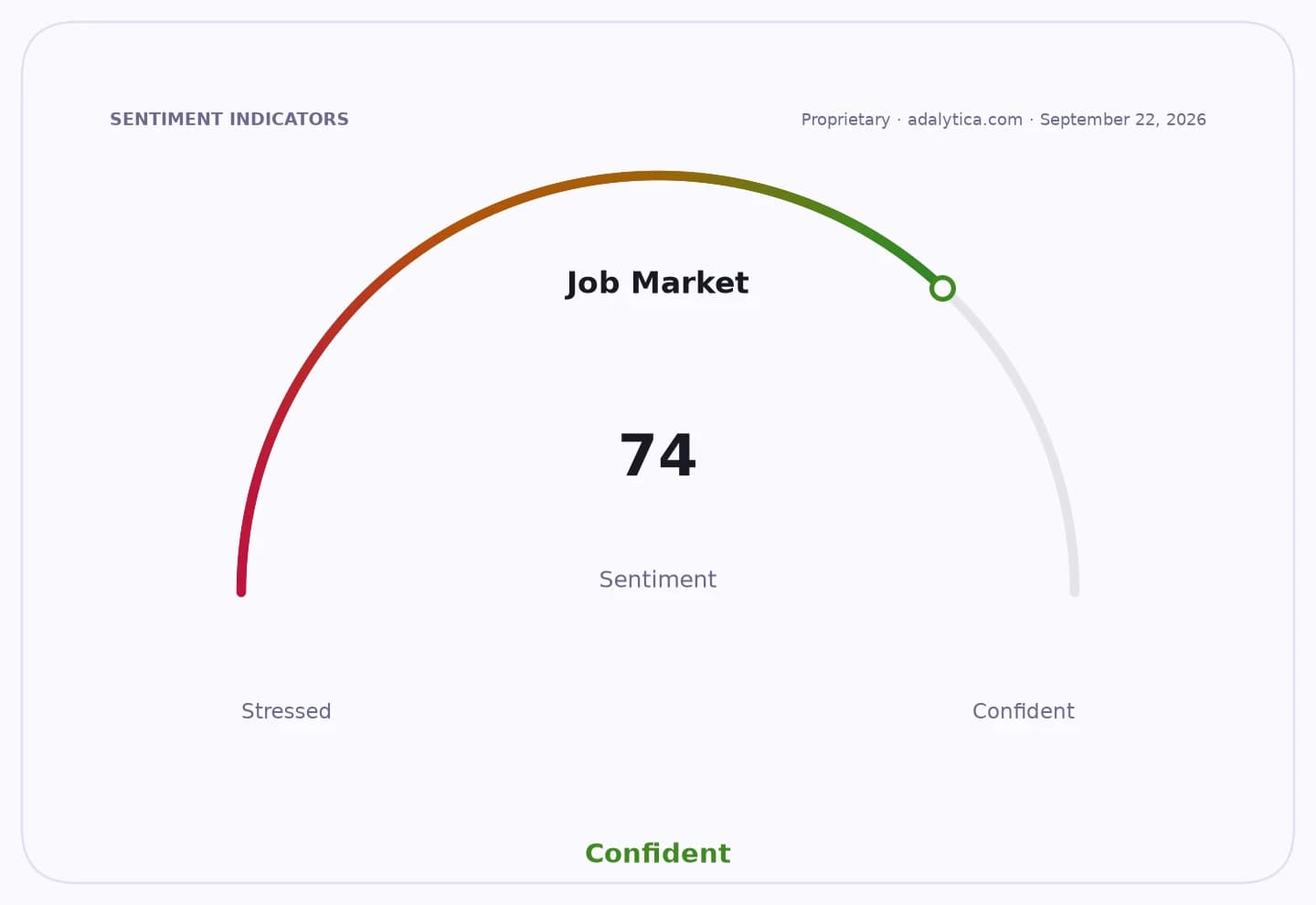
The broader backdrop is not especially friendly either. Adalytica’s Job Market Sentiment gauge sits in fear territory, with awareness at extreme fear and the 30-day change sharply lower. That does not mean the investment zones will fail, but it does suggest households and employers remain cautious, which can slow the kind of broad-based demand that turns project announcements into real economic momentum.
For long-term investors, the key question is whether these zones become a compounding engine or just another policy headline. The bullish case is straightforward: if the projects are financed, built and occupied, they can lift employment, tax receipts and private-sector confidence over several years. The risk is execution — delays, weak funding or underused assets can leave the economic benefits on paper.
In other words, this is the kind of story that rewards patience, not speculation. Investors should watch whether capital actually flows into the zones, whether job creation shows up in the data and whether the market begins to reward IDE with a sustained move back above its longer-term averages.
| Entity | Gains | Losses |
|---|---|---|
| Investment zones | ▲Project pipeline, jobs, capital inflows | ▼Credibility if execution stalls |
| Local workers | ▲78,000 potential jobs | ▼Delays in hiring |
| Banks and contractors | ▲Financing and build-out demand | ▼Margin pressure if projects slip |
| IDE shareholders | ▲Upside if growth follows through | ▼Near-term weakness below key averages |