Global equities are wobbling as investors confront the three forces driving markets this year: higher-for-longer interest rates, the capital drain from the AI buildout and fresh geopolitical risk.
Nikkei, SPY and QQQ fall as yields stay high
Japan’s Nikkei 225 fell to 62,693.16 on Oct. 23, its lowest close in the data provided and down 8.0% from the June 25 peak of 72,366.34. The decline comes as the benchmark trades below its 50-day moving average of 66,173.25 and its RSI reading sinks to 28.8, a level that typically indicates technically oversold conditions. Still, the selloff has not yet translated into a durable rebound, suggesting investors are still pricing in policy uncertainty and weaker risk appetite rather than stepping in to buy the dip.
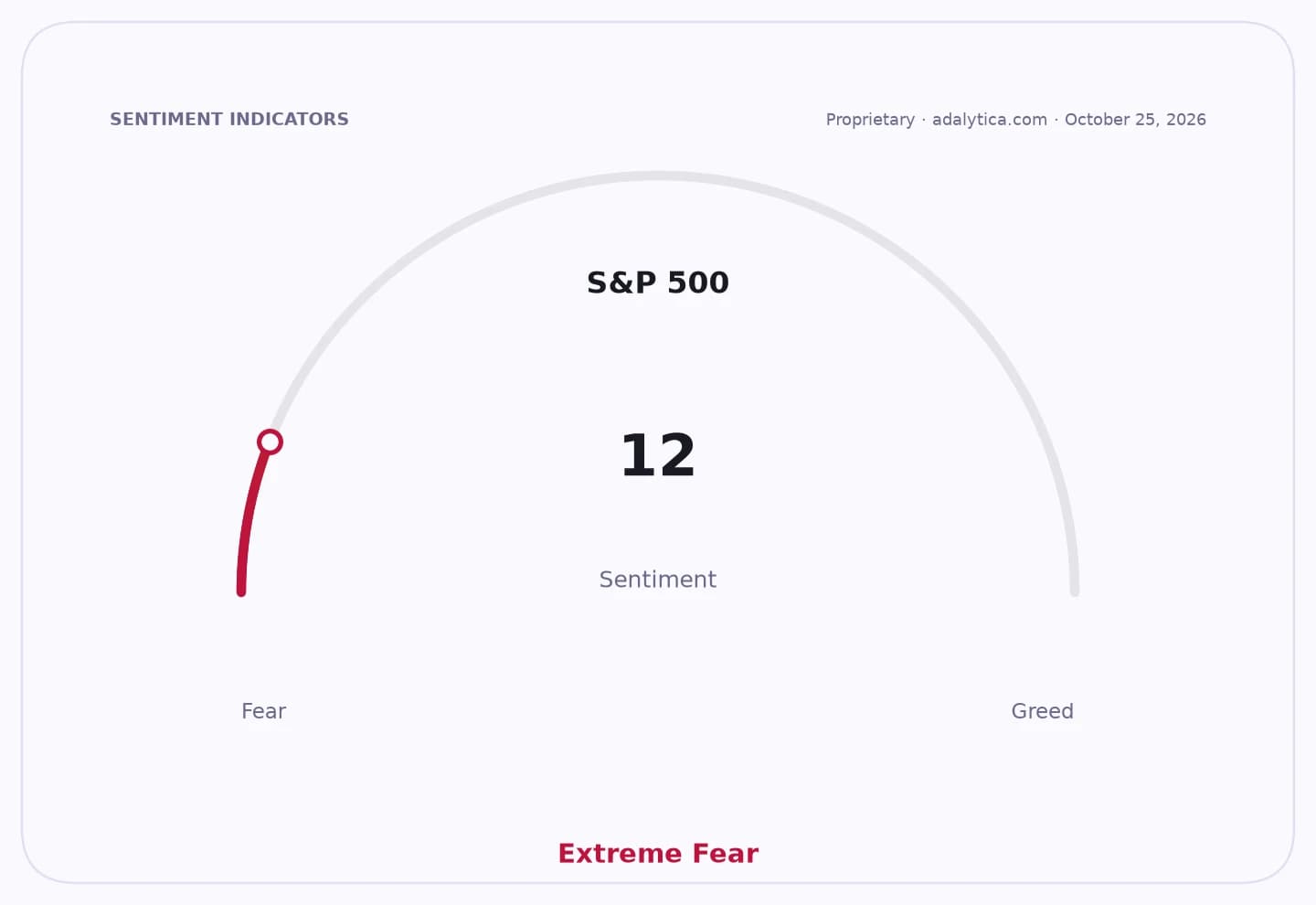
Sentiment IndicatorsⓘProprietary · adalytica.com · October 25, 2026
This is a snapshot — live sentiment, awareness and momentum for 130+ markets update continuously in the dashboard.Open AlphaPulse
The pressure is not just local. The S&P 500 ETF SPY slipped to 759.97 on Oct. 23 from 773.09 two sessions earlier, while the Nasdaq-100 proxy QQQ fell to 704.40 from 725.20 over the same stretch. QQQ’s RSI dropped to 23.7, underscoring how quickly enthusiasm for large-cap growth names can reverse when investors start worrying about financing costs and the durability of AI returns.
That caution fits a broader macro backdrop that remains difficult for risk assets. The U.S. 10-year Treasury yield forecast for Oct. 23 is 5.006%, up sharply from 3.75% in September’s fed funds rate and well above the 0.73% low seen in 2020, while the 10-year/2-year curve is forecast at 0.282 percentage point. Higher rates raise the discount rate on future earnings, hit valuations most sharply in long-duration tech stocks and keep pressure on capital-intensive business models.
DGS10 vs FEDFUNDS — macro contextadalytica.com
Explore this data interactively — full history, time series and cross-market comparisons.Open AlphaPulse

Investors are also weighing the cost of the AI race itself. Microsoft’s 10-K says its cloud and AI strategy requires substantial investment and depends on evolving customer demand, technology shifts and regulation. Nvidia disclosed $36 billion of commitments as of July 26 tied to its AI infrastructure buildout, while Broadcom said AI customers could hurt results if they reduce or delay infrastructure plans. For investors, that means the market is rewarding AI exposure but increasingly scrutinizing whether the spending cycle can justify valuations and margins.
Geopolitics adds another layer of fragility. Russia condemned Japan’s new sanctions on vessels linked to its “shadow fleet,” highlighting how energy, trade and security tensions can spill into markets already on edge over rates and earnings. Safe-haven signals have been mixed, but the combination of policy tightening fears and geopolitical noise is enough to keep money managers defensive.
The near-term test is whether upcoming central bank decisions and U.S. data can calm rate expectations enough to support equities again. If yields stay elevated and AI capex keeps rising, investors are likely to continue rotating toward cash flow, balance-sheet strength and sectors less exposed to valuation compression.
| Entity | Gains | Losses |
|---|---|---|
| Treasury buyers | ▲Higher yields | ▼Lower bond prices |
| Growth stocks | ▲AI tailwinds | ▼Higher valuation pressure |
| Cash-rich megacaps | ▲Funding flexibility | ▼Earnings scrutiny |
| Japan exporters | ▲Weaker yen support | ▼Risk-off equities sentiment |