India’s decision to put a planned Alipay+ connection to the country’s Unified Payments Interface on hold highlights how tightly New Delhi is linking payments expansion to data sovereignty and national security.
India Halts Alipay+ UPI Connection

The move matters because UPI is now one of the world’s most important payment rails, and any foreign-wallet access to that ecosystem has implications well beyond a single cross-border payments route. A pause means the government is signaling that control over transaction data, user information and system access will take priority over broader interoperability with foreign platforms, even as India seeks to keep digital payments open and scalable.
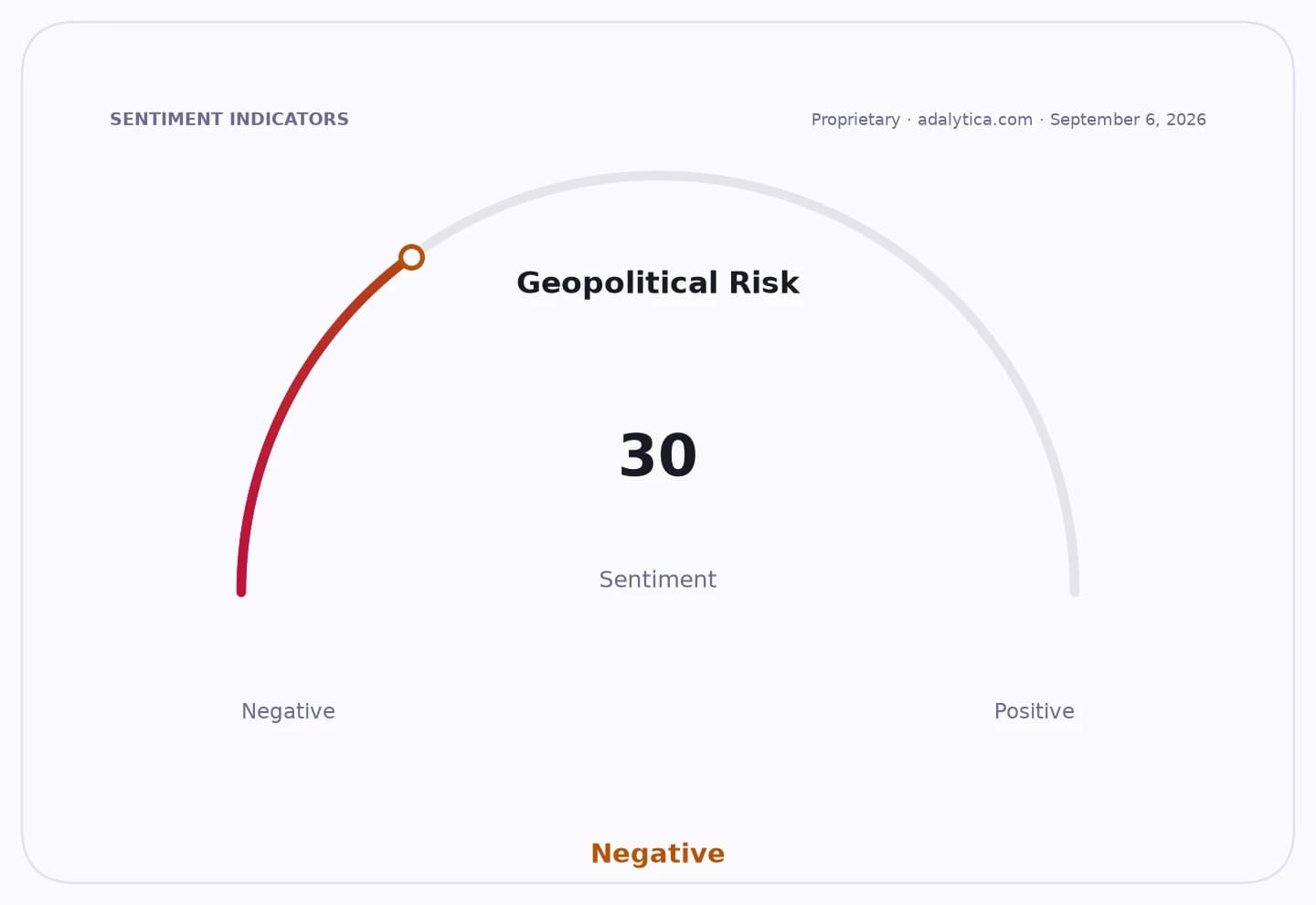
Sentiment IndicatorsⓘProprietary · adalytica.com · September 3, 2026
This is a snapshot — live sentiment, awareness and momentum for 130+ markets update continuously in the dashboard.Open AlphaPulse
For investors, the immediate read-through is less about one delayed integration than about the rules of engagement for global payments companies trying to tap India’s fast-growing digital economy. PayPal, Visa and Mastercard all trade on the prospect that cross-border commerce and wallet interoperability can deepen monetization over time, but the Indian market has repeatedly shown that regulatory approval can be as important as product capability. Any delay tied to security or data localization concerns can slow transaction growth assumptions, lengthen rollout timelines and increase compliance costs for international payment networks and wallet operators.
The report also lands in a broader policy environment where governments are scrutinizing foreign technology and financial infrastructure more aggressively. India has built UPI into a strategic national asset, and a review of foreign participation fits the pattern of regulators wanting domestic control over identity, settlement and merchant data. That stance may protect the local ecosystem and reduce cyber and privacy risks, but it also narrows the path for external partners that had counted on India as a high-growth channel.
The market impact for listed payments firms is likely to be incremental rather than immediate, but the strategic message is clear: growth in digital payments is no longer just about adoption, it is about permission. For global players, that means India remains attractive, but access will likely come with stricter technical, legal and data-handling guardrails. Investors will watch whether the hold is temporary, whether revised terms can satisfy regulators, and whether other jurisdictions follow India’s lead in treating payment networks as sensitive national infrastructure.
| Entity | Gains | Losses |
|---|---|---|
| India / UPI regulators | ▲Data control | ▼Faster foreign access |
| Domestic payments ecosystem | ▲Competitive protection | ▼Less foreign competition |
| Alipay+ / Ant Group | ▲None immediately | ▼India expansion plans |
| Global payments firms | ▲Clearer regulatory signal | ▼Shorter rollout visibility |