India’s banking labor dispute is escalating into a systemwide test of service continuity, with Reserve Bank of India unions throwing their weight behind a nationwide strike over a five-day work week and a revised performance-linked incentive scheme that workers say unfairly rewards a small senior elite.
India banks face strike over five-day week and incentives
The immediate economic risk is not a full-blown financial shock but a drag on transaction flow, cash management and customer service at a time when India’s banking system is central to wage payments, remittances and daily commerce. Even before the planned September 28-30 action, the RBI itself had to tell commercial banks to stay open on Sunday, underscoring how quickly labor tensions can spill into operational decisions with consequences for depositors, borrowers and the broader payment network.
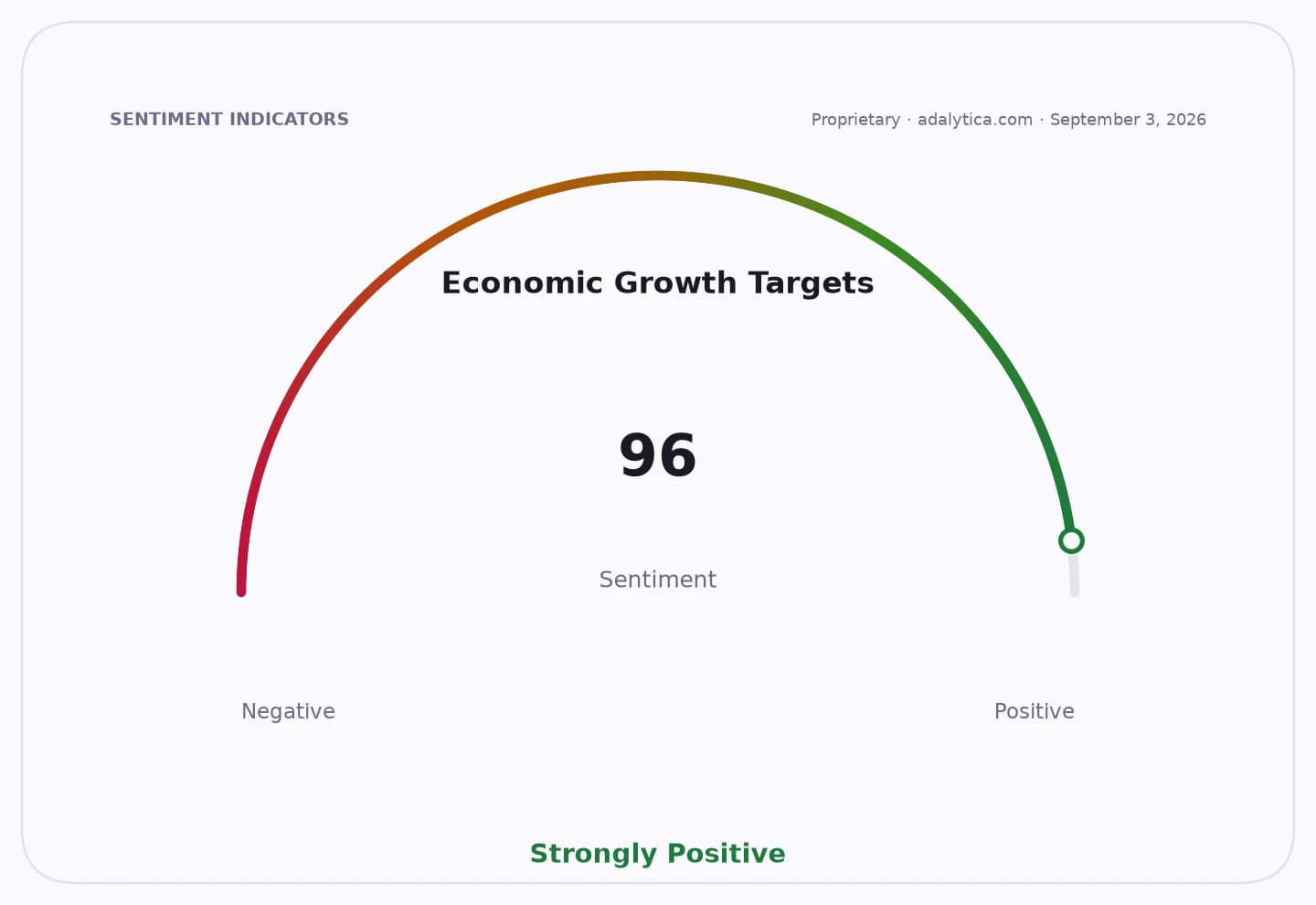
Sentiment IndicatorsⓘProprietary · adalytica.com · October 2, 2026
This is a snapshot — live sentiment, awareness and momentum for 130+ markets update continuously in the dashboard.Open AlphaPulse
At the heart of the dispute is the long-delayed move to a five-day work week, a demand unions say was already agreed in principle between the Indian Banks’ Association and the United Forum of Bank Unions in December 2023 and acknowledged by the Department of Financial Services in March 2025. Workers have said they are willing to lengthen daily hours to preserve service levels, which makes the issue less about reduced output than about the distribution of working time and the cost of staffing a more compressed schedule.
The second flashpoint is the government’s revised profit-linked incentive scheme. Unions argue the new formula disproportionately benefits top executives in scales IV to VIII, who make up less than 5% of employees, while leaving the remaining 95% with far smaller payouts. That has turned a compensation question into a fairness issue that could harden resistance across the sector and complicate efforts to use bonuses or incentives as a tool for retention and productivity.
For investors, the story matters less because of any direct hit to bank earnings this week than because it highlights a persistent governance and labor-cost overhang in Indian banking. Public-sector lenders, in particular, depend on staff stability to support branch operations, loan processing and customer acquisition. Any prolonged friction could raise compliance risk, slow new account openings and pressure service metrics in an industry already under scrutiny for efficiency.
The strike threat also lands against a mixed backdrop for Indian financial shares, where investors have been watching banks for signs that margins, asset quality and operating leverage can hold up as growth cools from recent highs. Conventional technical indicators on several bank-traded instruments show a market that has already been under pressure, with prices for India-focused bank names sitting below both the 50-day and 200-day moving averages in recent trading, suggesting investors have been trimming exposure even before the labor dispute came to a head.
The RBI unions’ decision to back the strike raises the stakes because it broadens the conflict beyond commercial bank employees to staff at the central bank itself, adding institutional weight to the unions’ demands. That may help keep pressure on the Finance Ministry and the Indian Banks’ Association to reopen negotiations, but it also increases the chance of a face-saving compromise rather than a sweeping policy change.
The near-term market question is whether the dispute remains contained to a short protest or becomes a recurring feature of banking operations in the coming quarters. If talks revive the five-day-week plan and narrow the PLI gap, banks could get labor peace and a more predictable operating cadence. If not, investors may have to price in periodic disruption, higher staffing complexity and another reminder that India’s banking model still relies heavily on human labor in a digitizing economy.
| Entity | Gains | Losses |
|---|---|---|
| Bank unions | ▲Negotiating leverage | ▼If talks fail to deliver reforms |
| RBI and Finance Ministry | ▲Chance to broker compromise | ▼Pressure to resolve labor unrest |
| Commercial banks | ▲Potential labor settlement | ▼Operational disruption and reputational strain |
| Customers and depositors | ▲Possible longer-term service stability | ▼Short-term inconvenience and delays |