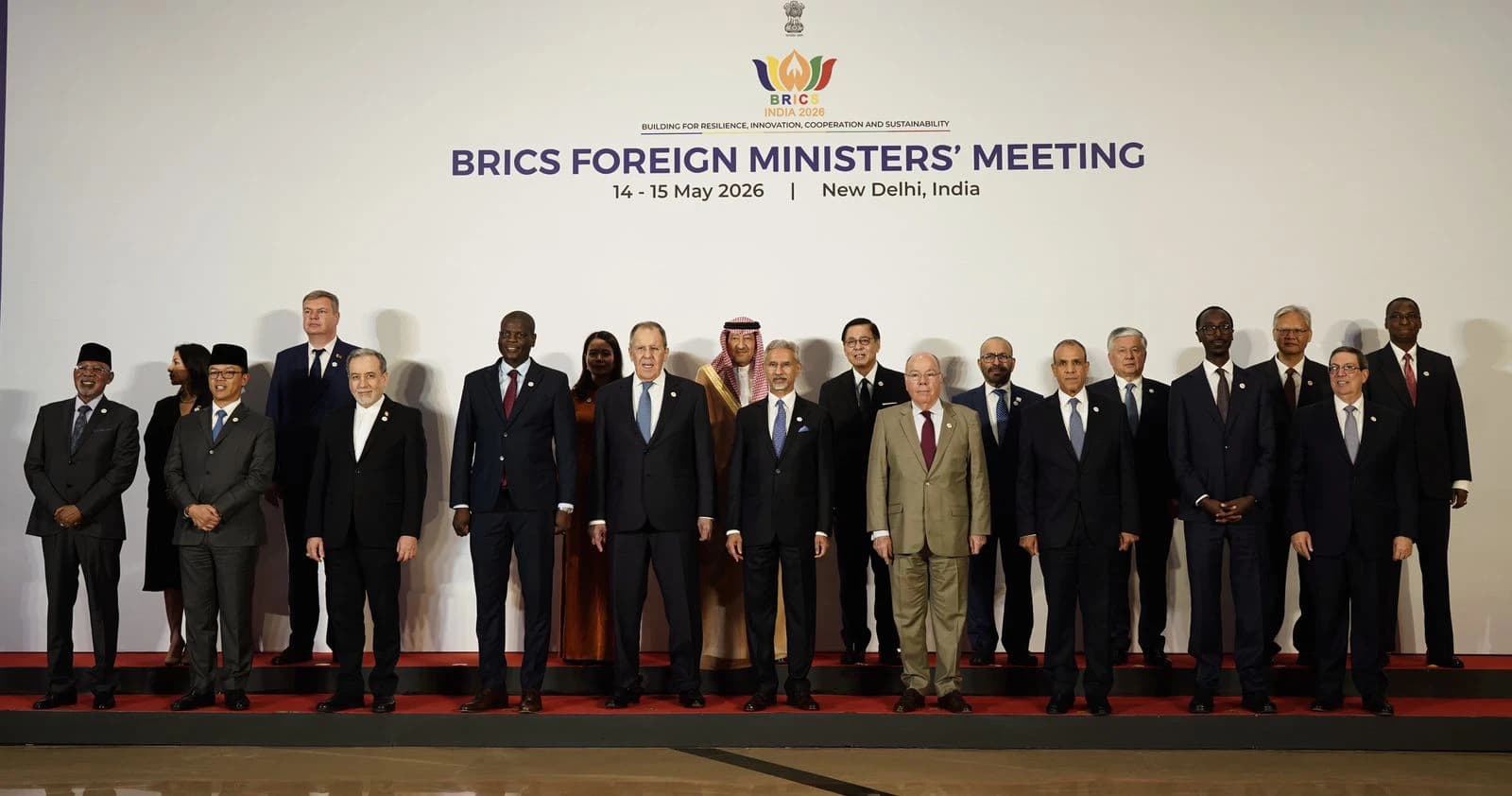
Prime Minister Narendra Modi’s back-to-back meetings with Vladimir Putin and Iran’s President at the BRICS summit are the clearest sign yet that India is using the gathering in New Delhi to advance a more active Eurasia strategy at a time of rising geopolitical fragmentation.
India BRICS meetings with Putin and Iran president

The significance goes beyond diplomatic optics. India is trying to preserve room to maneuver between Russia, Iran, China and the West while protecting energy security, trade access and strategic autonomy. Those goals matter economically because they shape India’s import bill, shipping routes, access to discounted crude and the policy environment for exporters, infrastructure firms and state-owned buyers tied to sanctions-sensitive trade.
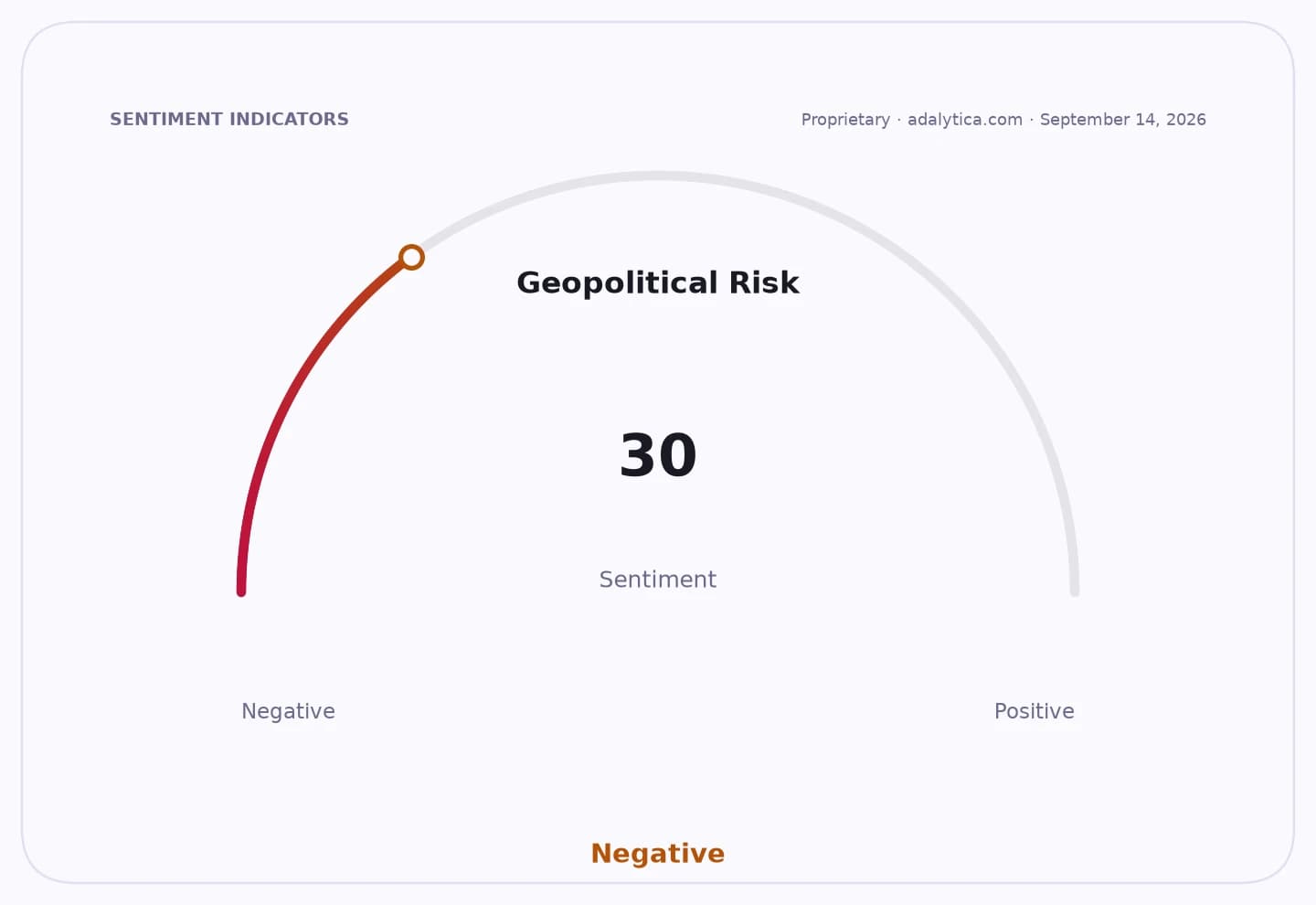
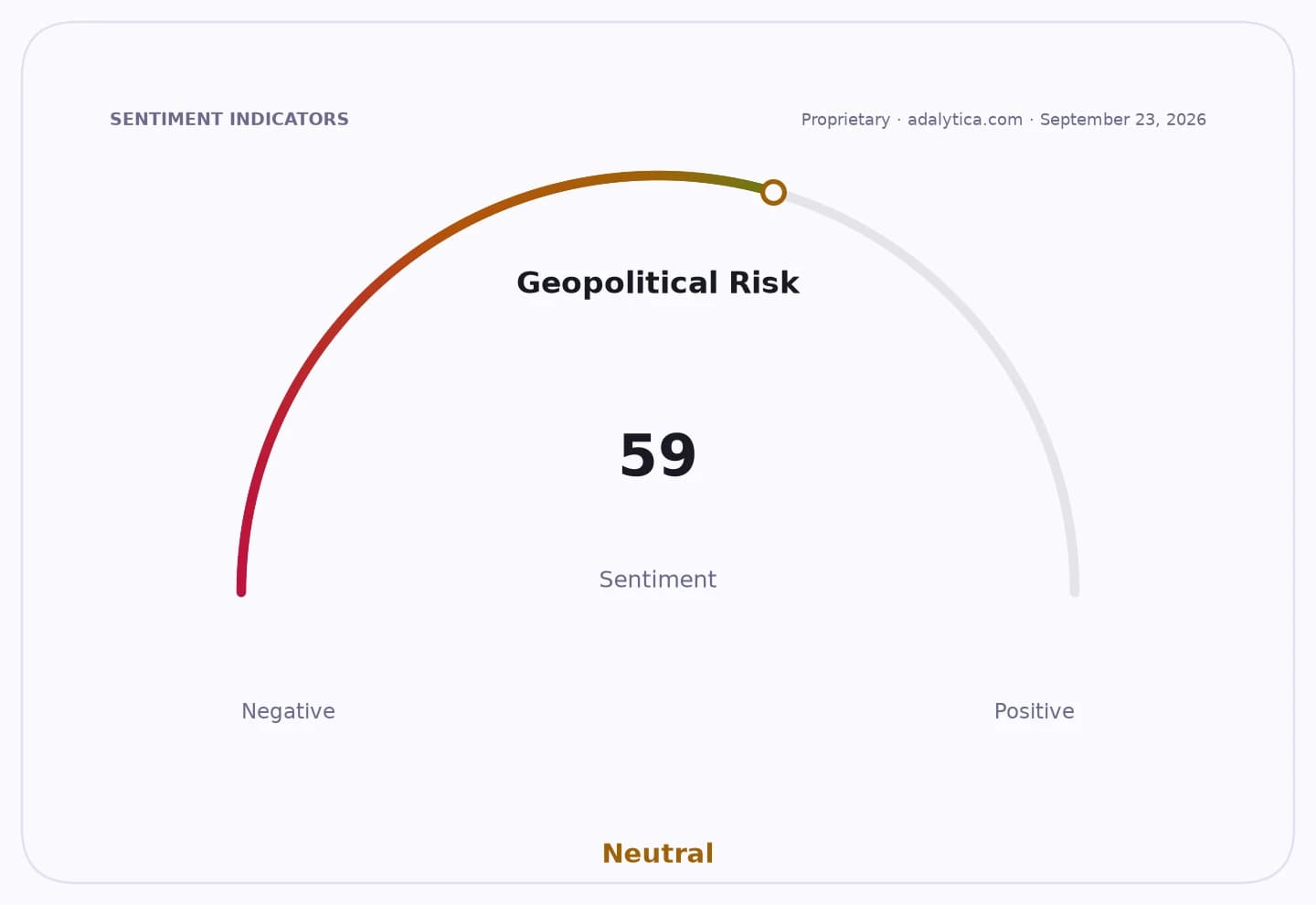
Sentiment IndicatorsⓘProprietary · adalytica.com · September 13, 2026
This is a snapshot — live sentiment, awareness and momentum for 130+ markets update continuously in the dashboard.Open AlphaPulse

Putin’s presence in Delhi is especially important because it underlines the durability of the India-Russia relationship despite Western pressure over the war in Ukraine. India has kept buying Russian crude and expanded commercial links even as the global order has become more polarized. That has helped support Indian refiners and kept energy costs lower than they would otherwise have been, though it also leaves New Delhi exposed to future sanctions risk and secondary-pressure tactics if the conflict intensifies.
The meeting with Iran’s president carries a different but related economic logic. Iran remains central to India’s interests in the Gulf, particularly in trade corridors, shipping access and Afghanistan-linked regional diplomacy. Any easing in ties can aid port and logistics ambitions, while tighter coordination could support longer-term efforts to diversify supply chains away from chokepoints dominated by rival powers. Investors will be watching whether the summit produces language on connectivity or trade that could benefit Indian infrastructure, commodity and shipping names.
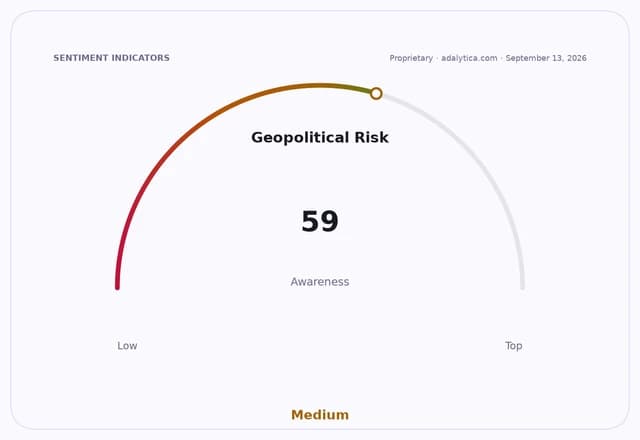
The BRICS backdrop matters as well. With China’s Xi Jinping also expected in Delhi, the summit gives India a platform to push a non-aligned message at a time when global growth is slowing and geopolitical risk is rising. Adalytica’s Global Stability Sentiment gauge shows fear at 30, down 42 points over the past month, reflecting how quickly market perceptions can deteriorate when strategic tensions intensify. That makes any indication of bloc coordination more relevant for risk assets, particularly commodities and emerging-market currencies.
Market implications are already visible in energy. USO, the oil ETF, has rallied sharply and remains elevated, with conventional momentum readings still strong. That suggests traders are pricing in persistent geopolitical risk rather than a clean de-escalation. For India, higher crude would be a direct macro headwind through inflation, the current account and fuel subsidies; for exporters, a weaker oil bill would have been a partial offset.
There is also a domestic economic dimension. India has been trying to convert diplomacy into trade gains, and the government has pointed to rising agricultural exports to Russia, including a near 170% jump in meat and edible meat products. That supports the case that India sees BRICS not just as a political forum but as a channel for commercial diversification, especially for farmers, food processors and MSMEs looking for markets beyond the West.
For investors, the key question is whether this summit translates into practical gains or simply more symbolism. The bull case is that India broadens its trade relationships, secures energy flexibility and strengthens its role as a balancing power. The bear case is that deeper ties with sanctioned or contested partners increase policy risk, complicate India’s relations with the US and Europe and keep a geopolitical premium embedded in energy and shipping markets. The next catalyst will be whether the bilateral meetings yield any concrete agreements on energy, payments, connectivity or trade.
| Entity | Gains | Losses |
|---|---|---|
| India | ▲Trade leverage, energy flexibility | ▼Diplomatic balancing risk |
| Russia | ▲Strategic legitimacy, bilateral access | ▼Isolation from West persists |
| Iran | ▲Regional engagement, connectivity prospects | ▼Sanctions pressure remains |
| Oil consumers | ▲Potential supply stability if ties deepen | ▼Higher geopolitical risk premium |